Department of Preventive Medicine, Icahn School of Medicine at Mount Sinai, New York, New York 10029, USA.
Nature. 2013 Jun 13;498(7453):216-9. doi: 10.1038/nature12169. Epub 2013 May 22.
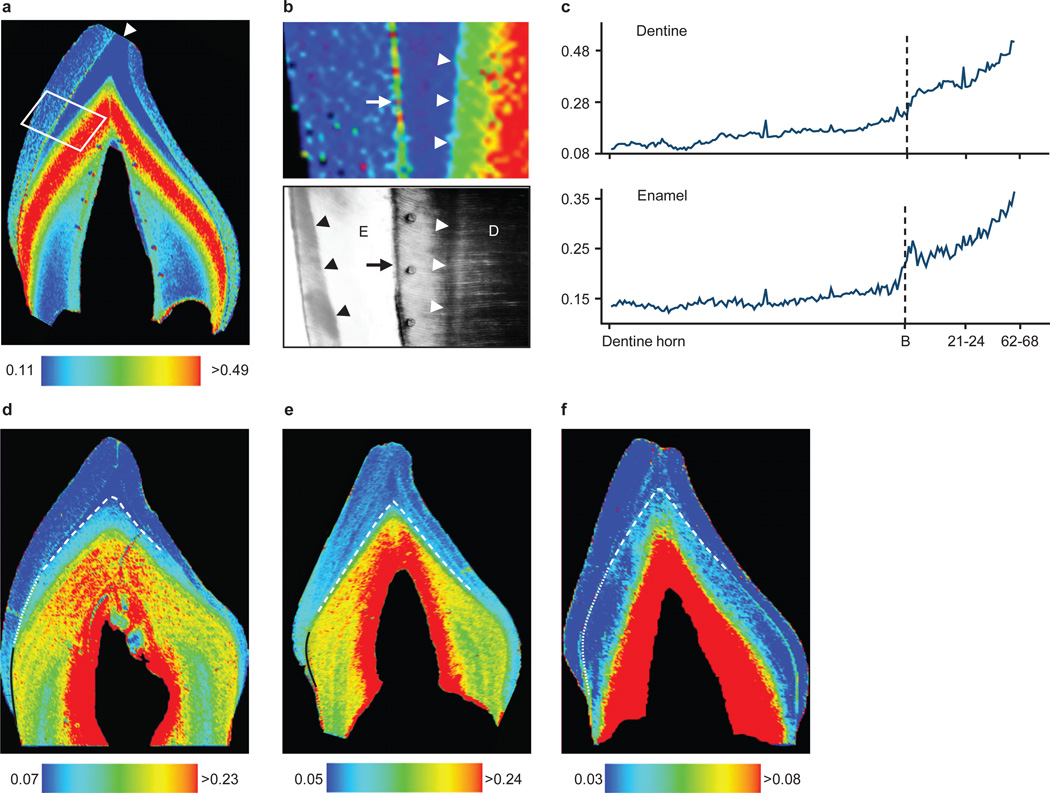
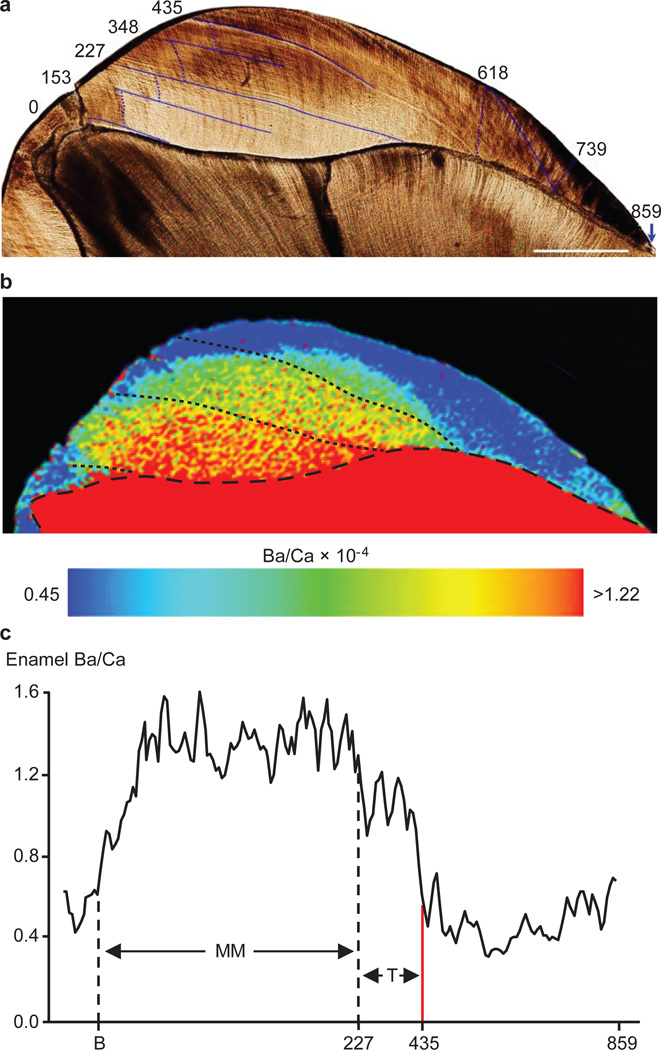
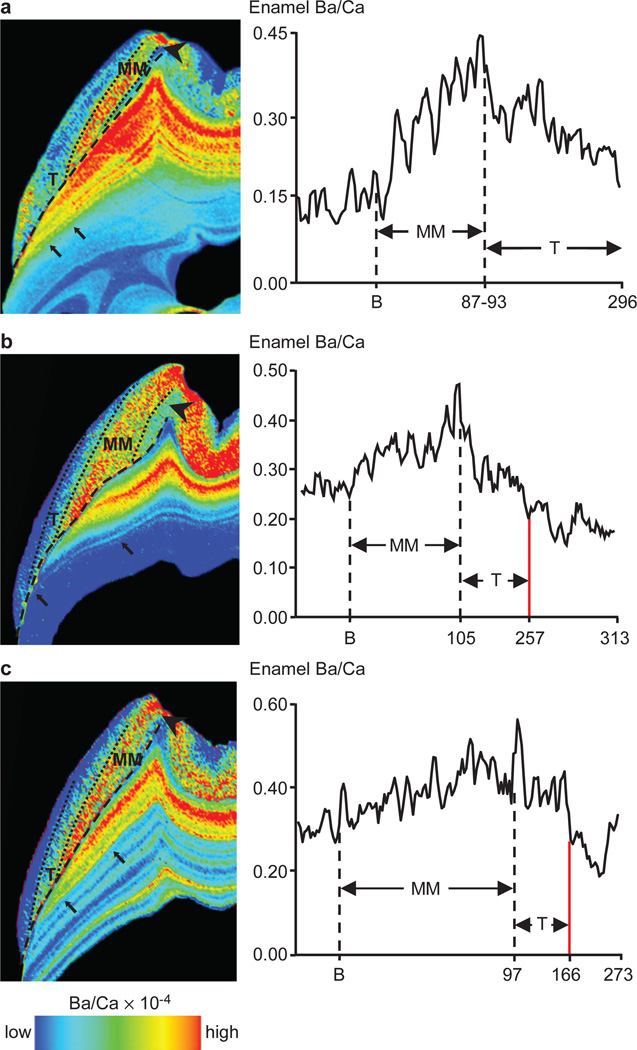
Early-life dietary transitions reflect fundamental aspects of primate evolution and are important determinants of health in contemporary human populations. Weaning is critical to developmental and reproductive rates; early weaning can have detrimental health effects but enables shorter inter-birth intervals, which influences population growth. Uncovering early-life dietary history in fossils is hampered by the absence of prospectively validated biomarkers that are not modified during fossilization. Here we show that large dietary shifts in early life manifest as compositional variations in dental tissues. Teeth from human children and captive macaques, with prospectively recorded diet histories, demonstrate that barium (Ba) distributions accurately reflect dietary transitions from the introduction of mother's milk through the weaning process. We also document dietary transitions in a Middle Palaeolithic juvenile Neanderthal, which shows a pattern of exclusive breastfeeding for seven months, followed by seven months of supplementation. After this point, Ba levels in enamel returned to baseline prenatal levels, indicating an abrupt cessation of breastfeeding at 1.2 years of age. Integration of Ba spatial distributions and histological mapping of tooth formation enables novel studies of the evolution of human life history, dietary ontogeny in wild primates, and human health investigations through accurate reconstructions of breastfeeding history.
生命早期的饮食转变反映了灵长类动物进化的基本方面,是当代人类健康的重要决定因素。断奶对发育和生殖率至关重要;早期断奶会对健康产生不利影响,但可以缩短出生间隔,从而影响人口增长。由于缺乏在化石形成过程中不会改变的经过前瞻性验证的生物标志物,因此难以在化石中揭示生命早期的饮食史。在这里,我们表明生命早期的大型饮食转变表现为牙齿组织成分的变化。具有前瞻性记录饮食史的人类儿童和圈养猕猴的牙齿表明,钡 (Ba) 分布准确反映了从引入母乳到断奶过程中的饮食转变。我们还记录了中更新世少年尼安德特人的饮食转变,其中显示了七个月的纯母乳喂养,随后是七个月的补充喂养。在此之后,牙釉质中的 Ba 水平恢复到产前基线水平,表明 1.2 岁时突然停止母乳喂养。Ba 空间分布的整合以及牙齿形成的组织学绘图使我们能够通过对母乳喂养史的准确重建,对人类生活史、野生灵长类动物的饮食发育以及人类健康调查的演变进行新的研究。