Sellayah Dyan, Sikder Devanjan
Metabolic Signaling and Disease Program; Diabetes and Obesity Research Center; Sanford-Burnham Medical Research Institute; Orlando, FL USA.
Adipocyte. 2012 Jan 1;1(1):58-63. doi: 10.4161/adip.18965.
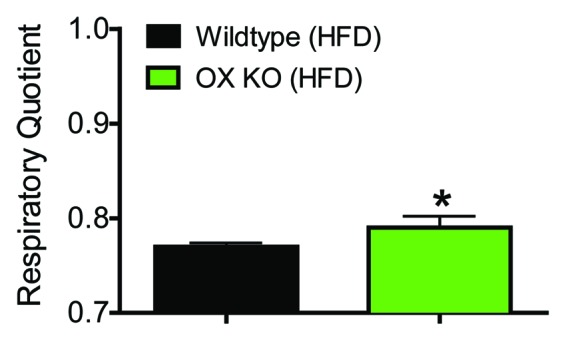
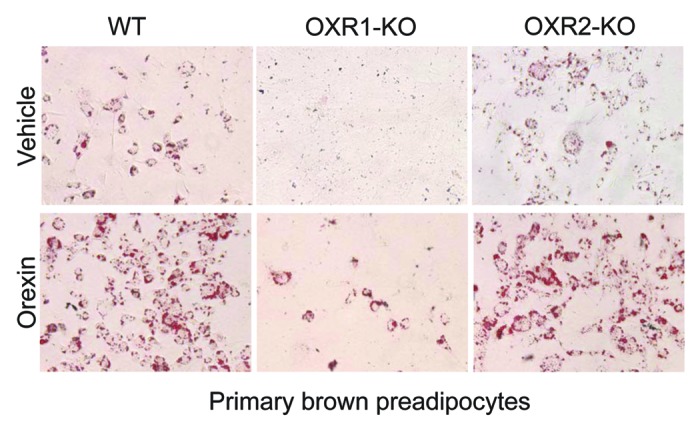
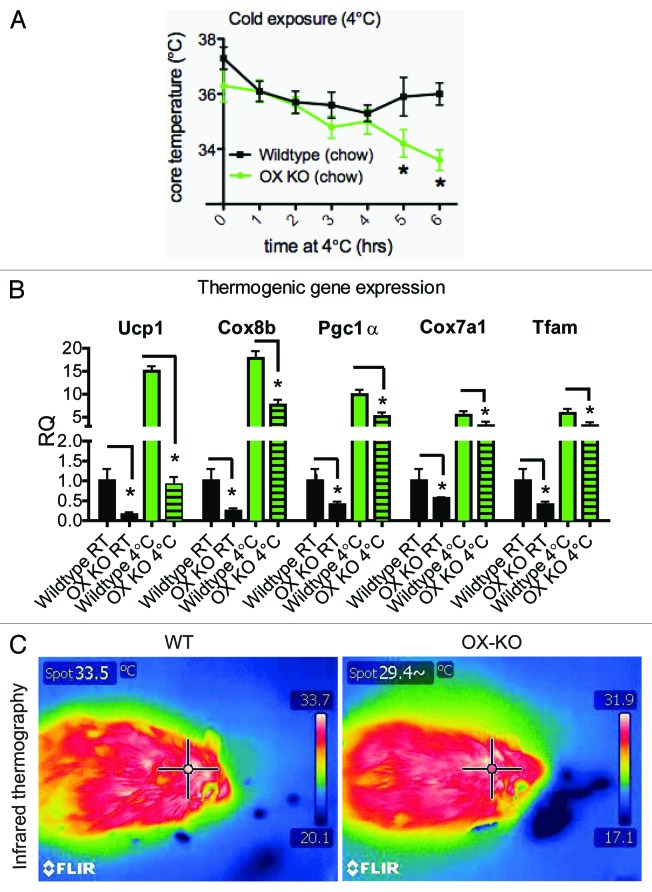
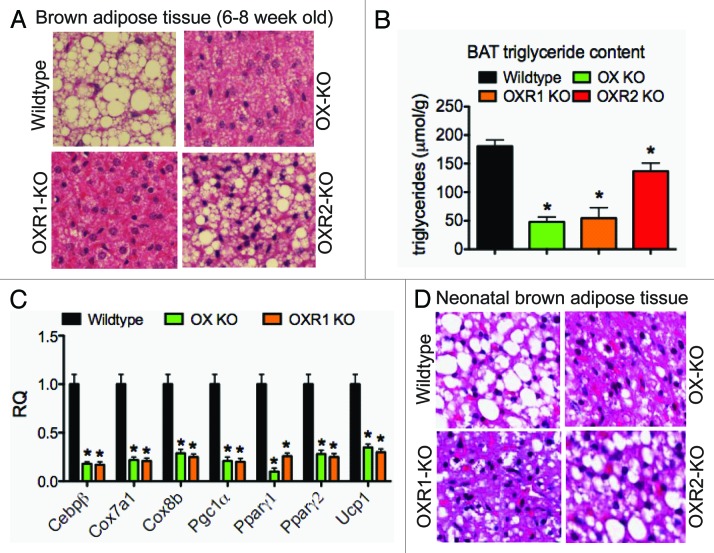
Orexin A (OX) is a small excitatory neuropeptide hormone that stimulates feeding, wakefulness and energy expenditure via a pair of G-coupled protein receptors, namely orexin receptor-1 (OXR1) and orexin receptor-2 (OXR2). OX-deficient mice are sensitive to obesity despite being hypophagic. The obesogenic effect of OX-deletion is due to brown adipose tissue (BAT) dysfunction, a defect that originates during fetal growth. Brown preadipocytes in OX-null mice display undifferentiated histological appearance and fail to support both diet- and cold-induced thermogenesis. We show that the OXR1-null mice phenocopies the differentiation defect observed in the ligand-null mice indicating that OXR1 relays OX's differentiation and thermogenic function. Consistent with this, OX fails to induce differentiation in cultured OXR1-null preadipocytes. Thus, OX signaling via OXR1 constitutes an important thermoregulatory mechanism that defends against cold and obesity.
食欲素A(OX)是一种小的兴奋性神经肽激素,它通过一对G蛋白偶联受体,即食欲素受体-1(OXR1)和食欲素受体-2(OXR2)来刺激进食、觉醒和能量消耗。尽管食欲素缺乏的小鼠摄食量减少,但它们对肥胖敏感。食欲素缺失的致肥胖作用是由于棕色脂肪组织(BAT)功能障碍,这种缺陷始于胎儿期生长。食欲素基因敲除小鼠的棕色前脂肪细胞呈现未分化的组织学外观,并且无法支持饮食诱导和寒冷诱导的产热。我们发现,OXR1基因敲除小鼠表现出与配体基因敲除小鼠中观察到的分化缺陷相似的表型,这表明OXR1传递了食欲素的分化和产热功能。与此一致的是,食欲素无法在培养的OXR1基因敲除前脂肪细胞中诱导分化。因此,通过OXR1的食欲素信号传导构成了一种重要的体温调节机制,可抵御寒冷和肥胖。