Dustrude Erik T, Caliman Izabela F, Bernabe Cristian S, Fitz Stephanie D, Grafe Laura A, Bhatnagar Seema, Bonaventure Pascal, Johnson Philip L, Molosh Andrei I, Shekhar Anantha
Department of Psychiatry, Institute of Psychiatric Research, Indiana University School of Medicine, Indianapolis, IN, United States.
Paul and Carole Stark Neurosciences Research Institute, Indiana University School of Medicine, Indianapolis, IN, United States.
Front Neurosci. 2018 Dec 18;12:934. doi: 10.3389/fnins.2018.00934. eCollection 2018.
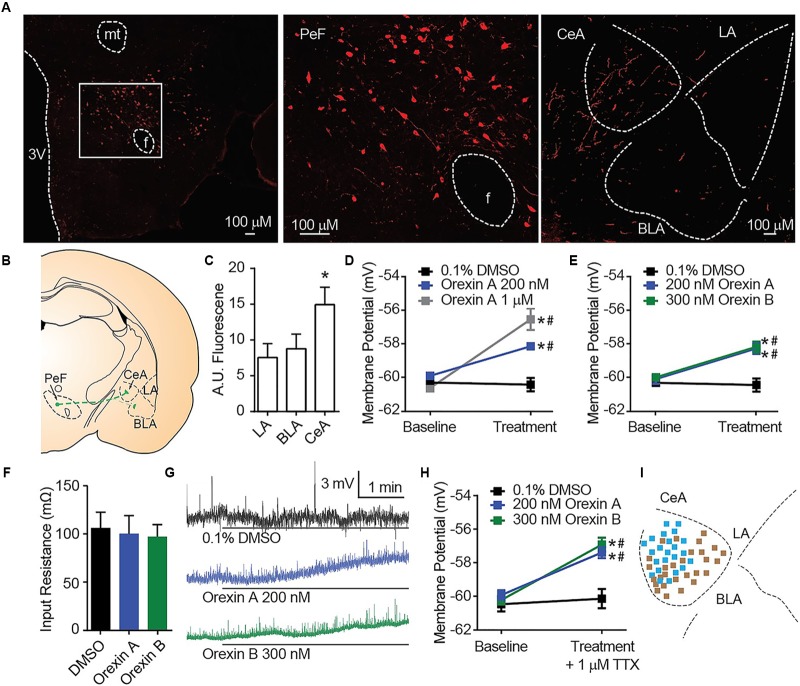
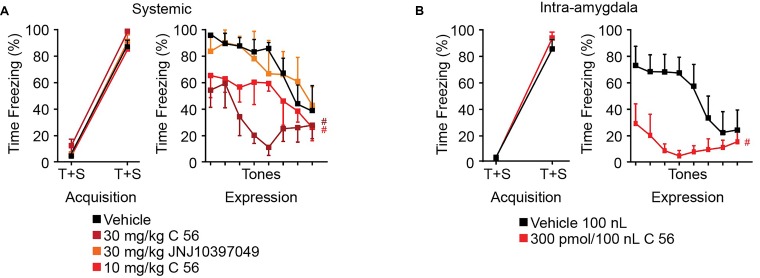
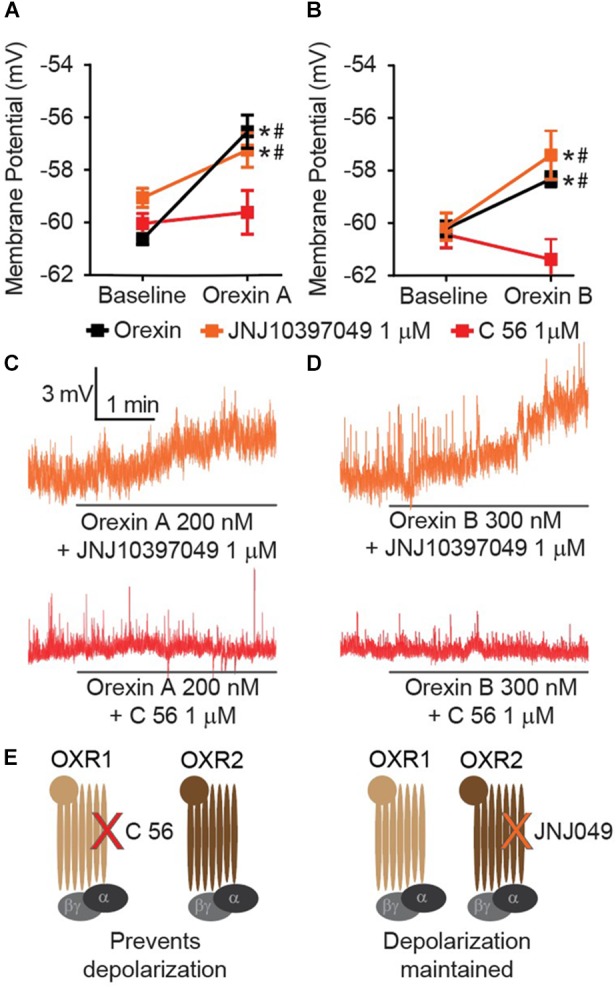
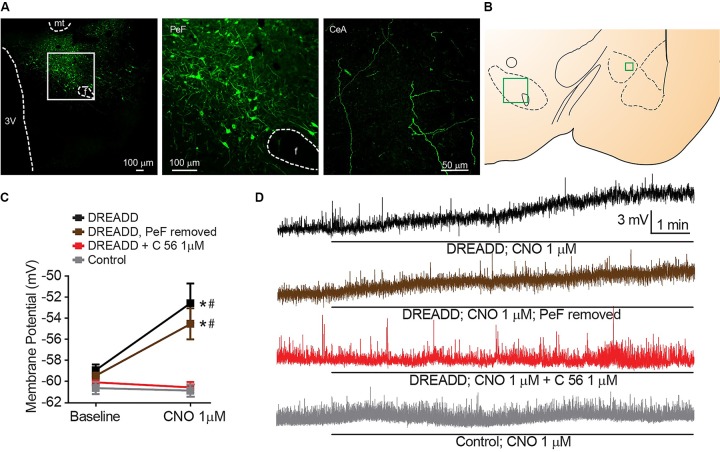
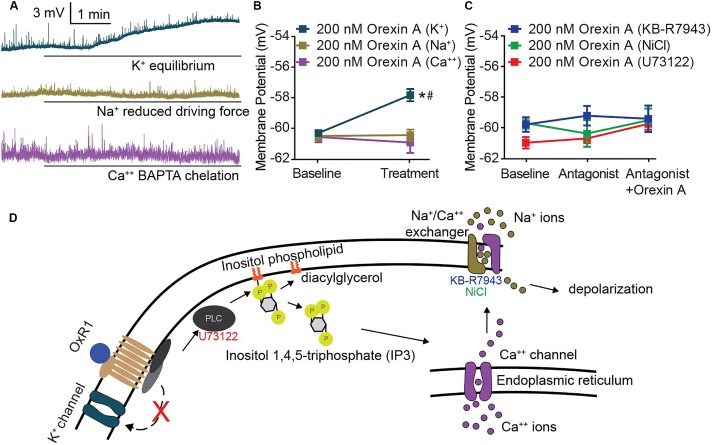
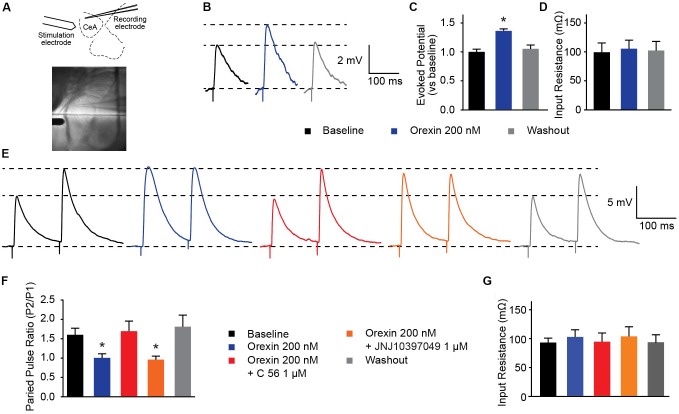
Orexins (OX), also known as hypocretins, are excitatory neuropeptides with well-described roles in regulation of wakefulness, arousal, energy homeostasis, and anxiety. An additional and recently recognized role of OX is modulation of fear responses. We studied the OX neurons of the perifornical hypothalamus (PeF) which send projections to the amygdala, a region critical in fear learning and fear expression. Within the amygdala, the highest density of OX-positive fibers was detected in the central nucleus (CeA). The specific mechanisms underlying OX neurotransmission within the CeA were explored utilizing rat brain slice electrophysiology, pharmacology, and chemogenetic stimulation. We show that OX induces postsynaptic depolarization of medial CeA neurons that is mediated by OX receptor 1 (OXR1) but not OX receptor 2 (OXR2). We further characterized the mechanism of CeA depolarization by OX as phospholipase C (PLC)- and sodium-calcium exchanger (NCX)- dependent. Selective chemogenetic stimulation of OX PeF fibers recapitulated OXR1 dependent depolarization of CeA neurons. We also observed that OXR1 activity modified presynaptic release of glutamate within the CeA. Finally, either systemic or intra-CeA perfusion of OXR1 antagonist reduced the expression of conditioned fear. Together, these data suggest the PeF-CeA orexinergic pathway can modulate conditioned fear through a signal transduction mechanism involving PLC and NCX activity and that selective OXR1 antagonism may be a putative treatment for fear-related disorders.
食欲素(OX),也被称为下丘脑泌素,是兴奋性神经肽,在调节清醒、觉醒、能量平衡和焦虑方面具有明确的作用。OX最近被认识到的另一个作用是调节恐惧反应。我们研究了穹窿周下丘脑(PeF)的OX神经元,这些神经元向杏仁核投射,杏仁核是恐惧学习和恐惧表达的关键区域。在杏仁核内,OX阳性纤维密度最高的区域是中央核(CeA)。我们利用大鼠脑片电生理学、药理学和化学遗传学刺激,探索了CeA内OX神经传递的具体机制。我们发现,OX诱导CeA内侧神经元的突触后去极化,这是由OX受体1(OXR1)介导的,而不是由OX受体2(OXR2)介导的。我们进一步将OX引起的CeA去极化机制表征为依赖磷脂酶C(PLC)和钠钙交换器(NCX)。对OX PeF纤维进行选择性化学遗传学刺激,重现了CeA神经元依赖OXR1的去极化。我们还观察到,OXR1活性改变了CeA内谷氨酸的突触前释放。最后,全身或CeA内灌注OXR1拮抗剂可降低条件性恐惧的表达。总之,这些数据表明,PeF-CeA食欲素能通路可通过涉及PLC和NCX活性的信号转导机制调节条件性恐惧,选择性OXR1拮抗作用可能是治疗恐惧相关疾病的一种潜在方法。