Department of Neurosciences, Medical University of South Carolina, Charleston, SC 29425, USA.
J Alzheimers Dis. 2013;36(4):781-9. doi: 10.3233/JAD-2012-121030.
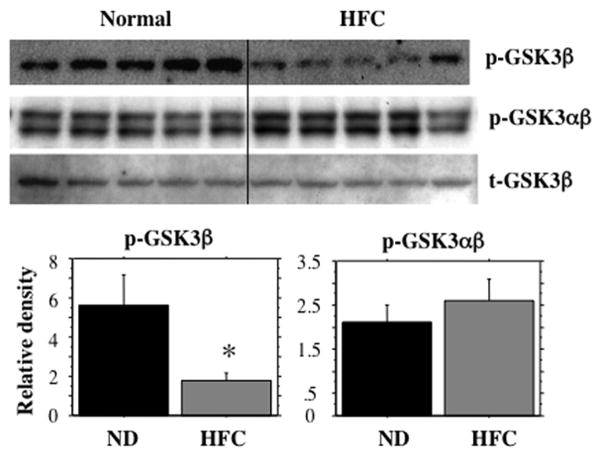
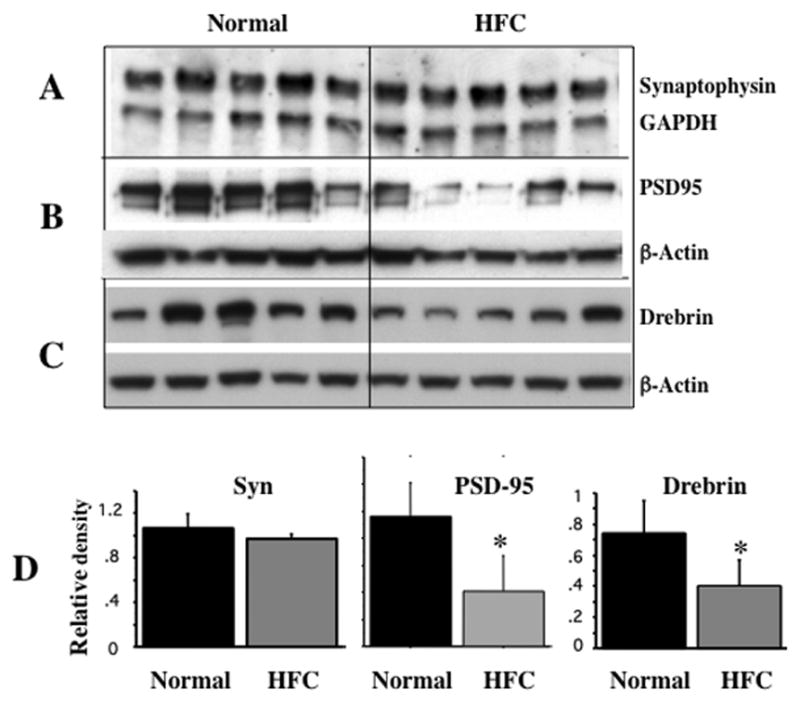
Previous studies demonstrated that a high fat/high cholesterol (HFC) diet results in a loss of working memory in mice correlated with neuroinflammatory changes and increased AβPP processing (Thirumangalakudi et al. (2008) J Neurochem 106, 475-485). To further explore the nature of the molecular correlates of cognitive impairment, in this study, we examined changes in tau phosphorylation, insulin/IGF-1 signaling (IIS) including GSK3, and levels of specific synaptic proteins. Immunoblot analysis of hippocampal tissue from C57BL/6 mice fed HFC for 2 months with anti-phospho-tau (i.e., PHF1 and phospho-Thr-231 tau) antibodies demonstrated the presence of hyperphosphorylated tau. The tau phosphorylation correlated with activated GSK3, a prominent tau kinase normally kept inactive under the control of IIS. That IIS itself was impaired due to the hyperlipidemic diet was confirmed by a down-regulation of insulin receptor substrate-1 and phospho-Akt levels. Although no significant changes in the levels of the pre-synaptic protein (i.e., synaptophysin) in response to HFC were apparent in immunoblot analysis, there was a clear down-regulation of the post-synaptic protein, PSD95, and drebrin, a dendritic spine-specific protein, indicative of altered synaptic plasticity. The results, in concert with previous findings with the same model, suggest that high dietary fat/cholesterol elicits brain insulin resistance and altered IIS leading to Alzheimer's disease-like cognitive impairment in 'normal' mice.
先前的研究表明,高脂肪/高胆固醇(HFC)饮食可导致与神经炎症变化和 AβPP 加工增加相关的工作记忆丧失(Thirumangalakudi 等人,(2008)J Neurochem 106,475-485)。为了进一步探讨认知障碍的分子相关性的本质,在这项研究中,我们检查了 tau 磷酸化、胰岛素/IGF-1 信号(IIS)包括 GSK3 和特定突触蛋白水平的变化。用抗磷酸化 tau(即 PHF1 和磷酸化 Thr-231 tau)抗体对喂食 HFC 2 个月的 C57BL/6 小鼠海马组织进行免疫印迹分析,证明存在过度磷酸化的 tau。tau 磷酸化与激活的 GSK3 相关,GSK3 是一种通常在 IIS 控制下保持非活性的主要 tau 激酶。由于高脂血症饮食,IIS 本身受到损害,这一点通过胰岛素受体底物-1 和磷酸化 Akt 水平的下调得到证实。尽管在免疫印迹分析中,HFC 对突触前蛋白(即突触小体蛋白)水平没有明显变化,但后突触蛋白 PSD95 和树突棘特异性蛋白 drebrin 的明显下调表明突触可塑性发生改变。这些结果与同一模型的先前发现一致,表明高脂肪/胆固醇饮食会引起大脑胰岛素抵抗和 IIS 改变,导致“正常”小鼠出现阿尔茨海默病样认知障碍。