Kyoto University Primate Research Institute, Center for International Collaboration and Advanced Studies in Primatology Kanrin 41-2, Inuyama, Aichi, Japan 484-8506.
Sci Rep. 2013;3:1884. doi: 10.1038/srep01884.
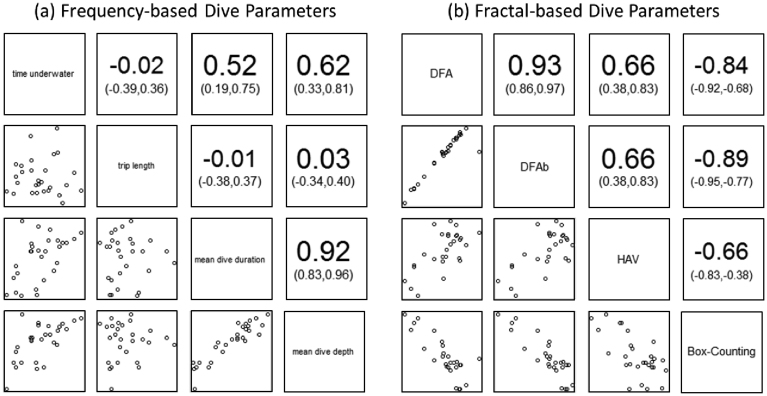
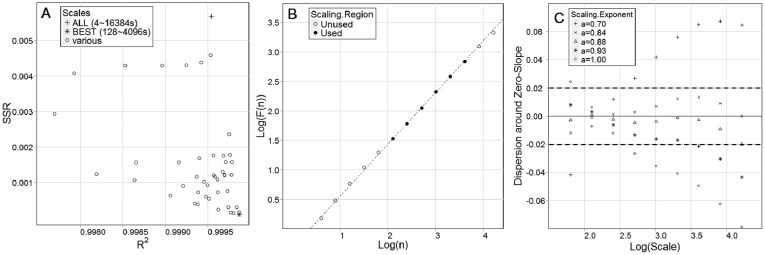
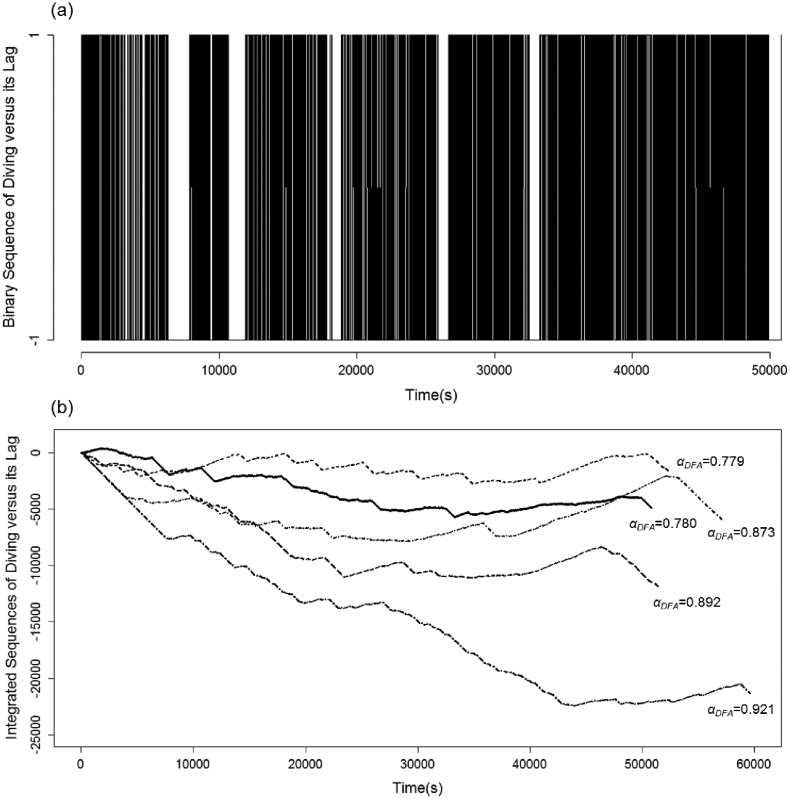
Animal behaviour exhibits fractal structure in space and time. Fractal properties in animal space-use have been explored extensively under the Lévy flight foraging hypothesis, but studies of behaviour change itself through time are rarer, have typically used shorter sequences generated in the laboratory, and generally lack critical assessment of their results. We thus performed an in-depth analysis of fractal time in binary dive sequences collected via bio-logging from free-ranging little penguins (Eudyptula minor) across full-day foraging trips (2(16) data points; 4 orders of temporal magnitude). Results from 4 fractal methods show that dive sequences are long-range dependent and persistent across ca. 2 orders of magnitude. This fractal structure correlated with trip length and time spent underwater, but individual traits had little effect. Fractal time is a fundamental characteristic of penguin foraging behaviour, and its investigation is thus a promising avenue for research on interactions between animals and their environments.
动物行为在时空上表现出分形结构。在莱维飞行觅食假说下,人们广泛探索了动物空间利用中的分形特性,但对行为随时间变化本身的研究则较为罕见,这些研究通常使用在实验室中产生的较短序列,并且通常缺乏对其结果的批判性评估。因此,我们对通过生物遥测从自由放养的小企鹅(Eudyptula minor)收集的二进制潜水序列中的分形时间进行了深入分析,这些序列是在全天觅食过程中收集的(2(16)个数据点; 4 个时间量级)。4 种分形方法的结果表明,潜水序列在大约 2 个数量级上具有长程相关性和持久性。这种分形结构与旅行长度和水下停留时间相关,但个体特征影响很小。分形时间是企鹅觅食行为的一个基本特征,因此对其进行研究是研究动物与其环境之间相互作用的一个很有前途的途径。