Institute of Neuroscience, Italian National Research Council (CNR), Pisa, Italy.
PLoS One. 2013 May 21;8(5):e64863. doi: 10.1371/journal.pone.0064863. Print 2013.
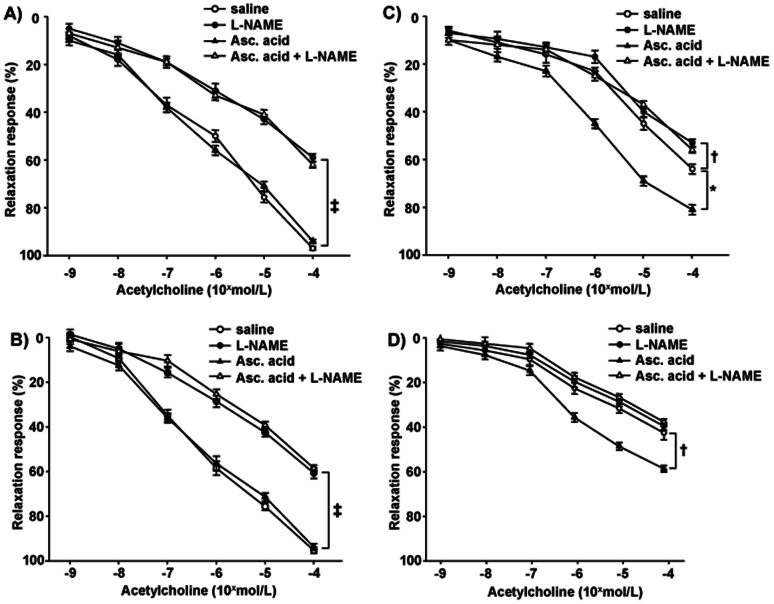
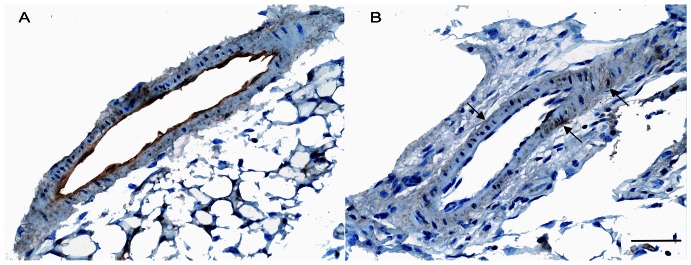
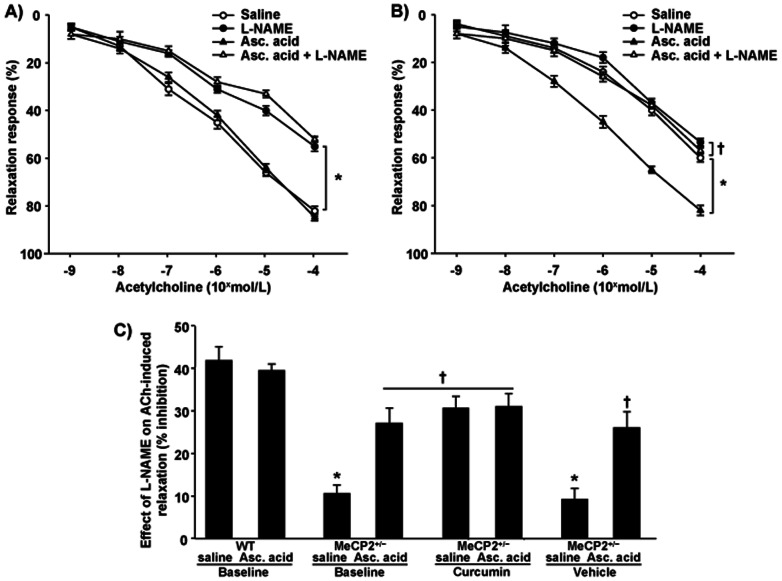
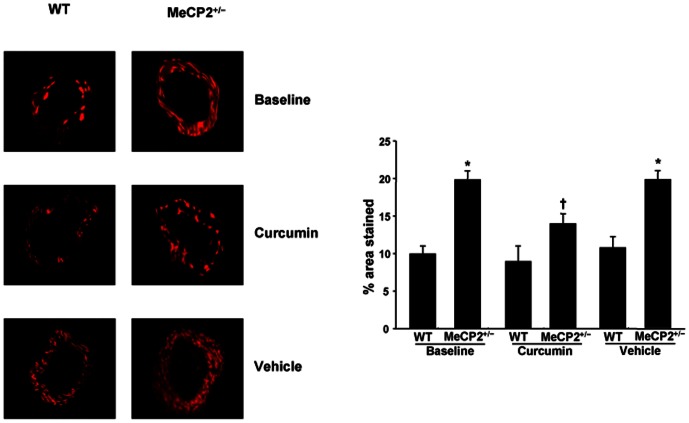
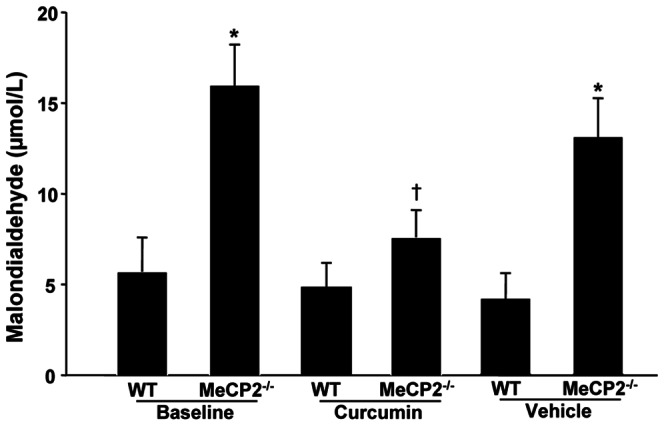
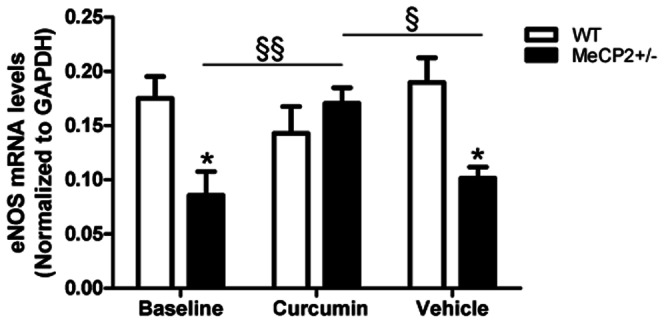
Mutations in the coding sequence of the X-linked gene MeCP2 (Methyl CpG-binding protein) are present in around 80% of patients with Rett Syndrome, a common cause of intellectual disability in female and to date without any effective pharmacological treatment. A relevant, and so far unexplored feature of RTT patients, is a marked reduction in peripheral circulation. To investigate the relationship between loss of MeCP2 and this clinical aspect, we used the MeCP2 null mouse model B6.129SF1-MeCP2tm1Jae for functional and pharmacological studies. Functional experiments were performed on isolated resistance mesenteric vessels, mounted on a pressurized myograph. Vessels from female MeCP2(+/-) mice show a reduced endothelium-dependent relaxation, due to a reduced Nitric Oxide (NO) availability secondary to an increased Reactive Oxygen Species (ROS) generation. Such functional aspects are associated with an intravascular increase in superoxide anion production, and a decreased vascular eNOS expression. These alterations are reversed by curcumin administration (5% (w/w) dietary curcumin for 21 days), which restores endothelial NO availability, decreases intravascular ROS production and normalizes vascular eNOS gene expression. In conclusion our findings highlight alterations in the vascular/endothelial system in the absence of a correct function of MeCP2, and uncover related cellular/molecular mechanisms that are rescued by an anti-oxidant treatment.
X 连锁基因 MeCP2(甲基 CpG 结合蛋白)编码序列中的突变存在于大约 80%的雷特综合征患者中,雷特综合征是女性智力残疾的常见原因,迄今为止尚无任何有效的药物治疗方法。RTT 患者的一个相关但尚未被探索的特征是外周循环明显减少。为了研究 MeCP2 缺失与这一临床特征之间的关系,我们使用了 MeCP2 缺失小鼠模型 B6.129SF1-MeCP2tm1Jae 进行功能和药理学研究。功能实验在分离的肠系膜阻力血管上进行,这些血管安装在加压肌动描记器上。来自雌性 MeCP2(+/-) 小鼠的血管显示出内皮依赖性松弛减少,这是由于一氧化氮(NO)可用性降低,这是由于活性氧(ROS)生成增加所致。这些功能方面与血管内超氧阴离子产生增加以及血管内皮型一氧化氮合酶(eNOS)表达减少有关。这些改变可通过姜黄素给药(21 天每天 5%(w/w)饮食姜黄素)逆转,这可恢复内皮细胞 NO 的可用性,减少血管内 ROS 的产生,并使血管 eNOS 基因表达正常化。总之,我们的研究结果强调了 MeCP2 功能异常时血管/内皮系统的改变,并揭示了相关的细胞/分子机制,这些机制可通过抗氧化治疗得到挽救。