Program in Barrier Immunity and Repair, Mucosal Immunology Section, Laboratory of Parasitic Diseases, National Institute of Allergy and Infectious Diseases (NIAID), National Institutes of Health (NIH), Bethesda, Maryland, USA.
Nat Med. 2013 Jun;19(6):713-21. doi: 10.1038/nm.3189. Epub 2013 May 26.
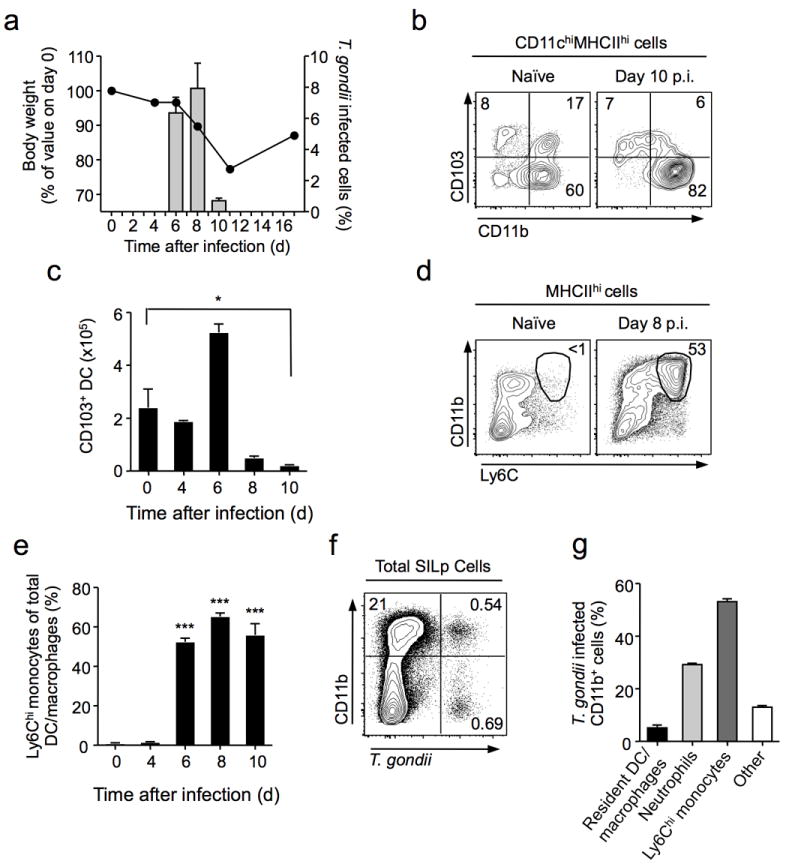
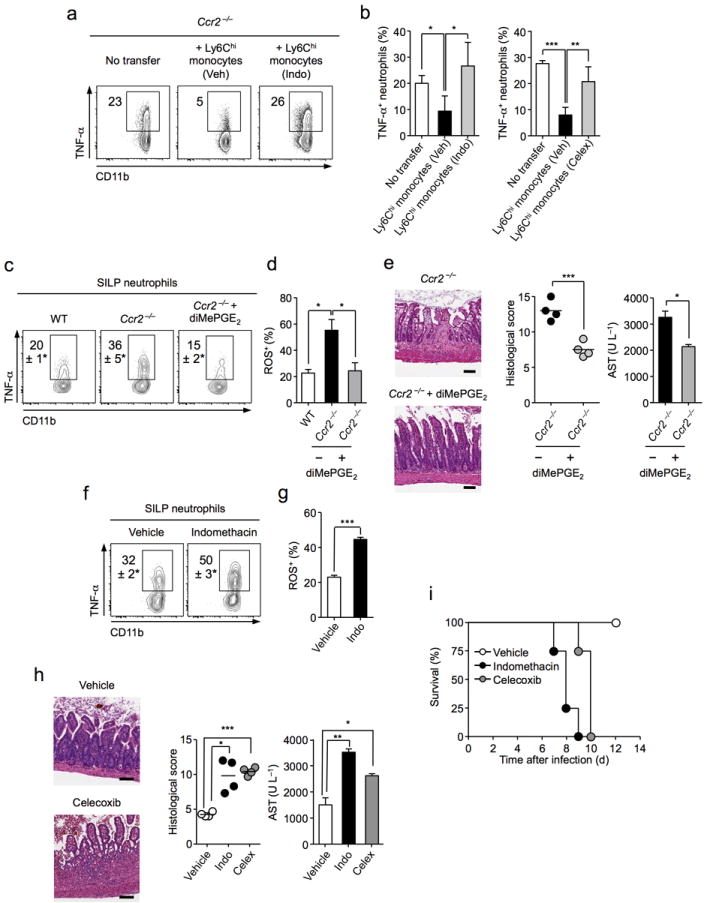
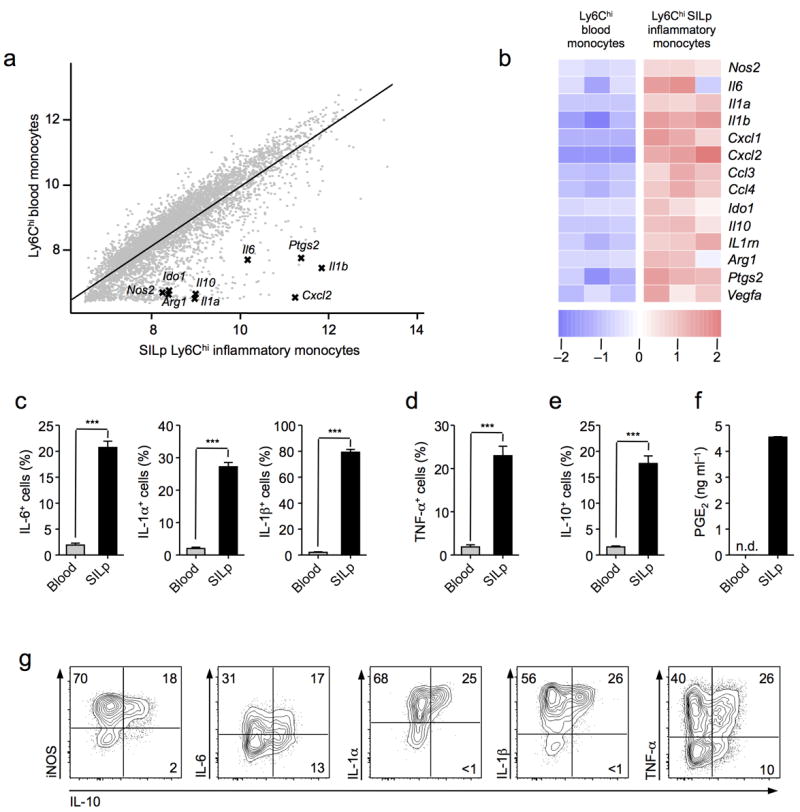
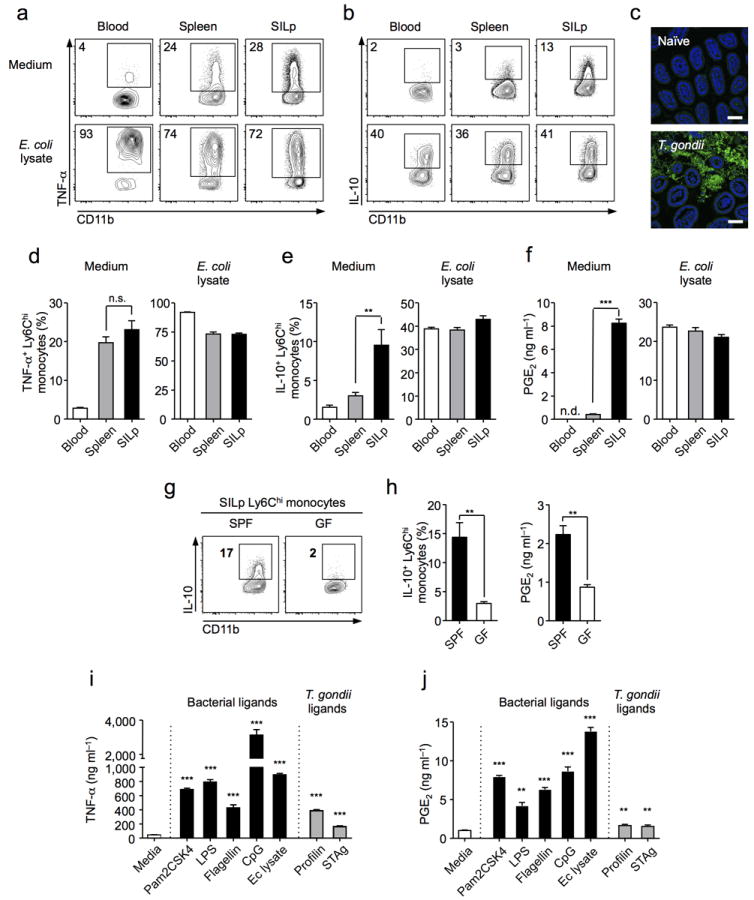
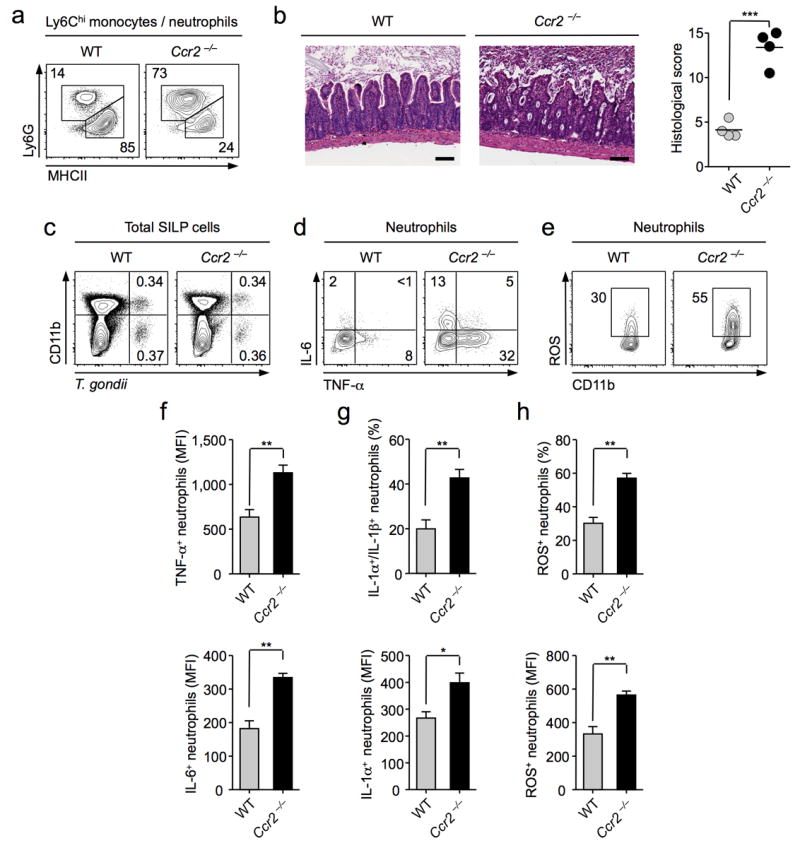
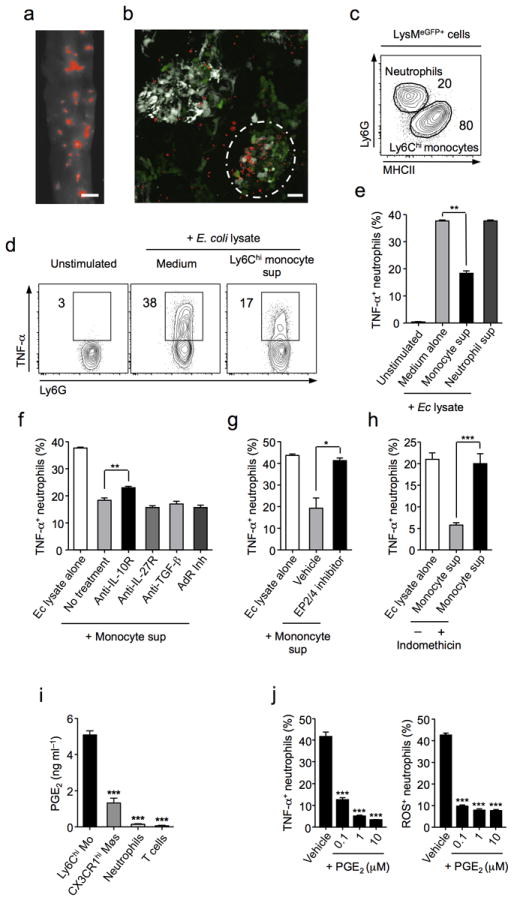
The commensal flora can promote both immunity to pathogens and mucosal inflammation. How commensal-driven inflammation is regulated in the context of infection remains poorly understood. Here, we show that during acute mucosal infection of mice with Toxoplasma gondii, inflammatory monocytes acquire a tissue-specific regulatory phenotype associated with production of the lipid mediator prostaglandin E2 (PGE2). Notably, in response to commensals, inflammatory monocytes can directly inhibit neutrophil activation in a PGE2-dependent manner. Further, in the absence of inflammatory monocytes, mice develop severe neutrophil-mediated pathology in response to pathogen challenge that can be controlled by PGE2 analog treatment. Complementing these findings, inhibition of PGE2 led to enhanced neutrophil activation and host mortality after infection. These data demonstrate a previously unappreciated dual action of inflammatory monocytes in controlling pathogen expansion while limiting commensal-mediated damage to the gut. Collectively, our results place inflammatory monocyte-derived PGE2 at the center of a commensal-driven regulatory loop required to control host-commensal dialog during pathogen-induced inflammation.
共生菌群既能促进对病原体的免疫,又能促进黏膜炎症。共生驱动的炎症在感染背景下如何得到调节仍知之甚少。在这里,我们表明,在急性黏膜感染弓形虫的小鼠中,炎症性单核细胞获得了一种与脂质介质前列腺素 E2(PGE2)产生相关的组织特异性调节表型。值得注意的是,炎症性单核细胞可以直接以 PGE2 依赖的方式抑制中性粒细胞的激活。此外,在没有炎症性单核细胞的情况下,小鼠在受到病原体挑战时会发生严重的中性粒细胞介导的病理学反应,而 PGE2 类似物治疗可以控制这种反应。这些发现的补充表明,抑制 PGE2 会导致感染后中性粒细胞的激活和宿主死亡率增加。这些数据表明,炎症性单核细胞在控制病原体扩增的同时,限制共生菌介导的肠道损伤方面具有以前未被认识的双重作用。总的来说,我们的研究结果表明,炎症性单核细胞衍生的 PGE2 处于共生驱动的调节环的中心位置,该调节环是在病原体诱导的炎症期间控制宿主-共生体对话所必需的。