Ge Phillip S, Watson Rabindra R, Chen David C, Muthusamy V Raman
Department of Medicine, UCLA Medical Center, Los Angeles, CA 90095, USA.
Case Rep Gastrointest Med. 2013;2013:652597. doi: 10.1155/2013/652597. Epub 2013 Apr 22.
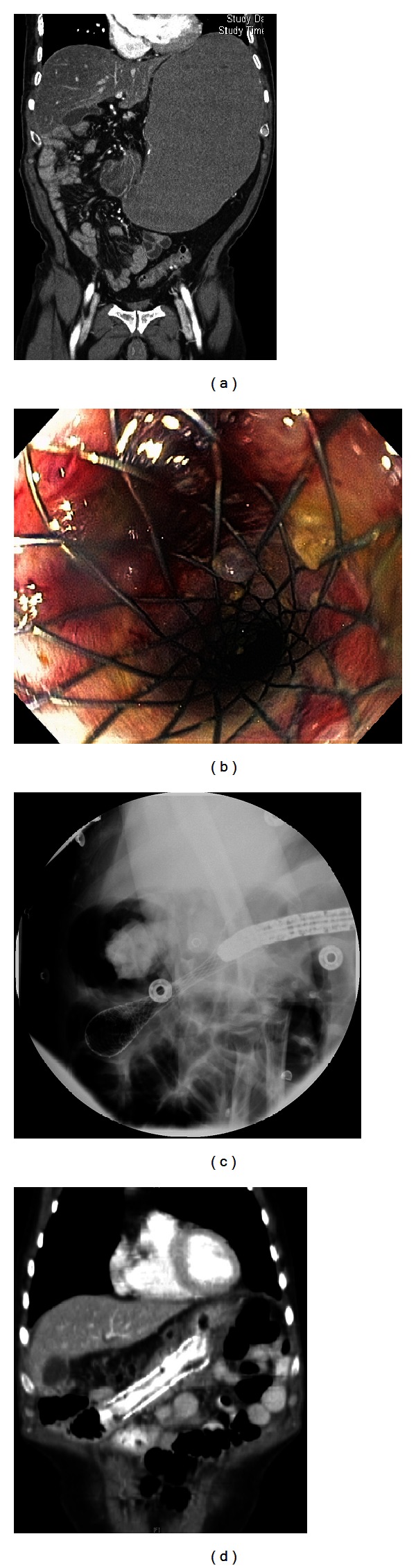
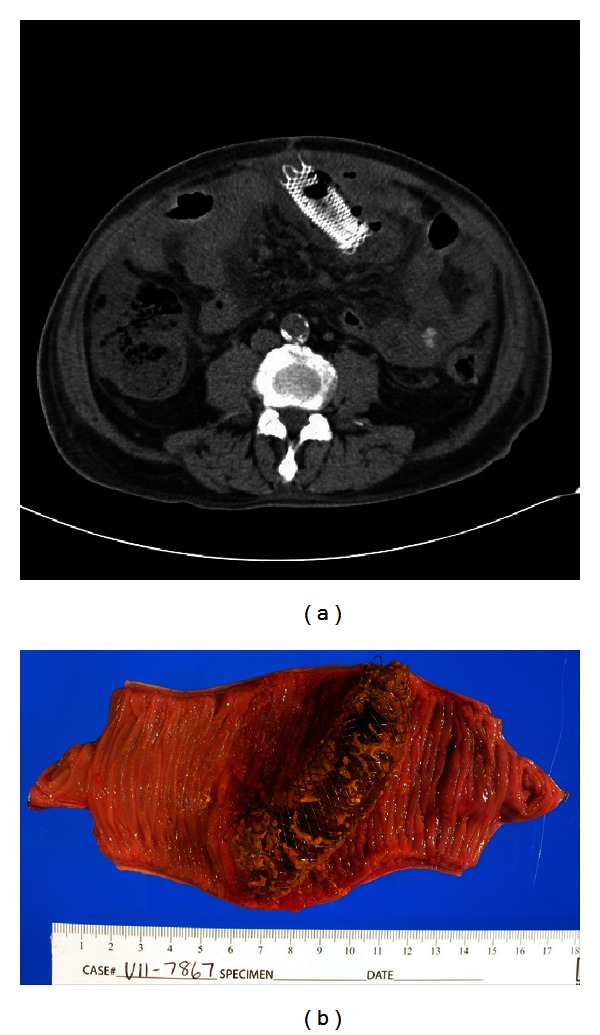
Enteral stents are increasingly utilized to palliate malignant gastrointestinal obstruction; however, they can be associated with significant complications. We describe an unusual case of a 67-year-old male with gastric adenocarcinoma who underwent placement of a WallFlex metallic enteral stent to relieve a malignant gastric outlet obstruction. Four months later, while actively undergoing chemotherapy, he developed acute abdominal pain and was found to have delayed stent migration and jejunal perforation. He required emergent surgical resection of the perforated segment of jejunum. Delayed migration of the WallFlex enteral stent with subsequent visceral perforation has yet to be reported in the literature. Chemotherapy after stent placement has been associated with an increase in maintenance of stent patency; however, shrinkage of the local tumor by chemoradiation may increase the risk of stent migration. Care should be taken in placing enteral stents in patients undergoing continued treatment of their malignancy, as delayed migration of even uncovered stents may occur.
肠道支架越来越多地用于缓解恶性胃肠道梗阻;然而,它们可能会引发严重并发症。我们描述了一例不同寻常的病例,一名67岁的胃腺癌男性患者接受了WallFlex金属肠道支架置入术,以缓解恶性胃出口梗阻。四个月后,在积极接受化疗期间,他出现急性腹痛,经检查发现支架延迟迁移并导致空肠穿孔。他需要紧急手术切除空肠穿孔段。WallFlex肠道支架延迟迁移并随后导致内脏穿孔的情况在文献中尚未见报道。支架置入后进行化疗与支架通畅维持时间增加有关;然而,放化疗导致局部肿瘤缩小可能会增加支架迁移的风险。对于正在接受恶性肿瘤持续治疗的患者,放置肠道支架时应格外小心,因为即使是未覆盖的支架也可能发生延迟迁移。