Setzer Florian, Oschatz Karsten, Hueter Lars, Schmidt Barbara, Schwarzkopf Konrad, Schreiber Torsten
Crit Care. 2013 May 27;17(3):R99. doi: 10.1186/cc12744.
The principal mechanisms of ventilator induced lung injury (VILI) have been investigated in numerous animal studies. However, prospective data on the effect of old age on VILI are limited. Under the hypothesis that susceptibility to VILI is increased in old age, we investigated the pulmonary and extrapulmonary effects of mechanical ventilation with high tidal volume (VT) in old compared to young adult animals.
Old (19.1±3.0 months) and young adult (4.4±1.3 months) male Wistar rats were anesthetized and mechanically ventilated (positive end-expiratory pressure 5 cmH2O, fraction of inspired oxygen 0.4, respiratory rate 40/minute) with a tidal volume (VT) of either 8, 16 or 24 ml/kg for four hours.
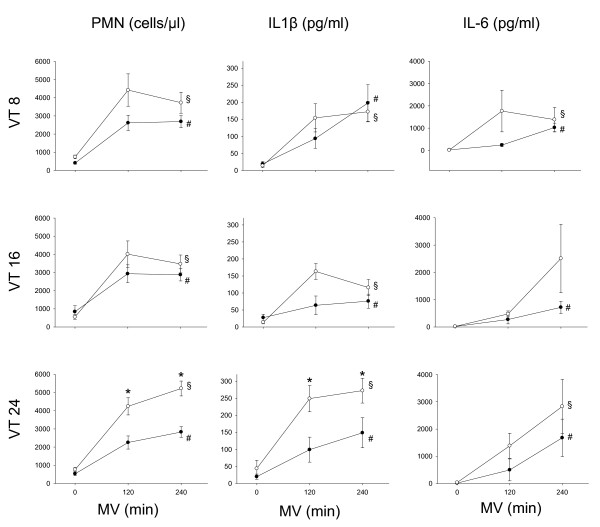
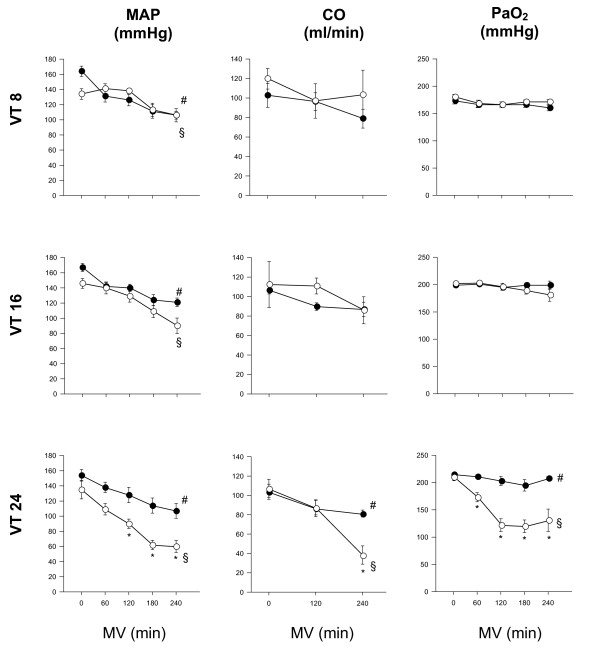
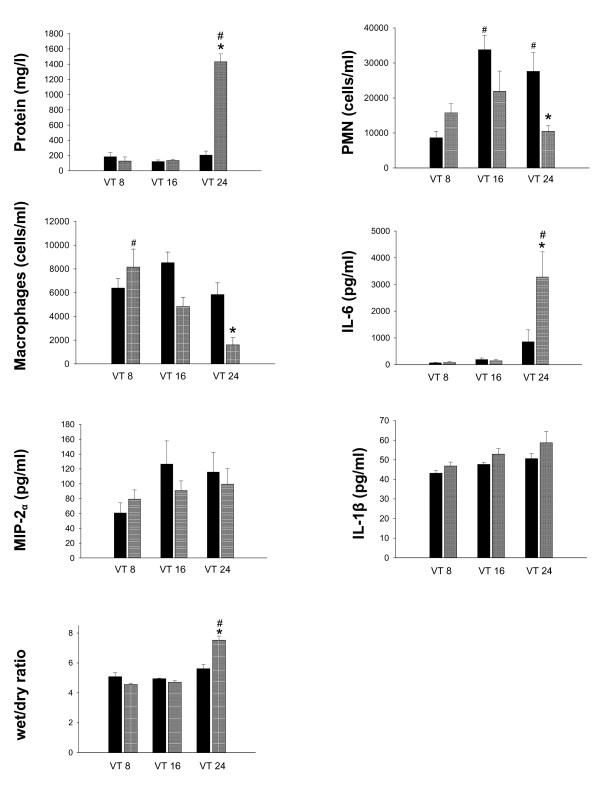
Compared to young adult animals, high VT (24 ml/kg body weight) caused more lung injury in old animals as indicated by decreased oxygenation (arterial oxygen tension (PaO2): 208±3 vs. 131±20 mmHg; P<0.05), increased lung wet-to-dry-weight ratio (5.61±0.29 vs. 7.52±0.27; P<0.05), lung lavage protein (206±52 mg/l vs. 1,432±101; P<0.05) and cytokine (IL-6: 856±448 vs. 3,283±943 pg/ml; P<0.05) concentration. In addition, old animals ventilated with high VT had more systemic inflammation than young animals (IL-1β: 149±44 vs. 272±36 pg/ml; P<0.05--young vs. old, respectively).
Ventilation with unphysiologically large tidal volumes is associated with more lung injury in old compared to young rats. Aggravated pulmonary and systemic inflammation is a key finding in old animals developing VILI.
众多动物研究已对呼吸机诱导性肺损伤(VILI)的主要机制进行了探究。然而,关于老年对VILI影响的前瞻性数据有限。基于老年个体对VILI易感性增加的假设,我们研究了与年轻成年动物相比,大潮气量(VT)机械通气对老年动物肺部和肺外的影响。
将老年(19.1±3.0个月)和年轻成年(4.4±1.3个月)雄性Wistar大鼠麻醉,并分别给予8、16或24ml/kg的潮气量进行机械通气(呼气末正压5cmH₂O,吸入氧分数0.4,呼吸频率40次/分钟),持续4小时。
与年轻成年动物相比,大潮气量(24ml/kg体重)导致老年动物出现更多肺损伤,表现为氧合降低(动脉血氧分压(PaO₂):208±3 vs. 131±20mmHg;P<0.05)、肺湿干重比增加(5.61±0.29 vs. 7.52±0.27;P<0.05)、肺灌洗蛋白(206±52mg/l vs. 1432±101;P<0.05)和细胞因子(IL-6:856±448 vs. 3283±943pg/ml;P<0.05)浓度升高。此外,接受大潮气量通气的老年动物比年轻动物有更严重的全身炎症反应(IL-1β:149±44 vs. 272±36pg/ml;P<0.05——分别为年轻与老年)。
与年轻大鼠相比,使用非生理性大潮气量通气会使老年大鼠出现更多肺损伤。在发生VILI的老年动物中,肺部和全身炎症加重是一个关键发现。