Yale Stem Cell Center, Yale University, New Haven, Connecticut 06520, USA.
Mol Reprod Dev. 2013 Aug;80(8):632-64. doi: 10.1002/mrd.22195. Epub 2013 Jun 27.
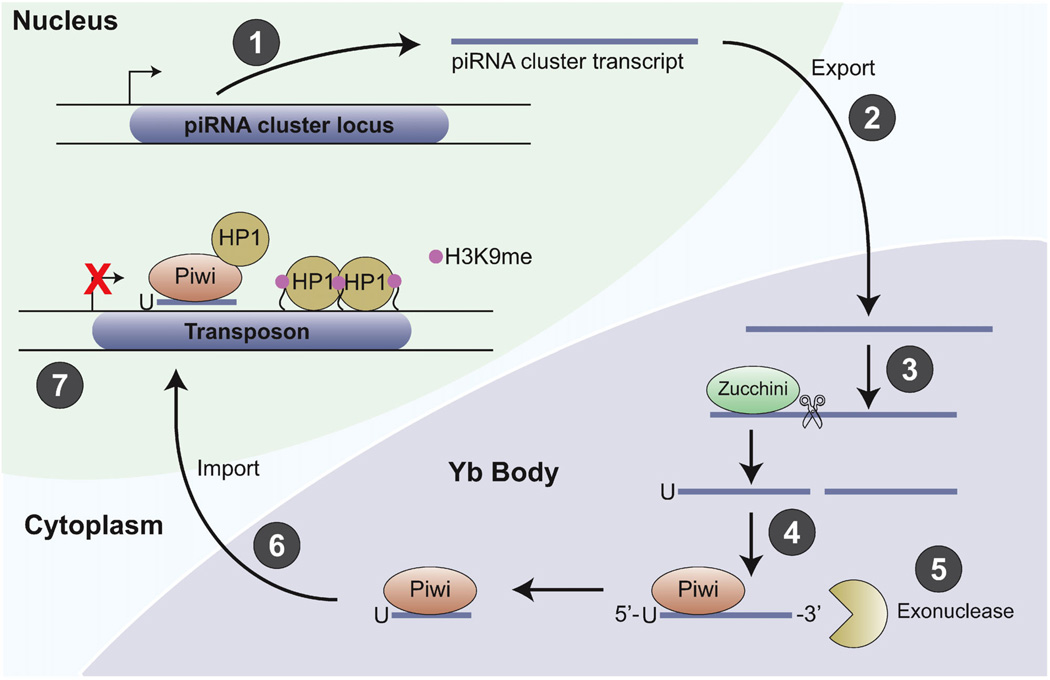
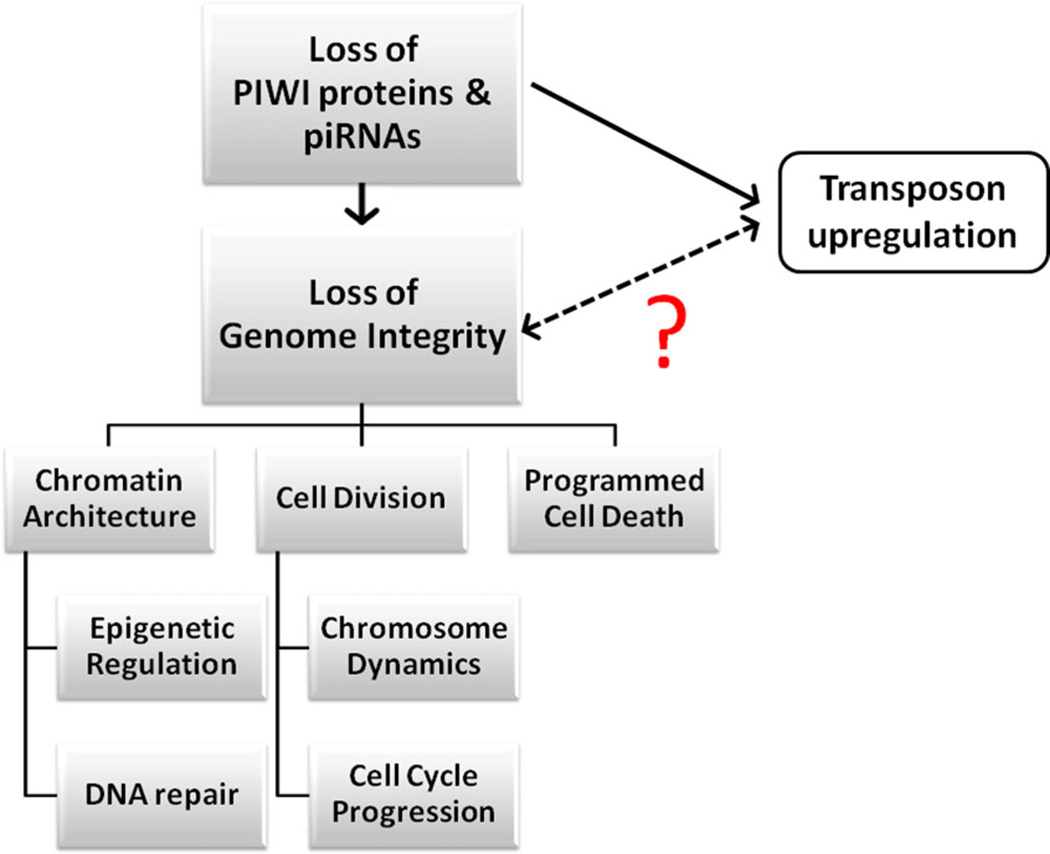
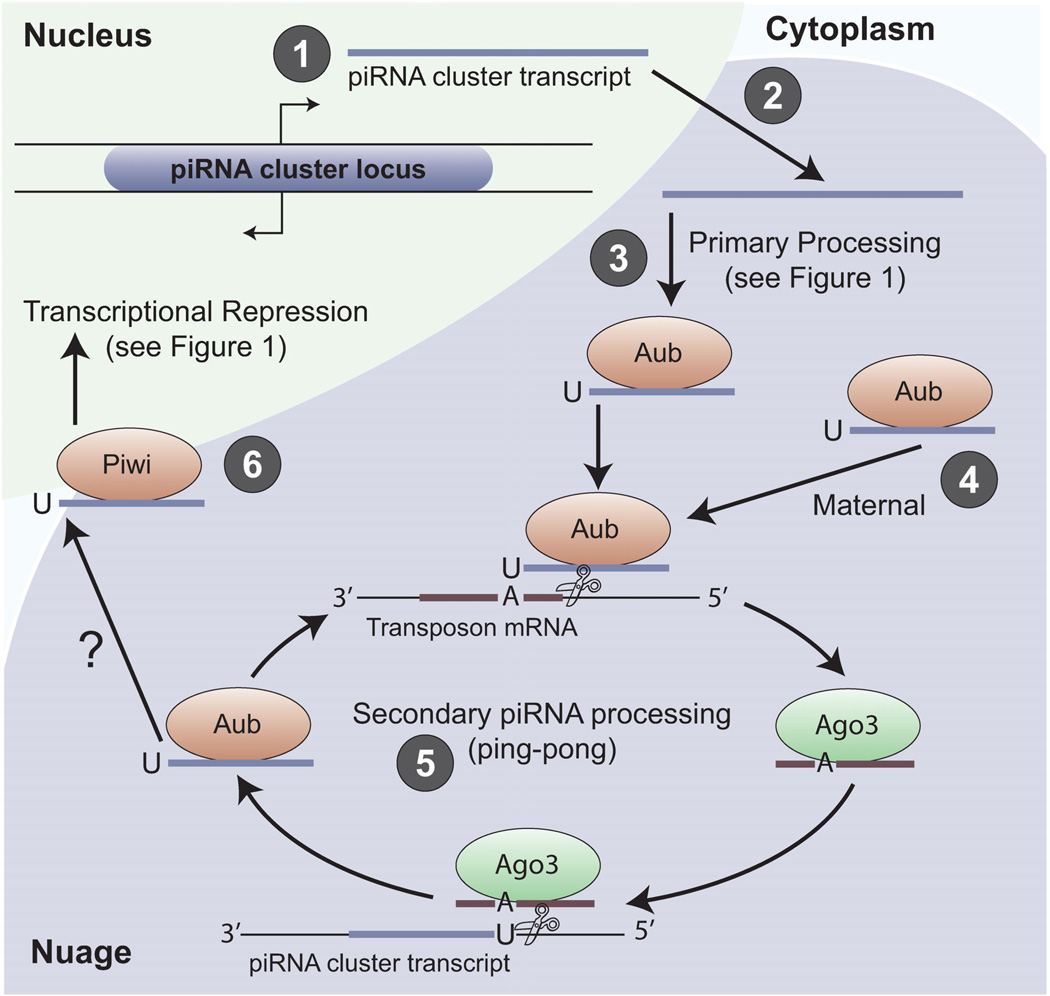
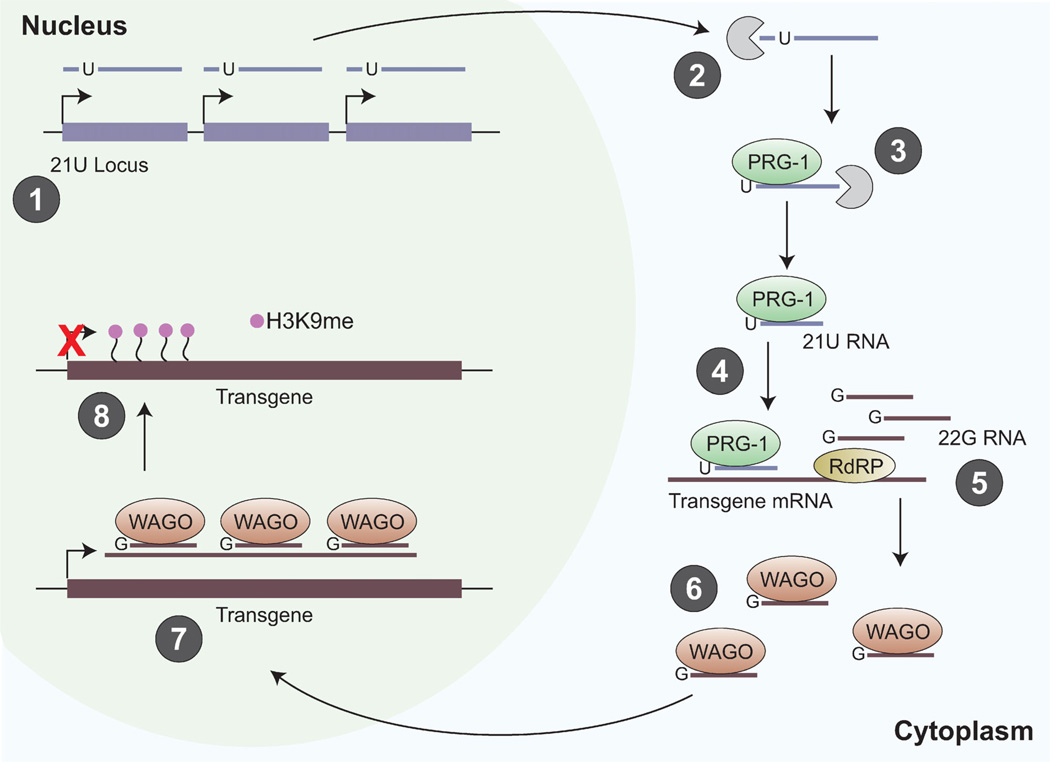
Small RNAs impact several cellular processes through gene regulation. Argonaute proteins bind small RNAs to form effector complexes that control transcriptional and post-transcriptional gene expression. PIWI proteins belong to the Argonaute protein family, and bind PIWI-interacting RNAs (piRNAs). They are highly abundant in the germline, but are also expressed in some somatic tissues. The PIWI/piRNA pathway has a role in transposon repression in Drosophila, which occurs both by epigenetic regulation and post-transcriptional degradation of transposon mRNAs. These functions are conserved, but clear differences in the extent and mechanism of transposon repression exist between species. Mutations in piwi genes lead to the upregulation of transposon mRNAs. It is hypothesized that this increased transposon mobilization leads to genomic instability and thus sterility, although no causal link has been established between transposon upregulation and genome instability. An alternative scenario could be that piwi mutations directly affect genomic instability, and thus lead to increased transposon expression. We propose that the PIWI/piRNA pathway controls genome stability in several ways: suppression of transposons, direct regulation of chromatin architecture and regulation of genes that control important biological processes related to genome stability. The PIWI/piRNA pathway also regulates at least some, if not many, protein-coding genes, which further lends support to the idea that piwi genes may have broader functions beyond transposon repression. An intriguing possibility is that the PIWI/piRNA pathway is using transposon sequences to coordinate the expression of large groups of genes to regulate cellular function.
小 RNA 通过基因调控影响多种细胞过程。Argonaute 蛋白与小 RNA 结合形成效应复合物,控制转录和转录后基因表达。PIWI 蛋白属于 Argonaute 蛋白家族,与 PIWI 相互作用 RNA(piRNA)结合。它们在生殖系中高度丰富,但也在一些体组织中表达。PIWI/piRNA 途径在果蝇中转座子抑制中起作用,这种抑制作用既通过表观遗传调控,也通过转座子 mRNA 的转录后降解来实现。这些功能是保守的,但在不同物种中转座子抑制的程度和机制存在明显差异。piwi 基因突变导致转座子 mRNA 的上调。据推测,这种转座子的激活会导致基因组不稳定,从而导致不育,尽管尚未在转座子上调和基因组不稳定性之间建立因果关系。另一种情况可能是 piwi 突变直接影响基因组不稳定性,从而导致转座子表达增加。我们提出 PIWI/piRNA 途径通过多种方式控制基因组稳定性:抑制转座子、直接调节染色质结构以及调节与基因组稳定性相关的重要生物学过程的基因。PIWI/piRNA 途径还调节至少一些(如果不是许多)蛋白质编码基因,这进一步支持了 piwi 基因可能具有超越转座子抑制的更广泛功能的观点。一个有趣的可能性是,PIWI/piRNA 途径利用转座子序列来协调大量基因的表达,以调节细胞功能。