Leibniz Institute for Neurobiology Magdeburg, Germany.
Front Psychol. 2013 May 14;4:262. doi: 10.3389/fpsyg.2013.00262. eCollection 2013.
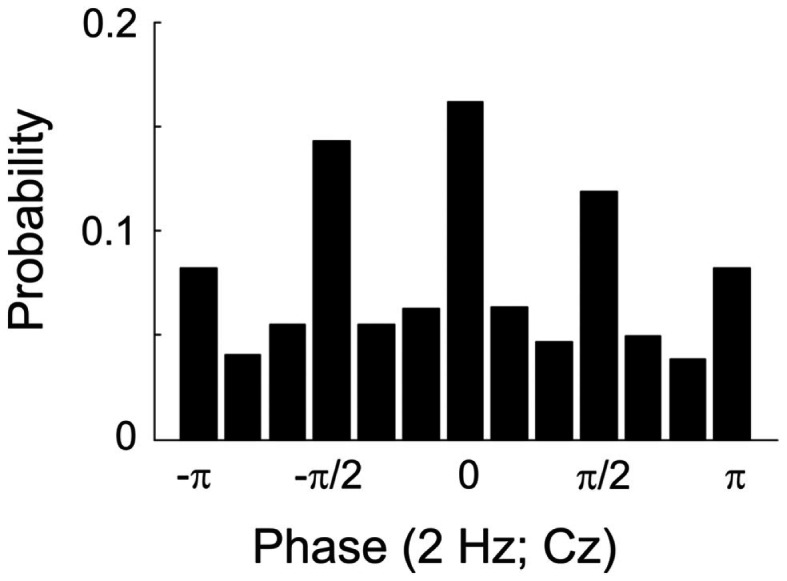
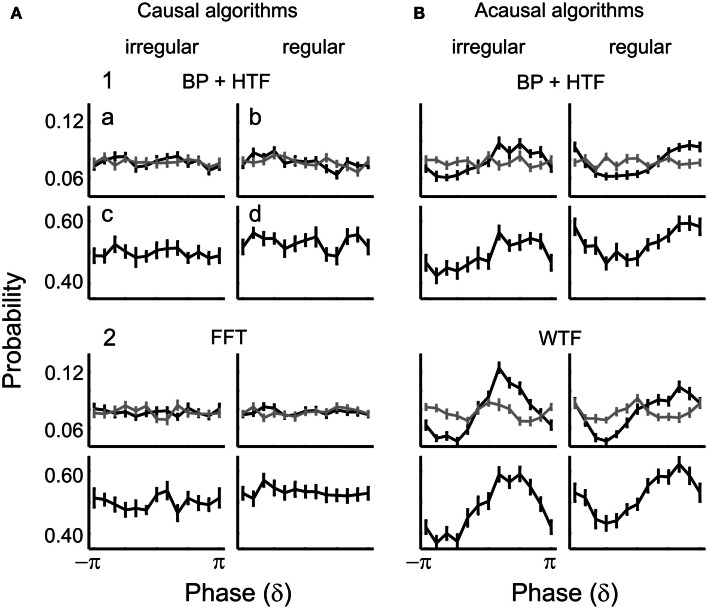
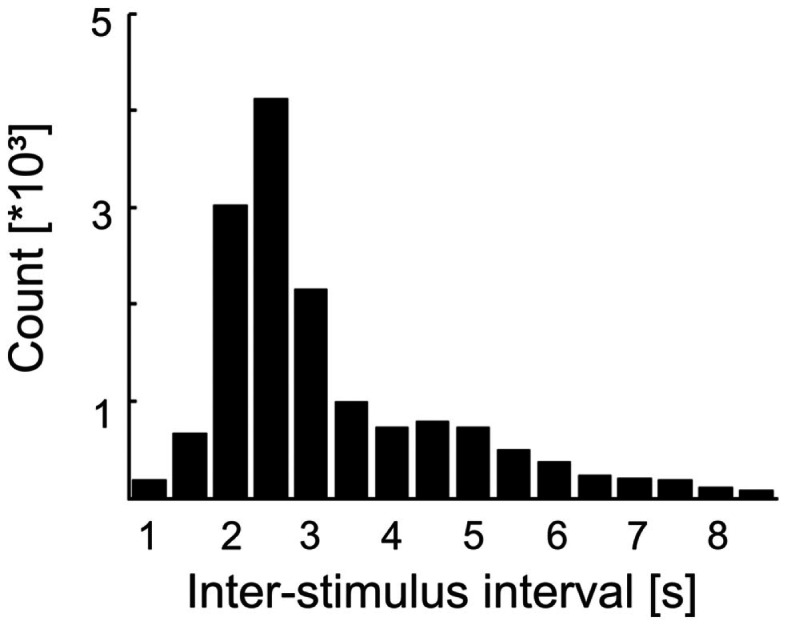
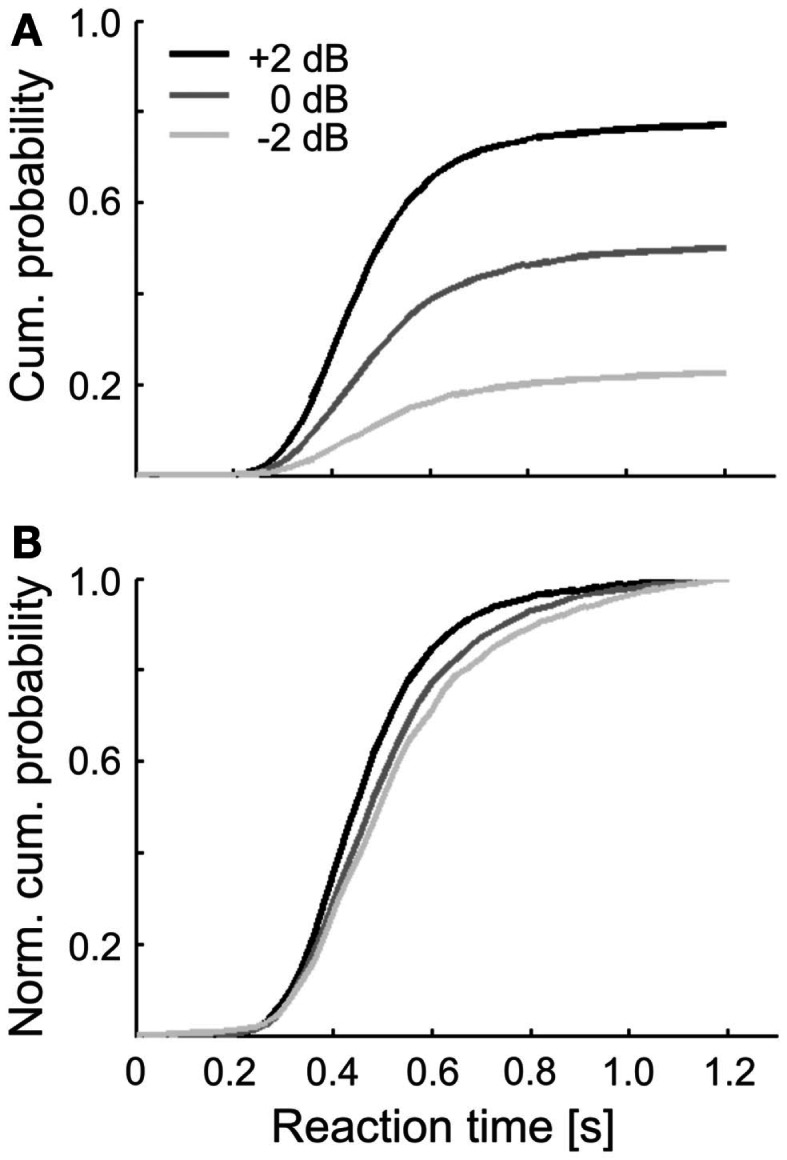
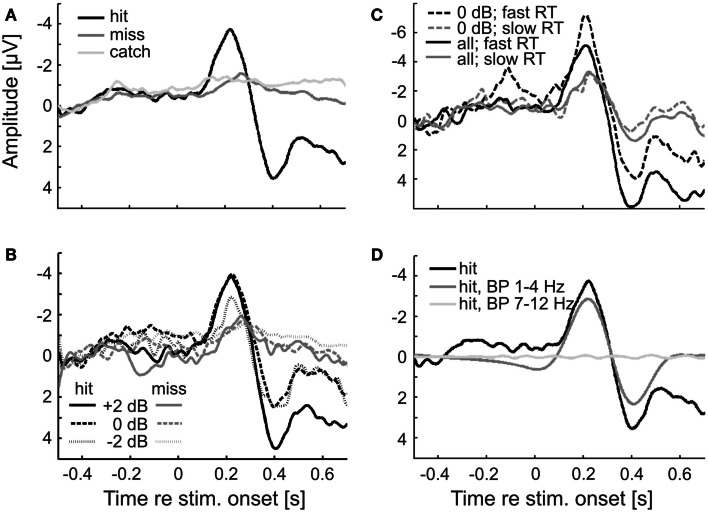
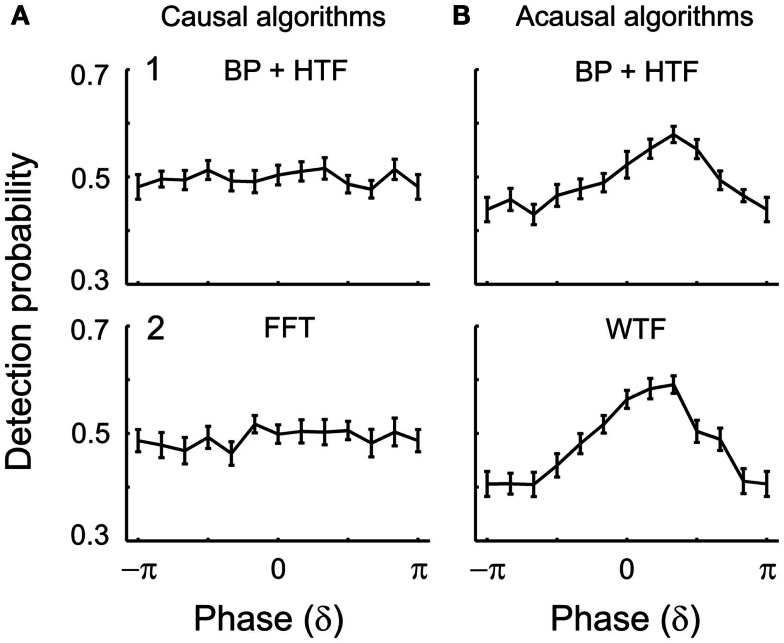
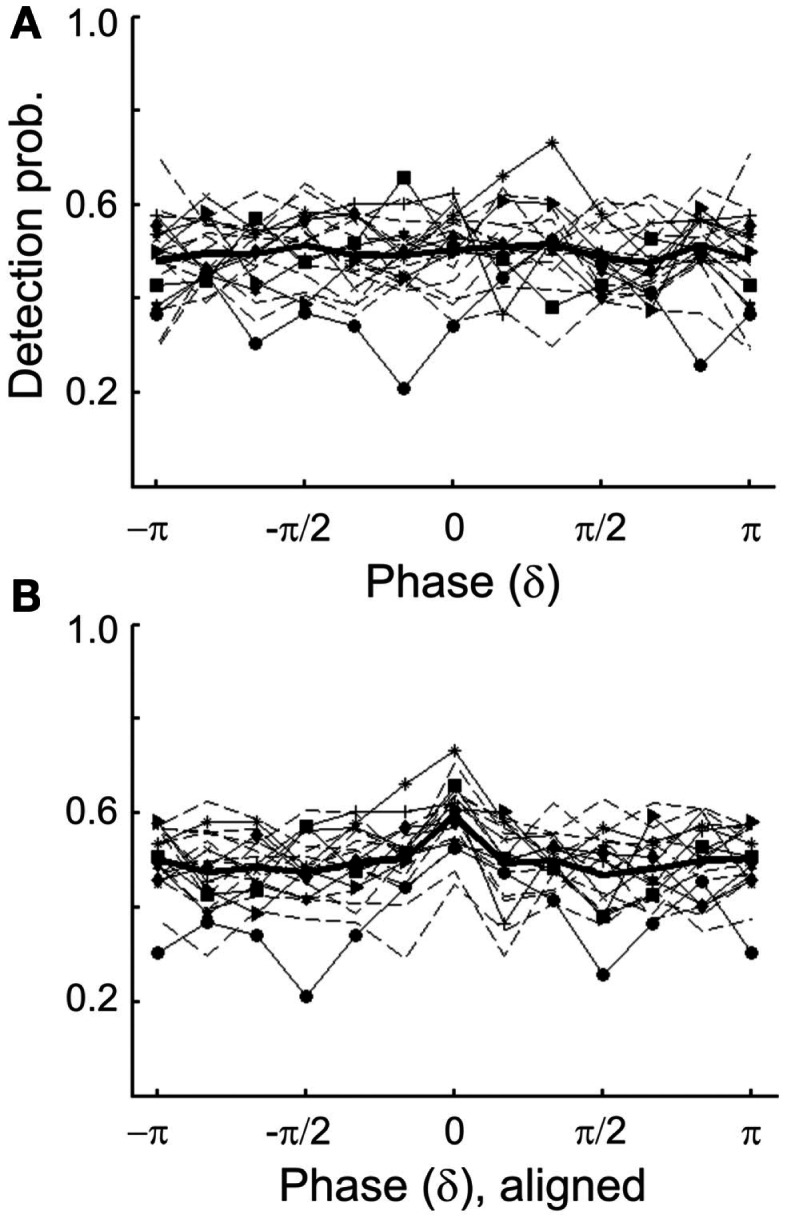
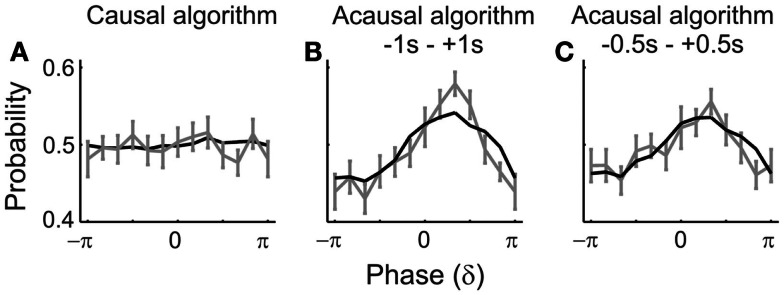
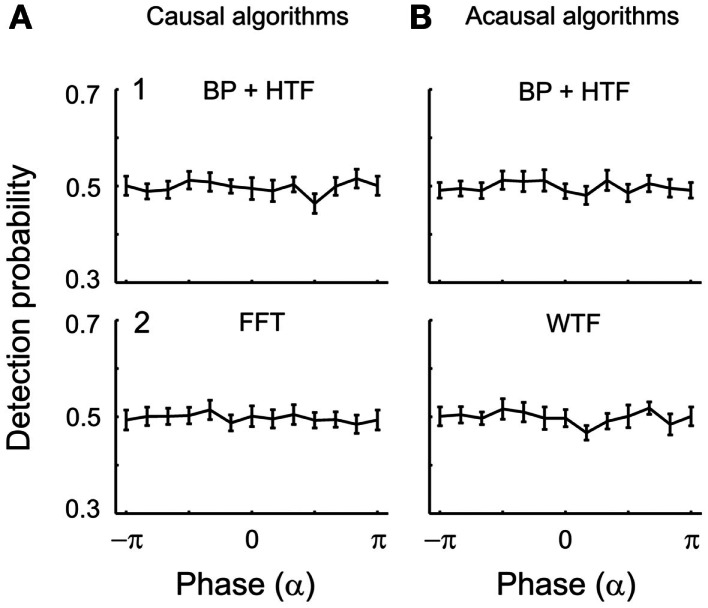
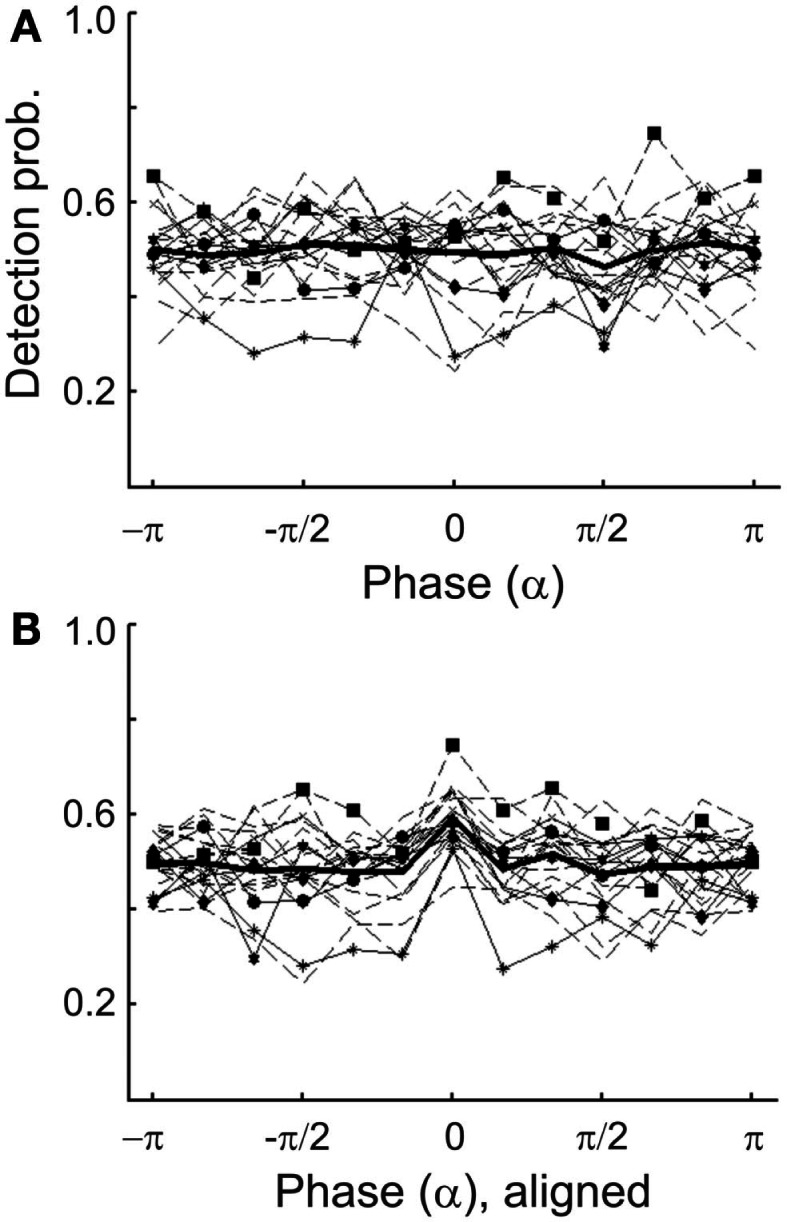
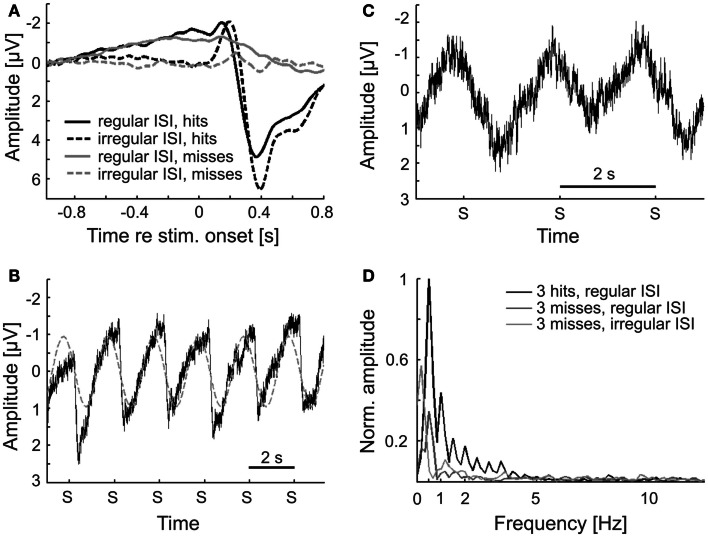
Low-frequency oscillations in the electroencephalogram (EEG) are thought to reflect periodic excitability changes of large neural networks. Consistent with this notion, detection probability of near-threshold somatosensory, visual, and auditory targets has been reported to co-vary with the phase of oscillations in the EEG. In audition, entrainment of δ-oscillations to the periodic occurrence of sounds has been suggested to function as a mechanism of attentional selection. Here, we examine in humans whether the detection of brief near-threshold sounds in quiet depends on the phase of EEG oscillations. When stimuli were presented at irregular intervals, we did not find a systematic relationship between detection probability and phase. When stimuli were presented at regular intervals (2-s), reaction times were significantly shorter and we observed phase entrainment of EEG oscillations corresponding to the frequency of stimulus presentation (0.5 Hz), revealing an adjustment of the system to the regular stimulation. The amplitude of the entrained oscillation was higher for hits than for misses, suggesting a link between entrainment and stimulus detection. However, detection was independent of phase at frequencies ≥1 Hz. Furthermore, we show that when the data are analyzed using acausal, though common, algorithms, an apparent "entrainment" of the δ-phase to presented stimuli emerges and detection probability appears to depend on δ-phase, similar to reports in the literature. We show that these effects are artifacts from phase distortion at stimulus onset by contamination with the event-related potential, which differs markedly for hits and misses. This highlights the need to carefully deal with this common problem, since otherwise it might bias and mislead this exciting field of research.
低频脑电(EEG)振荡被认为反映了大神经网络的周期性兴奋性变化。与这一观点一致,已报道接近阈下的体感、视觉和听觉目标的检测概率与 EEG 振荡的相位相关。在听觉中,δ 振荡与声音周期性出现的同步被认为是注意力选择的一种机制。在这里,我们在人类中检查了在安静环境下检测短暂接近阈下声音是否取决于 EEG 振荡的相位。当刺激以不规则的间隔呈现时,我们没有发现检测概率和相位之间存在系统关系。当刺激以规则的间隔(2 秒)呈现时,反应时间明显缩短,我们观察到 EEG 振荡与刺激呈现频率(0.5 Hz)的相位同步,表明系统对规则刺激进行了调整。与错过相比,同步的 EEG 振荡的幅度在命中时更高,这表明同步和刺激检测之间存在联系。然而,在频率≥1 Hz 时,检测与相位无关。此外,我们表明,当使用非因果(尽管常见)算法对数据进行分析时,会出现 δ 相位对呈现刺激的明显“同步”,并且检测概率似乎取决于 δ 相位,这与文献中的报告类似。我们表明,这些效应是由于事件相关电位的污染而在刺激开始时出现相位失真的伪影,对于命中和错过,这种效应差异显著。这突出表明需要仔细处理这个常见问题,否则它可能会影响和误导这个令人兴奋的研究领域。