Department of Pediatrics, the Third Affiliated Hospital of Zhengzhou University, Zhengzhou, Henan, China.
PLoS One. 2013 May 22;8(5):e63775. doi: 10.1371/journal.pone.0063775. Print 2013.
To investigate myeloid-derived suppressor cell (MDSC) accumulation and interleukin 10 (IL-10) and interleukin 12 (IL-12) levels during the onset of asthma in both pediatric patients and mouse models, as well as their possible roles in the development of asthma.
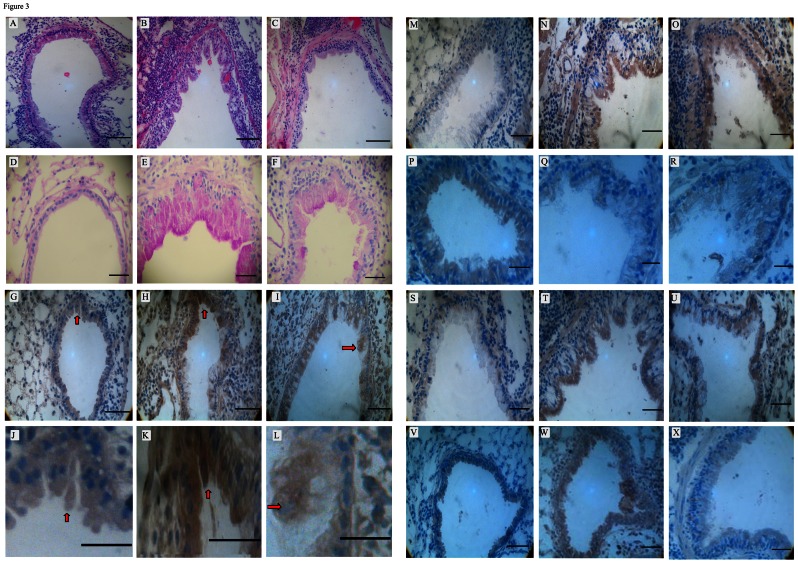
Peripheral blood samples were gathered from children with asthma attacks (attack group) and alleviated asthma (alleviated group), as well as two control groups, children with pneumonia and healthy children. The pathological characteristics of asthma in asthmatic mice, budesonide-treated asthmatic mice, and normal control mice were also evaluated by immunohistochemistry (IHC) and hematoxylin and eosin (H&E) staining.
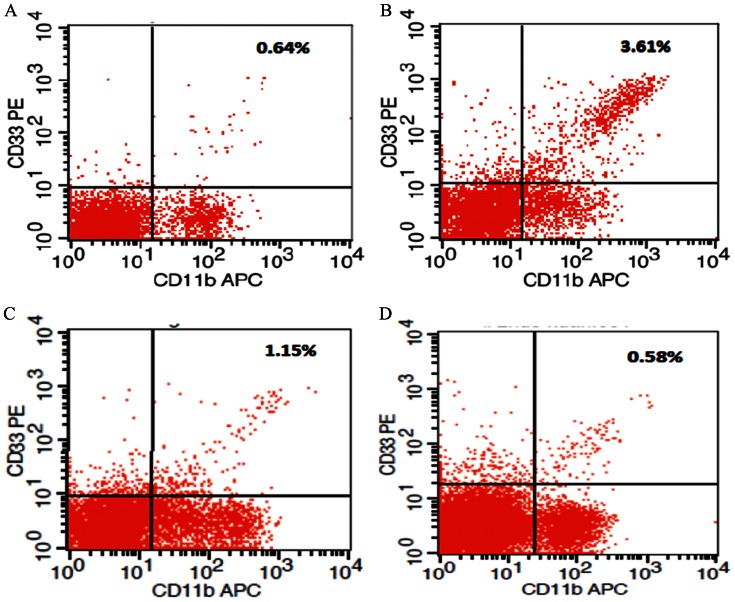
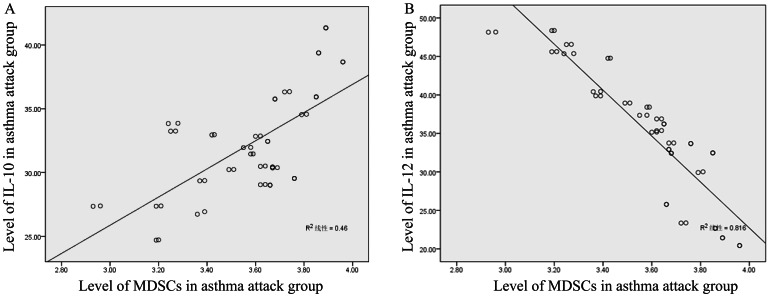
MDSC accumulation and serum IL-10 levels were significantly elevated in the children with asthma compared with the budesonide-treated alleviated group, normal healthy controls, and pneumonia controls (p<0.05), whereas those in the latter three groups showed no statistical differences (p>0.05). The level of serum IL-12 in the asthmatic children was drastically reduced compared to the budesonide-treated alleviated group, healthy controls, and pneumonia controls (p<0.05), whereas the latter three groups showed no significant differences in their serum IL-12 levels. The percentage of MDSCs in children with asthma was positively correlated with the level of serum IL-10 and negatively correlated with the level of serum IL-12. The levels of MDSCs and IL-10 in asthmatic mice were significantly higher than those in the normal control mice (both p<0.05) and were reduced after budesonide treatment (both p<0.05). IL-12 expression in the asthmatic mice was significantly lower than the control and was increased upon budesonide treatment (both p<0.05).
During the onset of asthma, the accumulation of MDSCs and the level of serum IL-10 increase, while the level of IL-12 decreases. These fluctuations may play an important role in the development of asthma.
研究小儿哮喘发作期及小鼠模型中髓系抑制细胞(MDSC)的积累、白细胞介素 10(IL-10)和白细胞介素 12(IL-12)的水平,及其在哮喘发病机制中的可能作用。
收集哮喘发作患儿(发作组)和哮喘缓解患儿(缓解组)、肺炎患儿和健康儿童外周血样本。通过免疫组织化学(IHC)和苏木精-伊红(H&E)染色评估哮喘小鼠、布地奈德治疗哮喘小鼠和正常对照小鼠的病理特征。
与布地奈德治疗缓解组、健康对照组和肺炎对照组相比,哮喘患儿的 MDSC 积累和血清 IL-10 水平显著升高(p<0.05),而后三组之间无统计学差异(p>0.05)。与布地奈德治疗缓解组、健康对照组和肺炎对照组相比,哮喘患儿血清 IL-12 水平明显降低(p<0.05),而后三组之间无显著差异。哮喘患儿 MDSC 百分比与血清 IL-10 水平呈正相关,与血清 IL-12 水平呈负相关。哮喘小鼠的 MDSC 水平和 IL-10 水平明显高于正常对照组(均 p<0.05),布地奈德治疗后降低(均 p<0.05)。哮喘小鼠的 IL-12 表达明显低于对照组,布地奈德治疗后增加(均 p<0.05)。
在哮喘发作期间,MDSC 的积累和血清 IL-10 水平增加,而 IL-12 水平降低。这些波动可能在哮喘的发生发展中起重要作用。