Department of Electrical Engineering, University of Washington Seattle, WA, USA ; Department of Bioengineering, Reykjavik University Reykjavik, Iceland.
Front Neurol. 2013 May 16;4:57. doi: 10.3389/fneur.2013.00057. eCollection 2013.
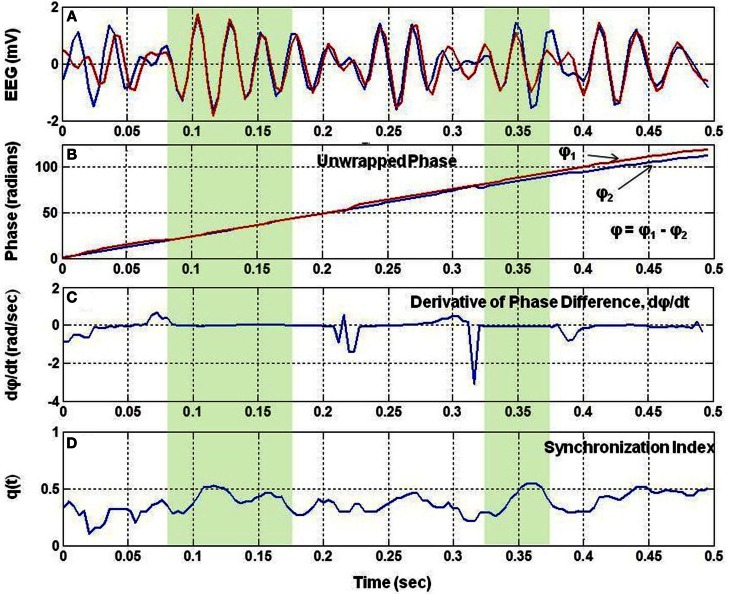
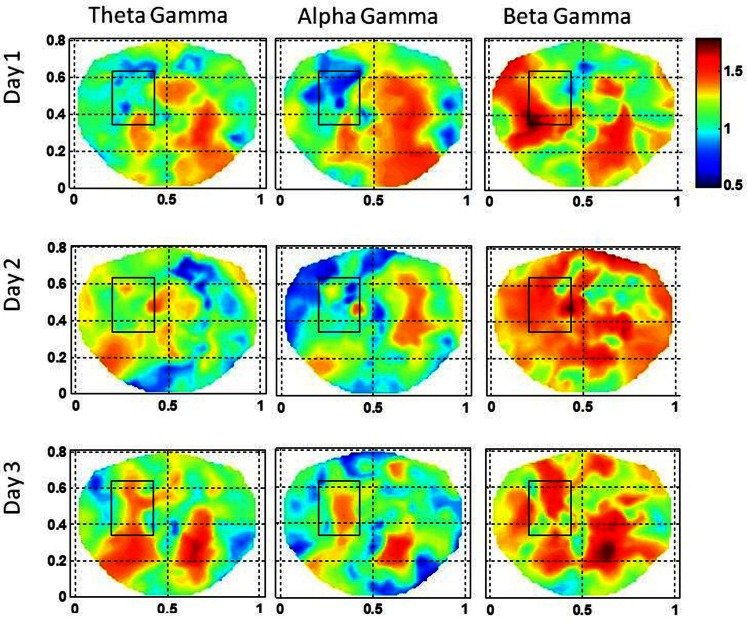
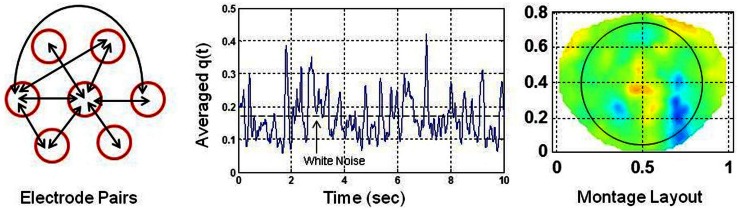
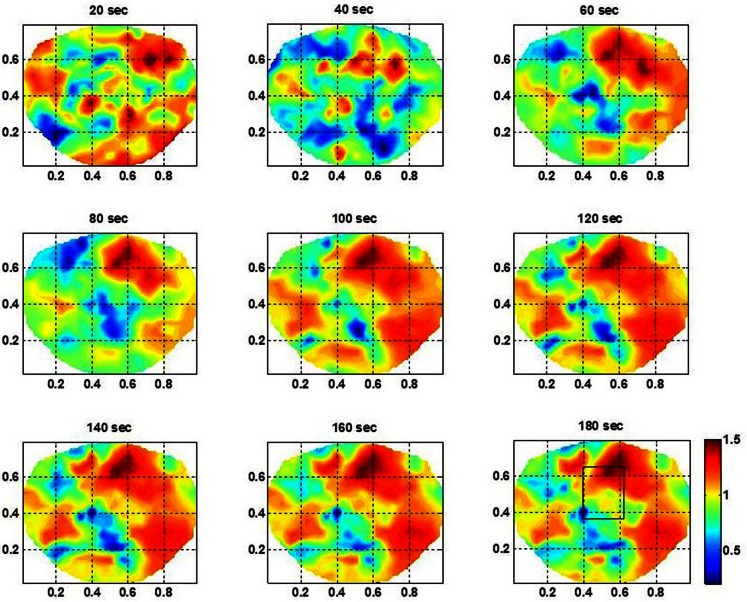
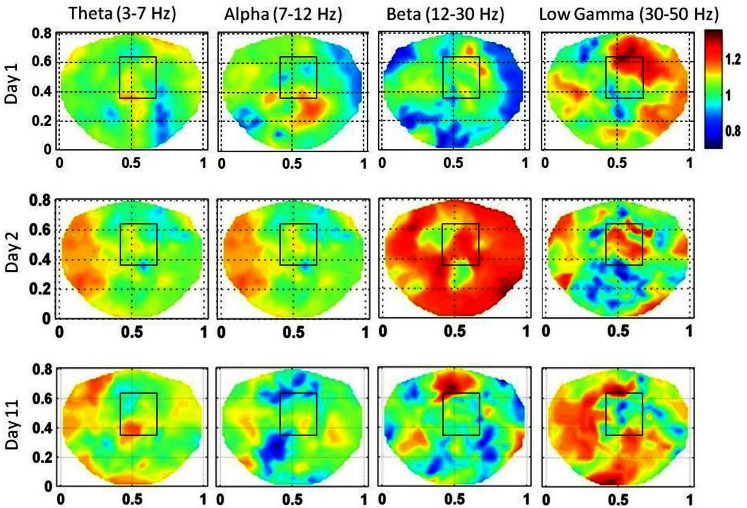
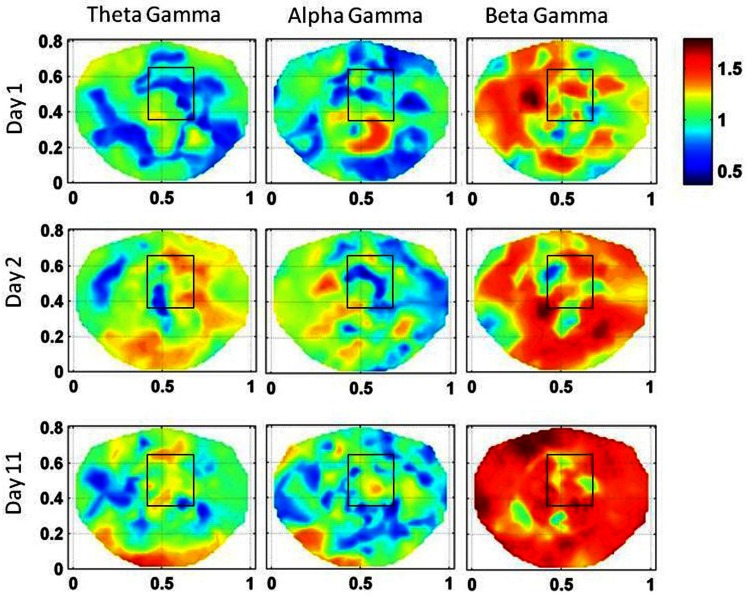
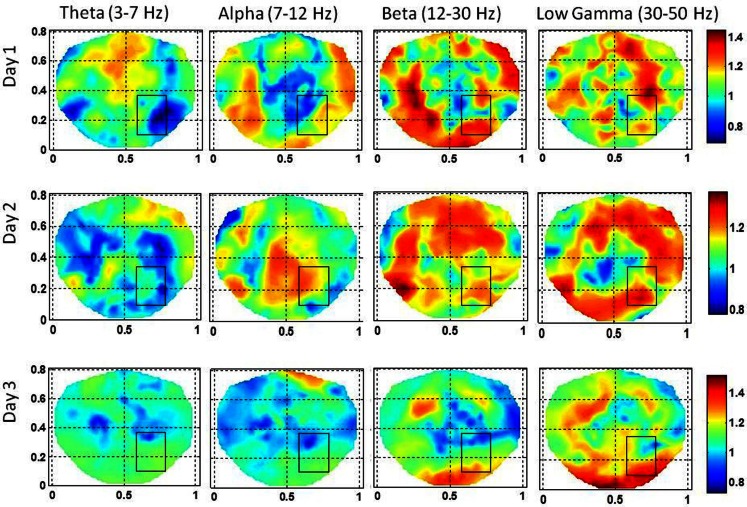
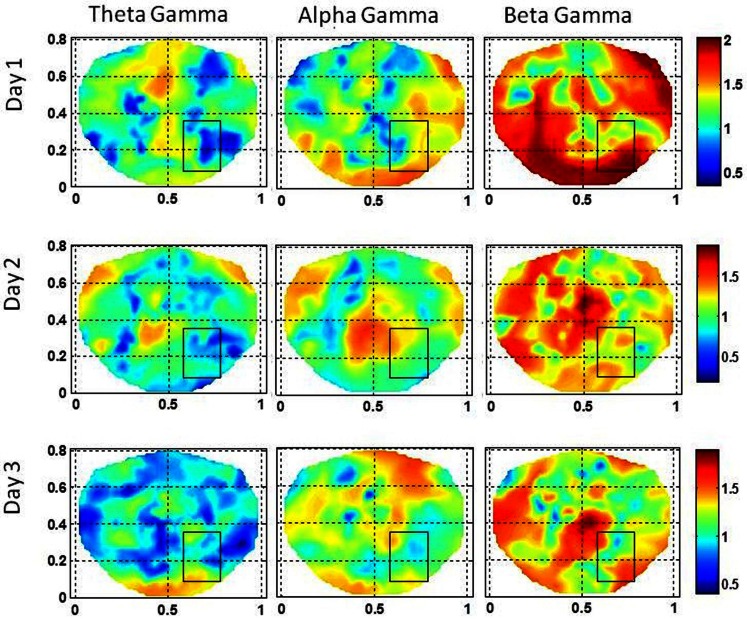
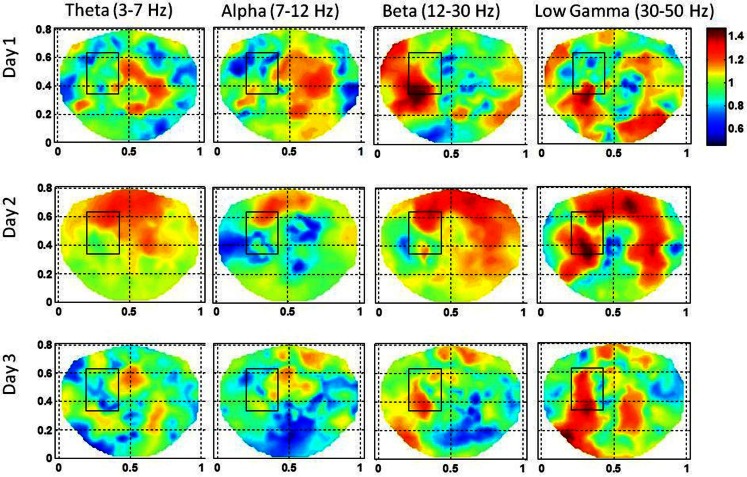
The stochastic behavior of the phase synchronization index (SI) and cross-frequency couplings on different days during a hospital stay of three epileptic patients was studied for non-invasive localization of the epileptogenic areas from high density, 256-channel, scalp EEG (dEEG) recordings. The study was performed with short-duration (0-180 s), seizure-free, epileptiform-free, and spike-free interictal dEEG data on different days of three subjects. The seizure areas were localized with subdural recordings with an 8 × 8 macro-electrode grid array and strip electrodes. The study was performed in theta (3-7 Hz), alpha (7-12 Hz), beta (12-30 Hz), and low gamma (30-50 Hz) bands. A detrended fluctuation analysis was used to find the long range temporal correlations in the SI that reveals the stochastic behavior of the SI in a given time period. The phase synchronization was computed after taking Hilbert transform of the EEG data. Contour plots were constructed with 20 s time-frames using a montage of the layout of 256 electrode positions. It was found that the stochastic behavior of the SI was higher in epileptogenic areas and in nearby areas on different days for each subject. The low gamma band was found to be the best to localize the epileptic sites. Also, a stable higher pattern of SI emerged after 60-120 s in the epileptogenic areas. The cross-frequency couplings of SI in theta-gamma, beta-gamma, and alpha-gamma bands were decreased and spatial patterns were fragmented in epileptogenic areas. Combinations of an increase in the stochastic behavior of the SI and decrease in cross-frequency couplings are potential markers to assist in localizing epileptogenic areas. These findings suggest that it is possible to localize the epileptogenic areas non-invasively from a short-duration (∼180 s), seizure-free and spike-free interictal scalp dEEG recordings.
研究了三名癫痫患者住院期间不同日子的相位同步指数(SI)和跨频耦合的随机行为,以从高密度 256 通道头皮 EEG(dEEG)记录中无创定位致痫区。该研究使用了 3 名受试者不同日子的短持续时间(0-180 秒)、无发作、无癫痫样放电和无尖峰的间期 dEEG 数据进行。致痫区通过 8×8 宏观电极网格阵列和条状电极进行硬膜下记录定位。研究在 theta(3-7 Hz)、alpha(7-12 Hz)、beta(12-30 Hz)和低 gamma(30-50 Hz)频段进行。使用去趋势波动分析来寻找 SI 中的长程时间相关性,该分析揭示了给定时间段内 SI 的随机行为。相位同步是通过对 EEG 数据进行希尔伯特变换来计算的。使用 256 个电极位置布局的组合,以 20 秒的时间框架构建等高线图。结果发现,每个受试者的不同日子,致痫区和附近区域的 SI 随机行为都较高。发现低 gamma 带最适合定位癫痫部位。此外,在致痫区 60-120 秒后出现了稳定的更高模式的 SI。在 theta-gamma、beta-gamma 和 alpha-gamma 频段中,SI 的跨频耦合减少,空间模式在致痫区碎片化。SI 的随机行为增加和跨频耦合减少的组合可能是帮助定位致痫区的潜在标志物。这些发现表明,从短持续时间(约 180 秒)、无发作和无尖峰的间期头皮 dEEG 记录中,有可能无创定位致痫区。