Department of Renal Medicine and Transplantation, University Hospitals Coventry and Warwickshire NHS Trust, Coventry, United Kingdom.
PLoS One. 2013 May 27;8(5):e64335. doi: 10.1371/journal.pone.0064335. Print 2013.
There is currently no effective preoperative assessment for patients undergoing kidney transplantation that is able to identify those at high perioperative risk requiring admission to critical care unit (CCU). We sought to determine if functional measures of cardiovascular reserve, in particular the anaerobic threshold (VO₂AT) could identify these patients.
Adult patients were assessed within 4 weeks prior to kidney transplantation in a University hospital with a 37-bed CCU, between April 2010 and June 2012. Cardiopulmonary exercise testing (CPET), echocardiography and arterial applanation tonometry were performed.
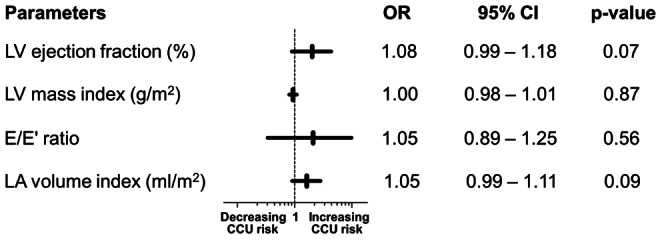
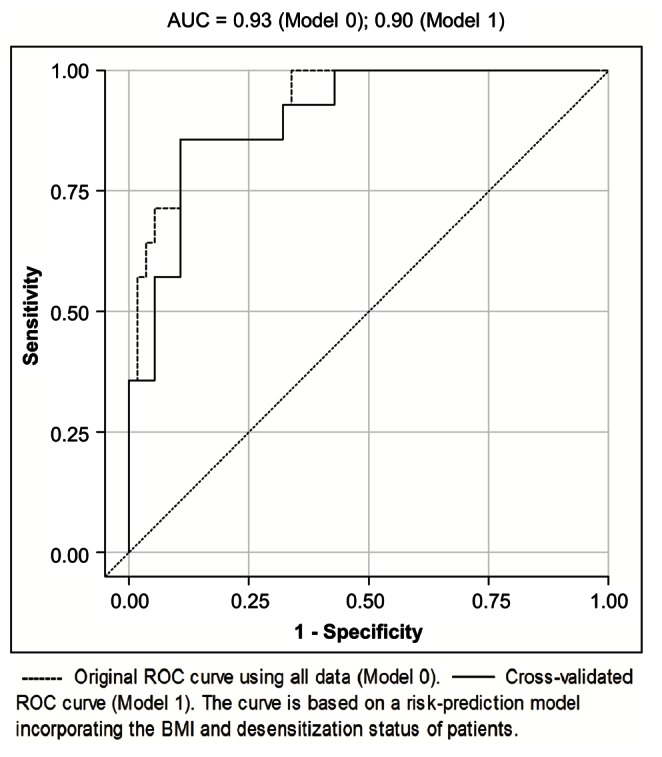
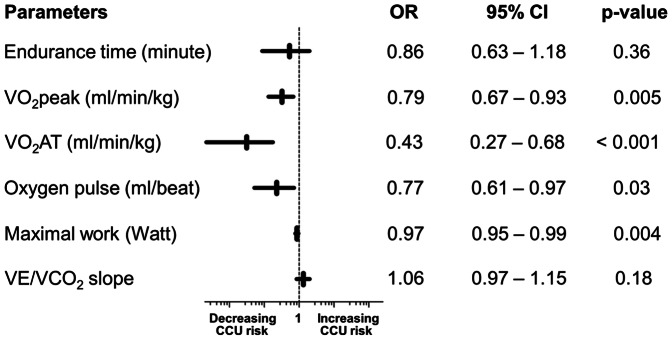
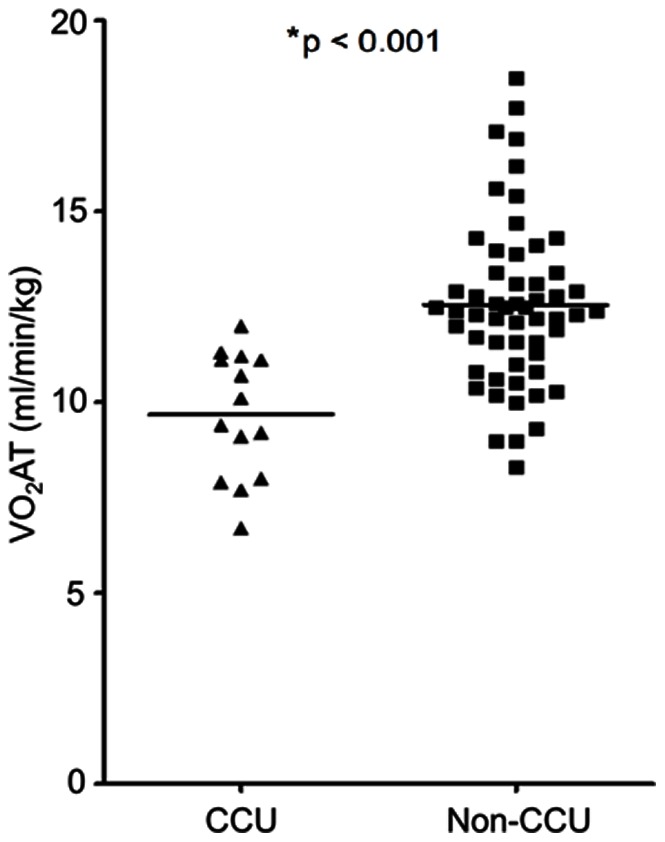
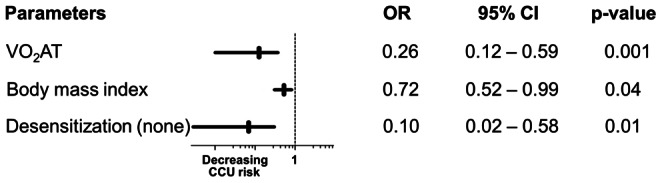
There were 70 participants (age 41.7±14.5 years, 60% male, 91.4% living donor kidney recipients, 23.4% were desensitized). 14 patients (20%) required escalation of care from the ward to CCU following transplantation. Reduced anaerobic threshold (VO₂AT) was the most significant predictor, independently (OR = 0.43; 95% CI 0.27-0.68; p<0.001) and in the multivariate logistic regression analysis (adjusted OR = 0.26; 95% CI 0.12-0.59; p = 0.001). The area under the receiver-operating-characteristic curve was 0.93, based on a risk prediction model that incorporated VO₂AT, body mass index and desensitization status. Neither echocardiographic nor measures of aortic compliance were significantly associated with CCU admission.
To our knowledge, this is the first prospective observational study to demonstrate the usefulness of CPET as a preoperative risk stratification tool for patients undergoing kidney transplantation. The study suggests that VO₂AT has the potential to predict perioperative morbidity in kidney transplant recipients.
目前,对于接受肾移植的患者,没有能够识别那些围手术期风险高、需要入住重症监护病房(CCU)的患者的有效术前评估方法。我们试图确定心血管储备的功能测量指标,特别是无氧阈(VO₂AT),是否能够识别这些患者。
2010 年 4 月至 2012 年 6 月,在一家拥有 37 张床位的 CCU 的大学医院,对 70 名成年患者进行了评估。进行了心肺运动测试(CPET)、超声心动图和动脉平板压力测定。
70 名参与者(年龄 41.7±14.5 岁,60%为男性,91.4%为活体供肾受者,23.4%为脱敏患者)。14 名患者(20%)在移植后需要从病房升级到 CCU 进行治疗。无氧阈(VO₂AT)降低是最显著的预测因素,独立预测(OR=0.43;95%CI 0.27-0.68;p<0.001),且在多变量逻辑回归分析中(调整 OR=0.26;95%CI 0.12-0.59;p=0.001)。基于纳入 VO₂AT、体重指数和脱敏状态的风险预测模型,ROC 曲线下面积为 0.93。
据我们所知,这是第一项前瞻性观察性研究,证明 CPET 作为接受肾移植患者术前风险分层工具的有用性。该研究表明,VO₂AT 有可能预测肾移植受者围手术期发病率。