Department of Plant and Soil Sciences, Oklahoma State University, Stillwater, OK 74078, USA.
BMC Genomics. 2013 Jun 1;14:369. doi: 10.1186/1471-2164-14-369.
Hessian fly (Mayetiola destructor) is one of the most destructive pests of wheat. The genes encoding 12-oxo-phytodienoic acid reductase (OPR) and lipoxygenase (LOX) play critical roles in insect resistance pathways in higher plants, but little is known about genes controlling resistance to Hessian fly in wheat.
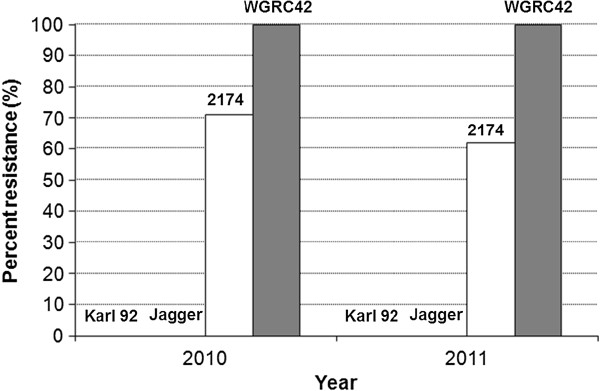
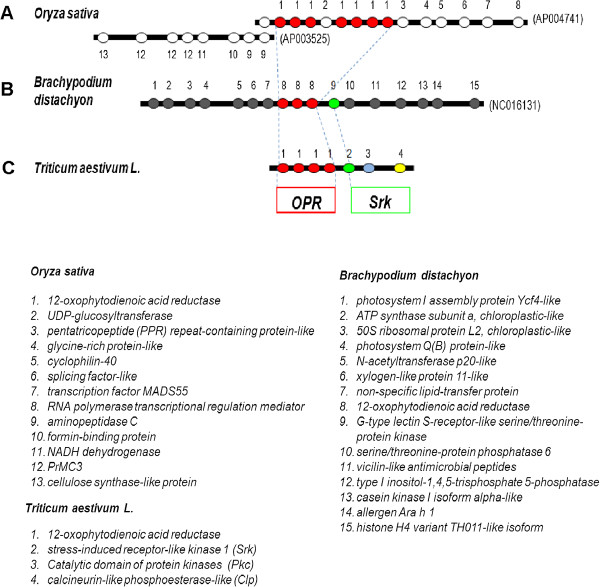
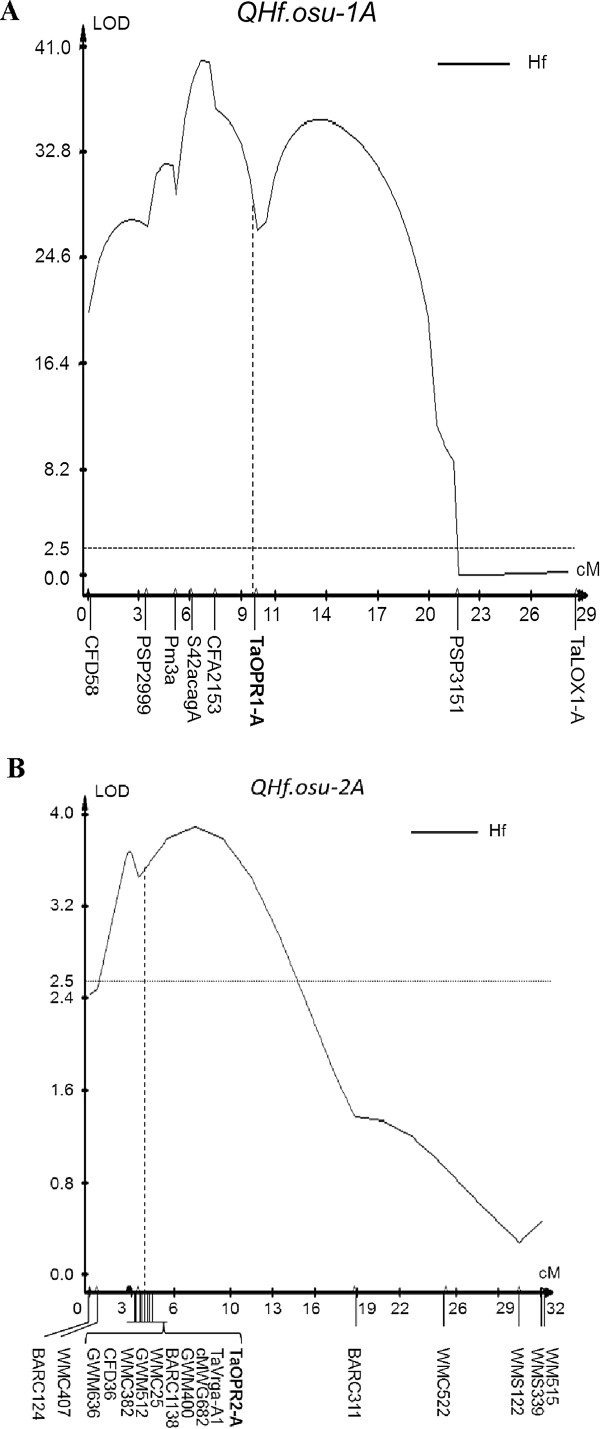
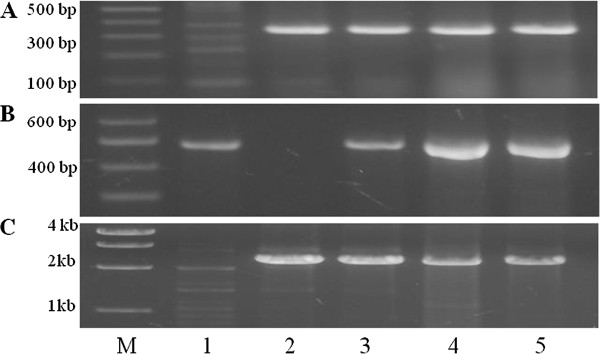
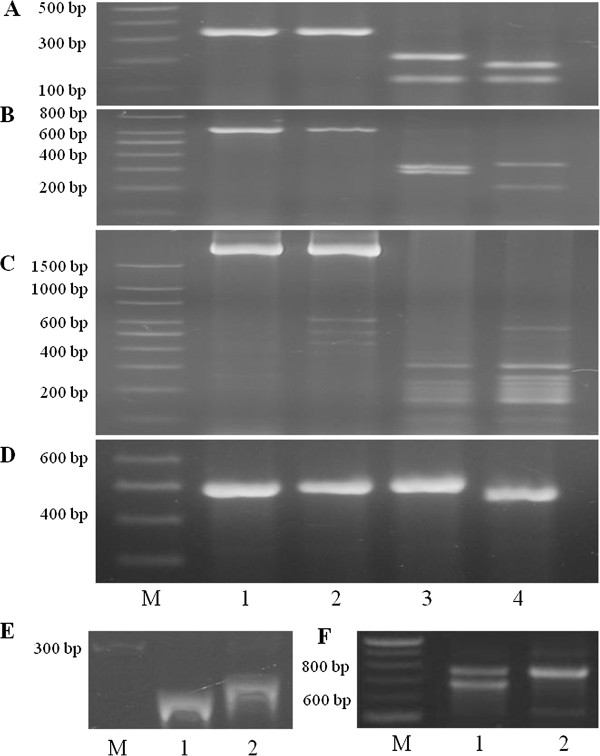
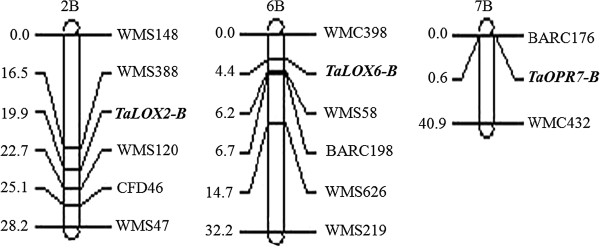
In this study, 154 F6:8 recombinant inbred lines (RILs) generated from a cross between two cultivars, 'Jagger' and '2174' of hexaploid wheat (2n = 6 × =42; AABBDD), were used to map genes associated with resistance to Hessian fly. Two QTLs were identified. The first one was a major QTL on chromosome 1A (QHf.osu-1A), which explained 70% of the total phenotypic variation. The resistant allele at this locus in cultivar 2174 could be orthologous to one or more of the previously mapped resistance genes (H9, H10, H11, H16, and H17) in tetraploid wheat. The second QTL was a minor QTL on chromosome 2A (QHf.osu-2A), which accounted for 18% of the total phenotypic variation. The resistant allele at this locus in 2174 is collinear to an Yr17-containing-fragment translocated from chromosome 2N of Triticum ventricosum (2n = 4 × =28; DDNN) in Jagger. Genetic mapping results showed that two OPR genes, TaOPR1-A and TaOPR2-A, were tightly associated with QHf.osu-1A and QHf.osu-2A, respectively. Another OPR gene and three LOX genes were mapped but not associated with Hessian fly resistance in the segregating population.
This study has located two major QTLs/genes in bread wheat that can be directly used in wheat breeding programs and has also provided insights for the genetic association and disassociation of Hessian fly resistance with OPR and LOX genes in wheat.
黑森瘿蚊(Mayetiola destructor)是小麦最具破坏性的害虫之一。编码 12-氧代-植物二烯酸还原酶(OPR)和脂氧合酶(LOX)的基因在高等植物的抗虫途径中起着关键作用,但对于控制小麦抗黑森瘿蚊的基因知之甚少。
本研究利用来源于两个六倍体小麦品种(2n=6x=42;AABBDD)杂交后代的 154 个 F6:8 重组自交系(RILs),对与抗黑森瘿蚊相关的基因进行定位。共鉴定到 2 个 QTL。第一个 QTL 位于 1A 染色体上(QHf.osu-1A),解释了总表型变异的 70%。2174 中的抗性等位基因可能与四倍体小麦中已定位的多个抗性基因(H9、H10、H11、H16 和 H17)同源。第二个 QTL 位于 2A 染色体上(QHf.osu-2A),解释了总表型变异的 18%。2174 中的抗性等位基因与来自 2174 中的抗性等位基因紧密连锁,该基因与来自 2N 染色体的 Yr17 含有片段易位。遗传作图结果表明,两个 OPR 基因 TaOPR1-A 和 TaOPR2-A 分别与 QHf.osu-1A 和 QHf.osu-2A 紧密相关。另外三个 LOX 基因被定位,但与分离群体中的黑森瘿蚊抗性无关。
本研究在普通小麦中定位到了两个可直接用于小麦育种的主效 QTL/基因,为小麦中黑森瘿蚊抗性与 OPR 和 LOX 基因的遗传关联和分离提供了新的见解。