University of Massachusetts Medical School, Worcester, Massachusetts, USA.
Nat Struct Mol Biol. 2013 Jul;20(7):836-42. doi: 10.1038/nsmb.2585. Epub 2013 Jun 2.
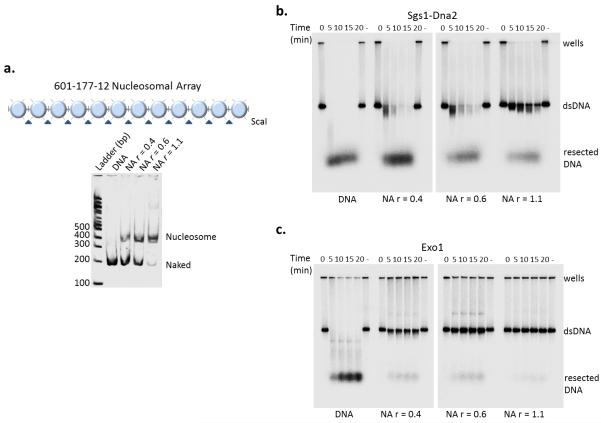
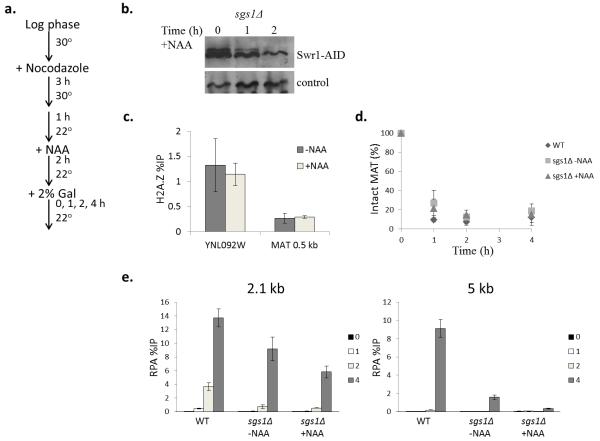
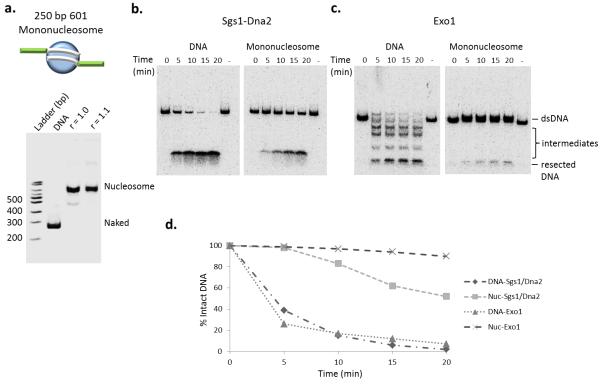
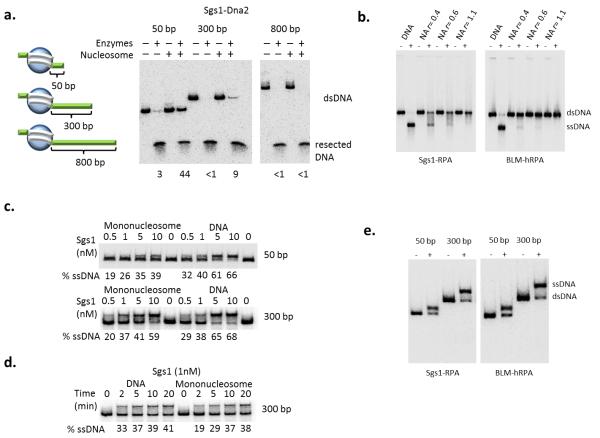
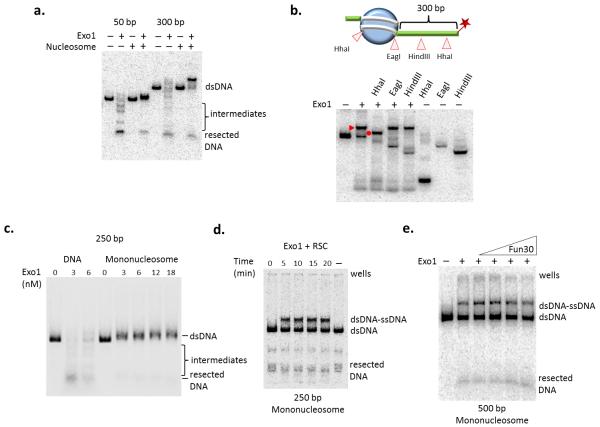
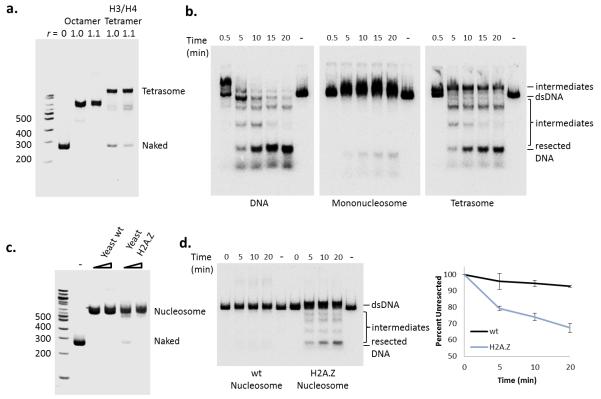
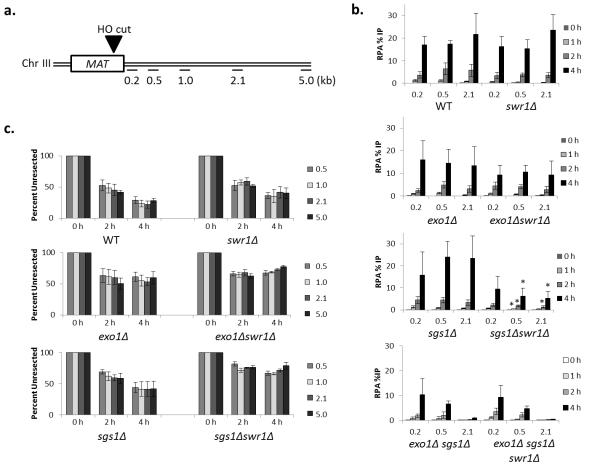
The repair of DNA double-strand breaks (DSBs) is critical for the maintenance of genome integrity. The first step in DSB repair by homologous recombination is the processing of the ends by one of two resection pathways, executed by the Saccharomyces cerevisiae Exo1 and Sgs1-Dna2 machineries. Here we report in vitro and in vivo studies that characterize the impact of chromatin on each resection pathway. We find that efficient resection by the Sgs1-Dna2-dependent machinery requires a nucleosome-free gap adjacent to the DSB. Resection by Exo1 is blocked by nucleosomes, and processing activity can be partially restored by removal of the H2A-H2B dimers. Our study also supports a role for the dynamic incorporation of the H2A.Z histone variant in Exo1 processing, and it further suggests that the two resection pathways require distinct chromatin remodeling events to navigate chromatin structure.
DNA 双链断裂 (DSB) 的修复对于基因组完整性的维持至关重要。同源重组修复 DSB 的第一步是由两种切除途径之一对末端进行加工,由酿酒酵母 Exo1 和 Sgs1-Dna2 机器执行。在这里,我们报告了体外和体内研究,这些研究描述了染色质对每种切除途径的影响。我们发现,Sgs1-Dna2 依赖性机器的有效切除需要在 DSB 附近有一个无核小体的缺口。Exo1 的切除被核小体阻断,并且通过去除 H2A-H2B 二聚体可以部分恢复处理活性。我们的研究还支持 H2A.Z 组蛋白变体在 Exo1 加工中的动态掺入作用,并且进一步表明两种切除途径需要不同的染色质重塑事件来导航染色质结构。