Center for Cancer Research, National Cancer Institute, National Institutes of Health (NIH), Bethesda, Maryland 20892, USA.
Nature. 2013 Jun 27;498(7455):506-10. doi: 10.1038/nature12199. Epub 2013 Jun 2.
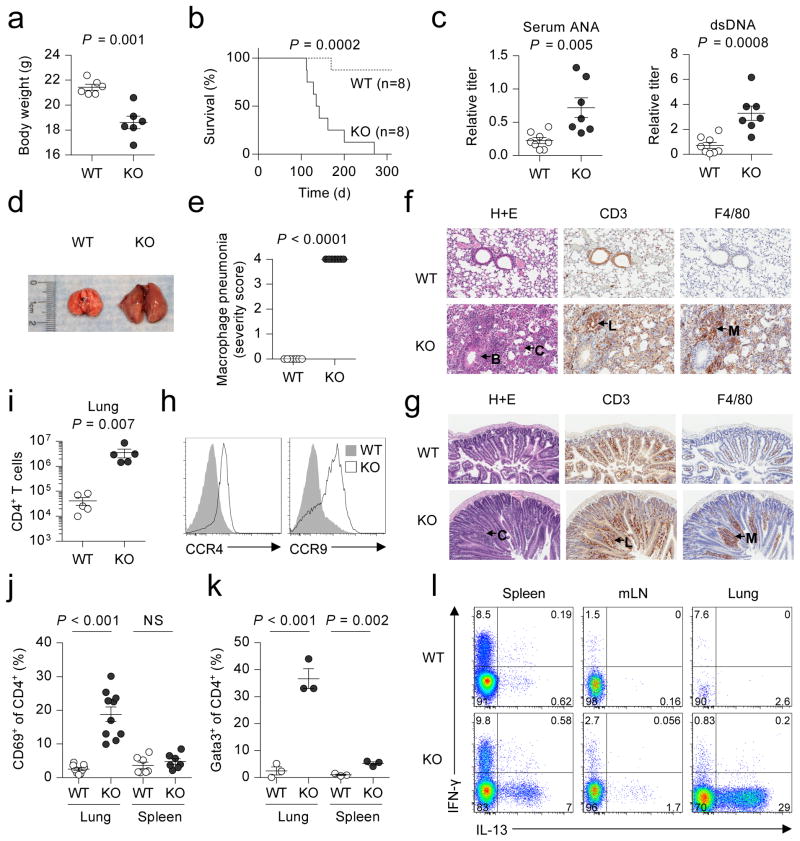
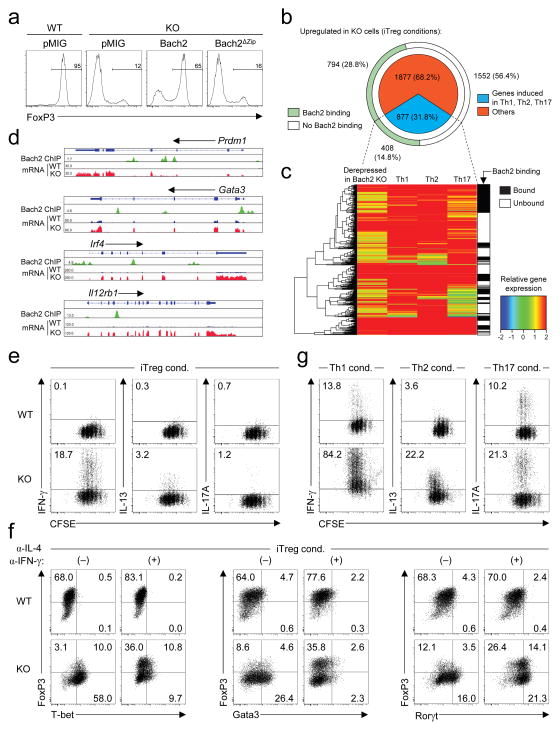
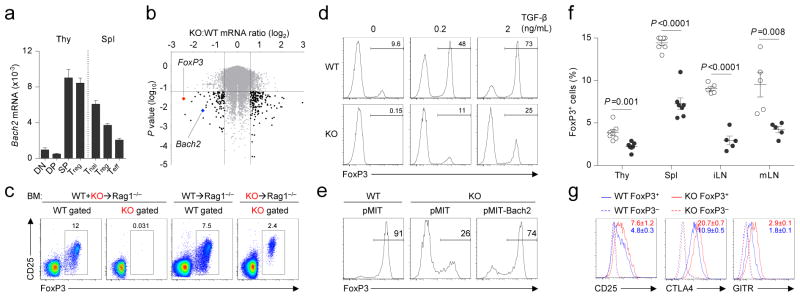
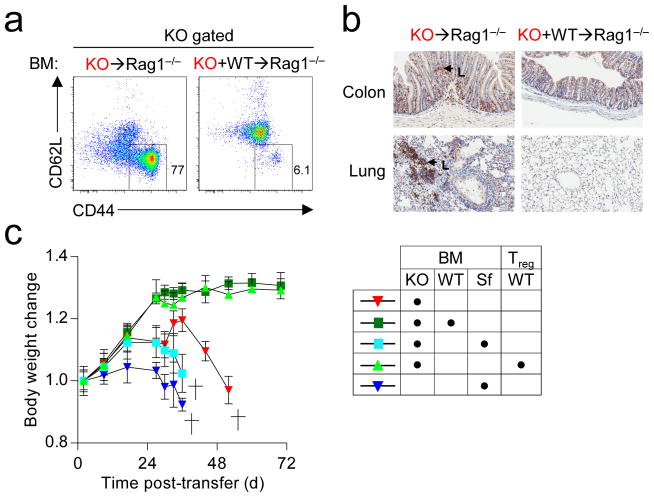
Through their functional diversification, distinct lineages of CD4(+) T cells can act to either drive or constrain immune-mediated pathology. Transcription factors are critical in the generation of cellular diversity, and negative regulators antagonistic to alternate fates often act in conjunction with positive regulators to stabilize lineage commitment. Genetic polymorphisms within a single locus encoding the transcription factor BACH2 are associated with numerous autoimmune and allergic diseases including asthma, Crohn's disease, coeliac disease, vitiligo, multiple sclerosis and type 1 diabetes. Although these associations point to a shared mechanism underlying susceptibility to diverse immune-mediated diseases, a function for BACH2 in the maintenance of immune homeostasis has not been established. Here, by studying mice in which the Bach2 gene is disrupted, we define BACH2 as a broad regulator of immune activation that stabilizes immunoregulatory capacity while repressing the differentiation programs of multiple effector lineages in CD4(+) T cells. BACH2 was required for efficient formation of regulatory (Treg) cells and consequently for suppression of lethal inflammation in a manner that was Treg-cell-dependent. Assessment of the genome-wide function of BACH2, however, revealed that it represses genes associated with effector cell differentiation. Consequently, its absence during Treg polarization resulted in inappropriate diversion to effector lineages. In addition, BACH2 constrained full effector differentiation within TH1, TH2 and TH17 cell lineages. These findings identify BACH2 as a key regulator of CD4(+) T-cell differentiation that prevents inflammatory disease by controlling the balance between tolerance and immunity.
通过功能多样化,不同谱系的 CD4(+)T 细胞可以促进或限制免疫介导的病理过程。转录因子在细胞多样性的产生中起着关键作用,拮抗替代命运的负调控因子通常与正调控因子一起作用,以稳定谱系承诺。编码转录因子 BACH2 的单一基因座内的遗传多态性与多种自身免疫和过敏性疾病有关,包括哮喘、克罗恩病、乳糜泻、白癜风、多发性硬化症和 1 型糖尿病。尽管这些关联表明多种免疫介导的疾病易感性存在共同机制,但 BACH2 在维持免疫稳态中的功能尚未确定。在这里,通过研究 Bach2 基因缺失的小鼠,我们将 BACH2 定义为广泛调节免疫激活的因子,它稳定免疫调节能力,同时抑制 CD4(+)T 细胞中多个效应谱系的分化程序。BACH2 是调节性(Treg)细胞有效形成所必需的,因此以依赖 Treg 细胞的方式抑制致命性炎症。然而,对 BACH2 的全基因组功能评估表明,它抑制与效应细胞分化相关的基因。因此,在 Treg 极化过程中缺失 BACH2 会导致效应谱系的不当分化。此外,BACH2 限制了 TH1、TH2 和 TH17 细胞谱系中的完全效应分化。这些发现表明 BACH2 是 CD4(+)T 细胞分化的关键调节因子,通过控制耐受与免疫之间的平衡来预防炎症性疾病。