Tumour Suppression Laboratory, Peter MacCallum Cancer Centre East Melbourne, VIC, Australia ; Sir Peter MacCallum Department of Oncology, The University of Melbourne Parkville, VIC, Australia.
Front Oncol. 2013 May 17;3:124. doi: 10.3389/fonc.2013.00124. eCollection 2013.
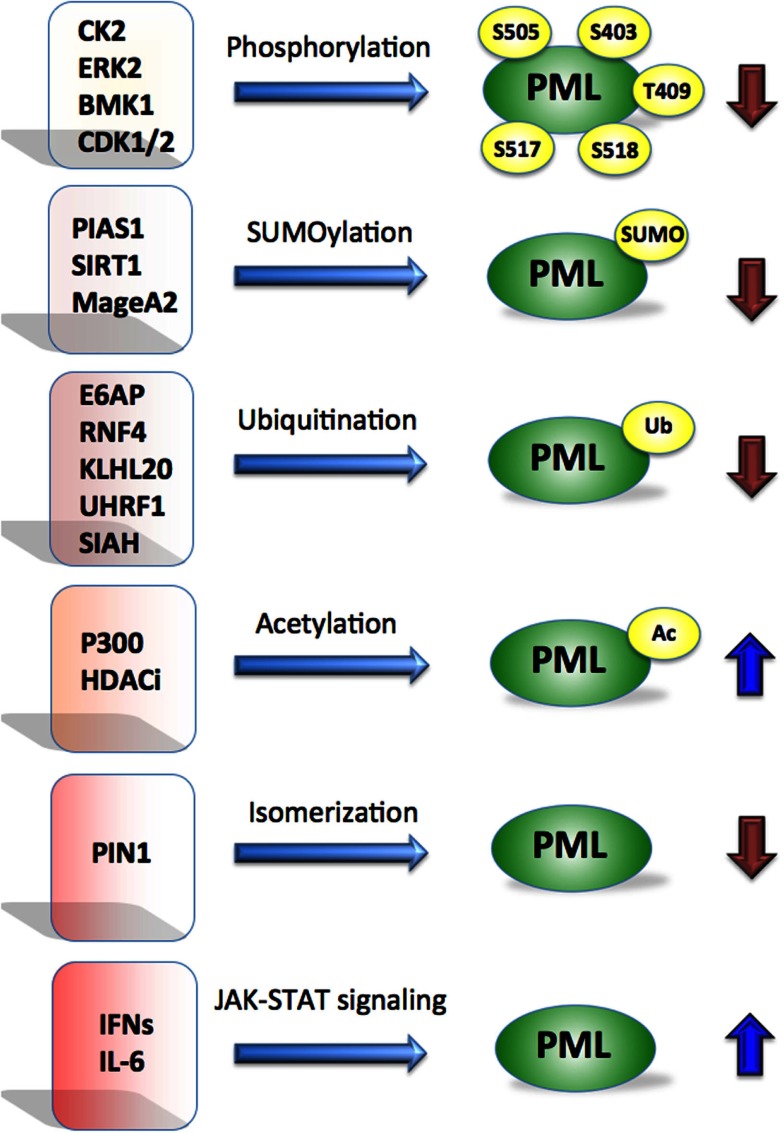
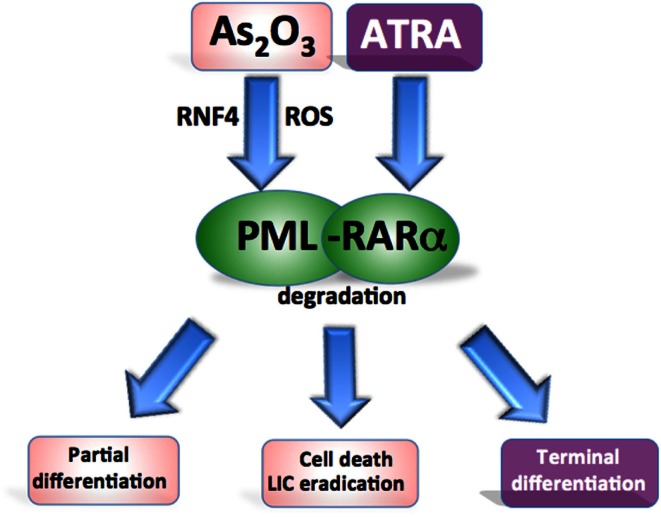
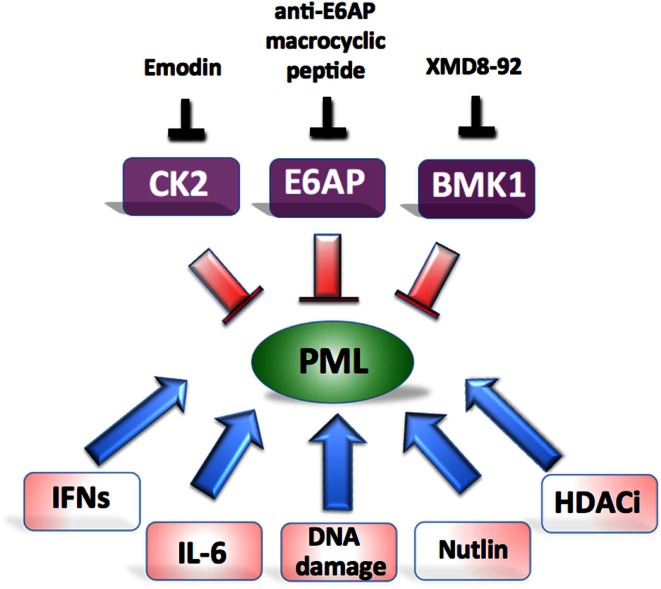
The tumor suppressor function of the promyelocytic leukemia (PML) protein was first identified as a result of its dysregulation in acute promyelocytic leukemia, however, its importance is now emerging far beyond hematological neoplasms, to an extensive range of malignancies, including solid tumors. In response to stress signals, PML coordinates the regulation of numerous proteins, which activate fundamental cellular processes that suppress tumorigenesis. Importantly, PML itself is the subject of specific post-translational modifications, including ubiquitination, phosphorylation, acetylation, and SUMOylation, which in turn control PML activity and stability and ultimately dictate cellular fate. Improved understanding of the regulation of this key tumor suppressor is uncovering potential opportunities for therapeutic intervention. Targeting the key negative regulators of PML in cancer cells such as casein kinase 2, big MAP kinase 1, and E6-associated protein, with specific inhibitors that are becoming available, provides unique and exciting avenues for restoring tumor suppression through the induction of apoptosis and senescence. These approaches could be combined with DNA damaging drugs and cytokines that are known to activate PML. Depending on the cellular context, reactivation or enhancement of tumor suppressive PML functions, or targeted elimination of aberrantly functioning PML, may provide clinical benefit.
早幼粒细胞白血病(PML)蛋白的抑瘤功能最初是由于其在急性早幼粒细胞白血病中的失调而被发现的,然而,其重要性现在远远超出了血液系统肿瘤,涉及到广泛的恶性肿瘤,包括实体瘤。PML 响应应激信号,协调调节众多蛋白质,这些蛋白质激活抑制肿瘤发生的基本细胞过程。重要的是,PML 本身是特定翻译后修饰的对象,包括泛素化、磷酸化、乙酰化和 SUMO 化,这些修饰反过来控制 PML 的活性和稳定性,最终决定细胞命运。对这种关键肿瘤抑制因子的调节的深入理解正在揭示潜在的治疗干预机会。针对癌细胞中 PML 的关键负调节因子,如酪蛋白激酶 2、大 MAP 激酶 1 和 E6 相关蛋白,使用特定的抑制剂,这些抑制剂正在变得可用,为通过诱导细胞凋亡和衰老来恢复肿瘤抑制提供了独特而令人兴奋的途径。这些方法可以与已知激活 PML 的 DNA 损伤药物和细胞因子结合使用。根据细胞环境,重新激活或增强肿瘤抑制性 PML 功能,或靶向消除异常功能的 PML,可能会带来临床益处。