Office of the CEO, UW Medicine and Executive Vice President for Medical Affairs, University of Washington, Seattle, WA 98195-6350, USA.
BMC Med Educ. 2013 Jun 3;13:80. doi: 10.1186/1472-6920-13-80.
Despite increasing attention to providing preclinical medical students with early patient experiences, little is known about associated outcomes for students. The authors compared three early patient experiences at a large American medical school where all preclinical students complete preceptorships and weekly bedside clinical-skills training and about half complete clinical, community-based summer immersion experiences. The authors asked, what are the relative outcomes and important educational components for students?
Medical students completed surveys at end of second year 2009-2011. In 2009, students compared/contrasted two of three approaches; responses framed later survey questions. In 2010 and 2011, students rated all three experiences in relevant areas (e.g., developing comfort in clinical setting). Investigators performed qualitative and quantitative analyses.
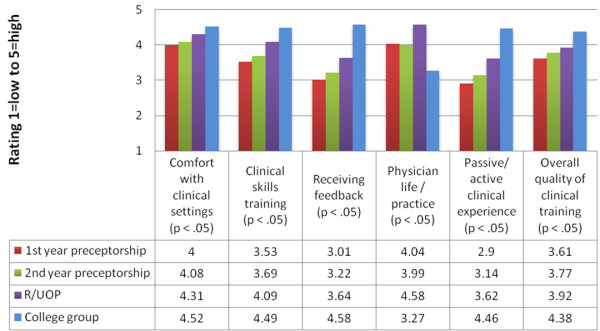
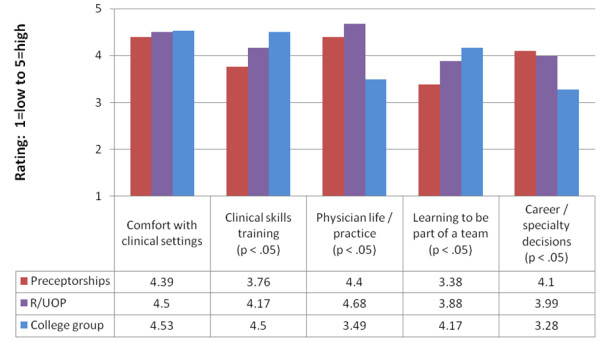
Students rated bedside training more highly for developing comfort with clinical settings, one-on-one clinical-skills training, feedback, active clinical experience, quality of clinical training, and learning to be part of a team. They rated community clinical immersion and preceptorships more highly for understanding the life/practice of a physician and career/specialty decisions.
Preclinical students received different benefits from the different experiences. Medical schools should define objectives of early clinical experiences and offer options accordingly. A combination of experiences may help students achieve clinical and team comfort, clinical skills, an understanding of physicians' lives/practices, and broad exposure for career decisions.
尽管越来越关注为医学生提供早期的患者体验,但对于学生相关的结果却知之甚少。作者比较了美国一所大型医学院的三种早期的患者体验,所有的医学生都要完成实习和每周的床边临床技能培训,大约一半的学生要完成临床、社区暑期沉浸式体验。作者想知道,对于学生来说,什么样的结果和重要的教育内容是相关的?
医学生在 2009-2011 年的第二年结束时完成了调查。在 2009 年,学生们比较了三种方法中的两种;随后的调查问题是根据这些回答来设计的。在 2010 年和 2011 年,学生们在相关领域对所有三种体验进行了评价(例如,在临床环境中建立舒适感)。研究人员进行了定性和定量分析。
学生们认为床边培训在以下方面更有优势:在临床环境中建立舒适感、一对一的临床技能培训、反馈、积极的临床经验、临床培训的质量和学习成为团队的一部分。他们认为社区临床沉浸式体验和实习更有利于了解医生的生活/实践以及职业/专业决策。
临床前学生从不同的体验中获得了不同的收益。医学院应该明确早期临床体验的目标,并相应地提供选择。多种体验的结合可能有助于学生实现临床和团队的舒适感、临床技能、对医生生活/实践的理解以及广泛的职业决策。