Department of Biomedical Informatics, Vanderbilt University School of Medicine, Nashville, Tennessee 37232, USA.
Genome Res. 2013 Sep;23(9):1434-45. doi: 10.1101/gr.152322.112. Epub 2013 Jun 3.
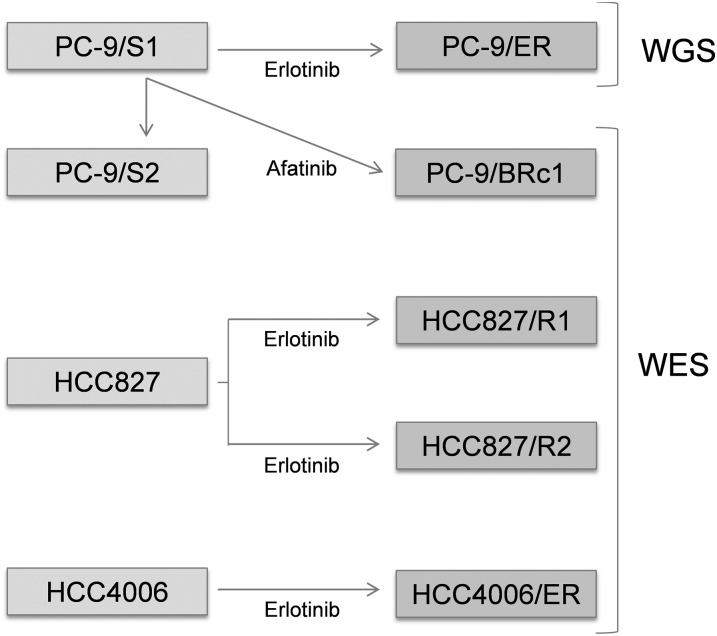
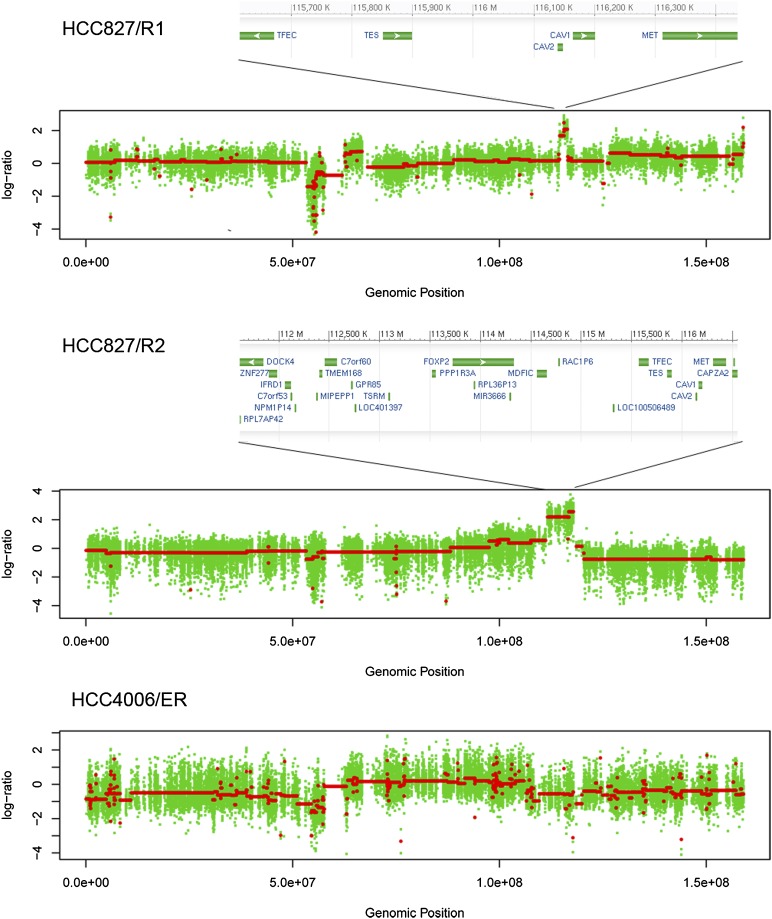
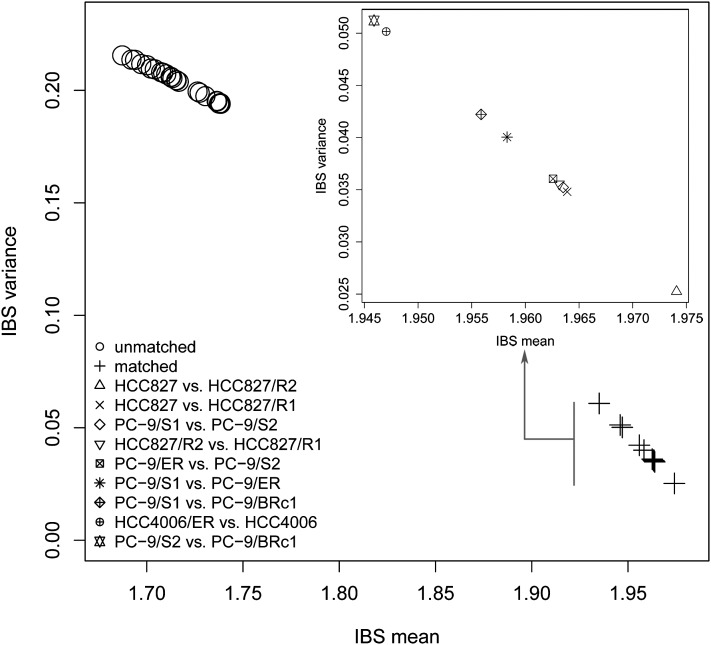
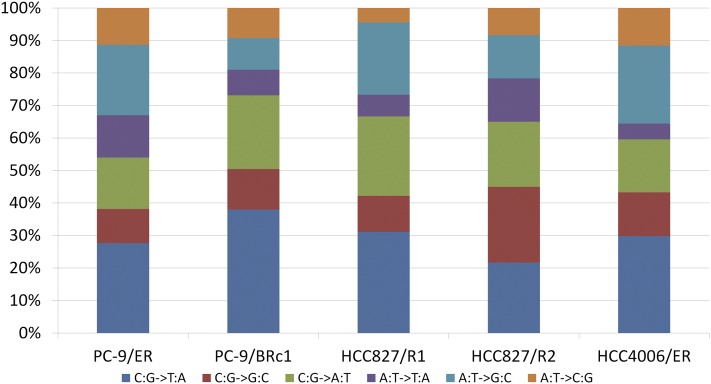
Somatic mutations in kinase genes are associated with sensitivity of solid tumors to kinase inhibitors, but patients with metastatic cancer eventually develop disease progression. In EGFR mutant lung cancer, modeling of acquired resistance (AR) with drug-sensitive cell lines has identified clinically relevant EGFR tyrosine kinase inhibitor (TKI) resistance mechanisms such as the second-site mutation, EGFR T790M, amplification of the gene encoding an alternative kinase, MET, and epithelial-mesenchymal transition (EMT). The full spectrum of DNA changes associated with AR remains unknown. We used next-generation sequencing to characterize mutational changes associated with four populations of EGFR mutant drug-sensitive and five matched drug-resistant cell lines. Comparing resistant cells with parental counterparts, 18-91 coding SNVs/indels were predicted to be acquired and 1-27 were lost; few SNVs/indels were shared across resistant lines. Comparison of two related parental lines revealed no unique coding SNVs/indels, suggesting that changes in the resistant lines were due to drug selection. Surprisingly, we observed more CNV changes across all resistant lines, and the line with EMT displayed significantly higher levels of CNV changes than the other lines with AR. These results demonstrate a framework for studying the evolution of AR and provide the first genome-wide spectrum of mutations associated with the development of cellular drug resistance in an oncogene-addicted cancer. Collectively, the data suggest that CNV changes may play a larger role than previously appreciated in the acquisition of drug resistance and highlight that resistance may be heterogeneous in the context of different tumor cell backgrounds.
激酶基因中的体细胞突变与实体瘤对激酶抑制剂的敏感性相关,但转移性癌症患者最终会出现疾病进展。在 EGFR 突变型肺癌中,使用对药物敏感的细胞系对获得性耐药(AR)进行建模,已经确定了临床上相关的 EGFR 酪氨酸激酶抑制剂(TKI)耐药机制,如第二部位突变、EGFR T790M、编码替代激酶 MET 的基因扩增,以及上皮-间充质转化(EMT)。与 AR 相关的 DNA 变化的全貌尚不清楚。我们使用下一代测序技术来描述与四个 EGFR 突变型药物敏感和五个匹配的耐药细胞系相关的突变变化。将耐药细胞与亲本细胞进行比较,预测有 18-91 个编码 SNVs/indels 是获得性的,1-27 个是丢失的;耐药细胞系之间很少有 SNVs/indels 是共享的。比较两个相关的亲本系,没有发现独特的编码 SNVs/indels,这表明耐药系的变化是由于药物选择所致。令人惊讶的是,我们观察到所有耐药系的 CNV 变化更多,而具有 EMT 的系表现出明显更高水平的 CNV 变化,比其他具有 AR 的系更高。这些结果为研究 AR 的进化提供了一个框架,并提供了与致癌基因依赖性癌症中细胞药物耐药性发展相关的突变的第一个全基因组图谱。总的来说,这些数据表明,与先前的认识相比,CNV 变化可能在获得耐药性方面发挥更大的作用,并强调在不同的肿瘤细胞背景下,耐药性可能是异质的。