Program in Chemical and Physical Biology, Vanderbilt University School of Medicine, Nashville, TN 37232, USA; Center for Cancer Systems Biology at Vanderbilt, Vanderbilt University, Nashville, TN 37232, USA.
Program in Cancer Biology, Vanderbilt University School of Medicine, Nashville, TN 37232, USA; Center for Cancer Systems Biology at Vanderbilt, Vanderbilt University, Nashville, TN 37232, USA.
Cell Syst. 2019 Feb 27;8(2):97-108.e16. doi: 10.1016/j.cels.2019.01.003. Epub 2019 Feb 20.
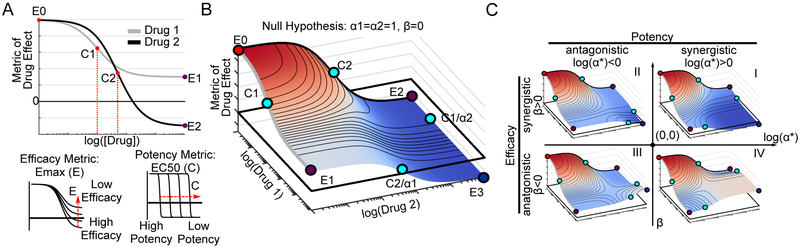
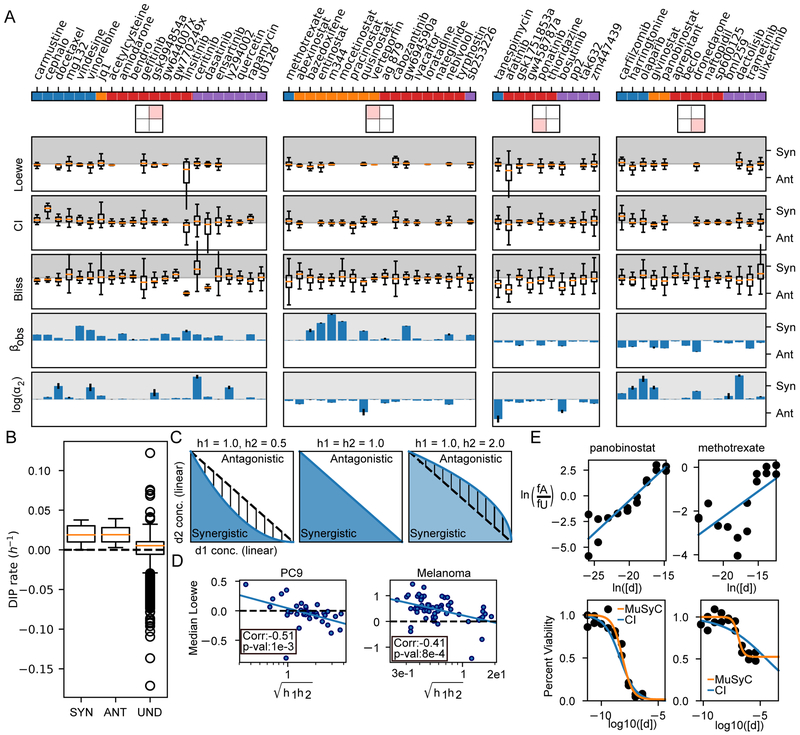
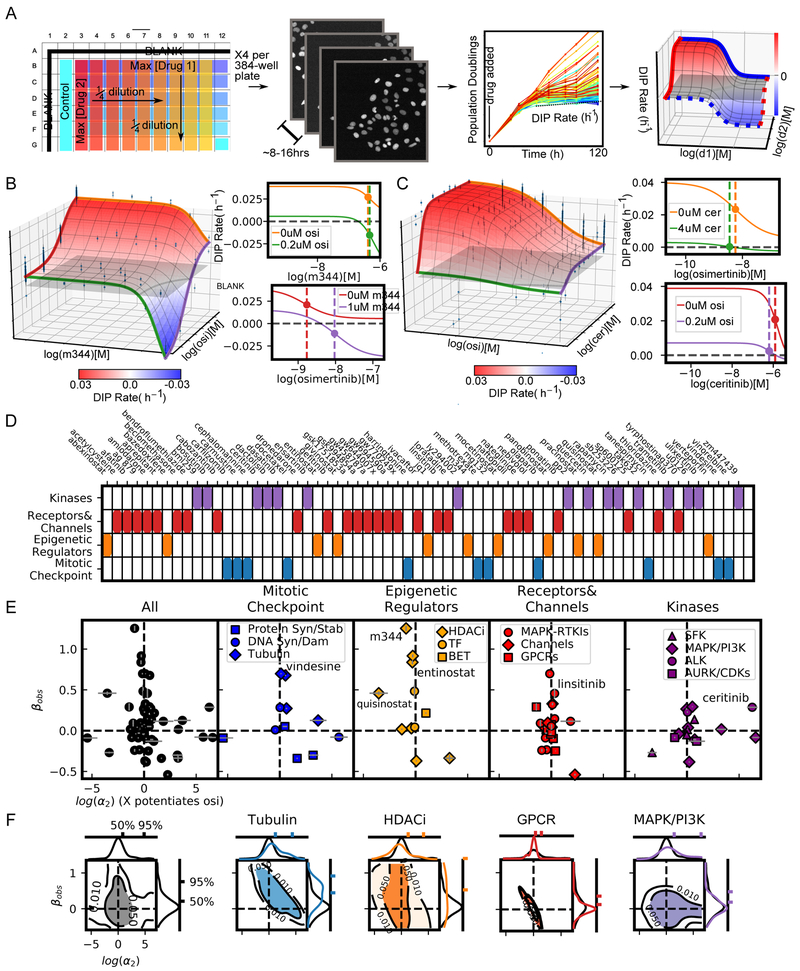
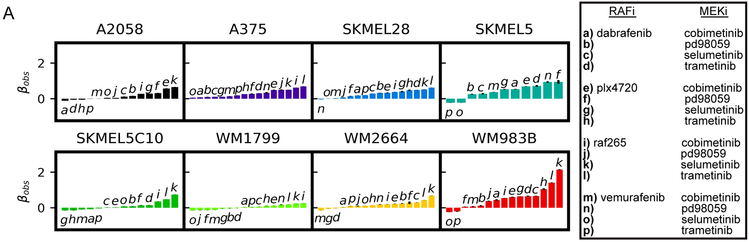
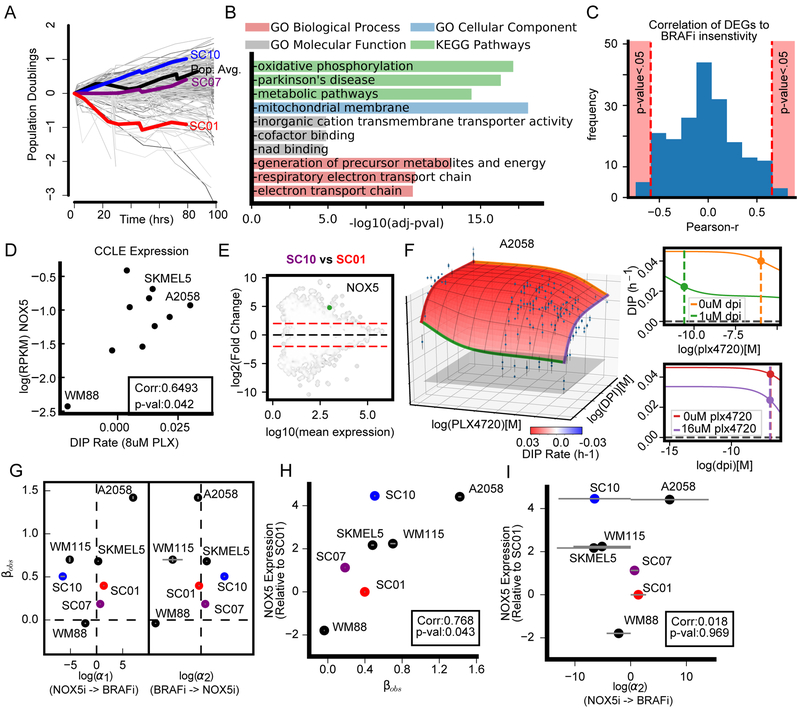
Two goals motivate treating diseases with drug combinations: reduce off-target toxicity by minimizing doses (synergistic potency) and improve outcomes by escalating effect (synergistic efficacy). Established drug synergy frameworks obscure such distinction, failing to harness the potential of modern chemical libraries. We therefore developed multi-dimensional synergy of combinations (MuSyC), a formalism based on a generalized, multi-dimensional Hill equation, which decouples synergistic potency and efficacy. In mutant-EGFR-driven lung cancer, MuSyC reveals that combining a mutant-EGFR inhibitor with inhibitors of other kinases may result only in synergistic potency, whereas synergistic efficacy can be achieved by co-targeting mutant-EGFR and epigenetic regulation or microtubule polymerization. In mutant-BRAF melanoma, MuSyC determines whether a molecular correlate of BRAFi insensitivity alters a BRAF inhibitor's potency, efficacy, or both. These findings showcase MuSyC's potential to transform the enterprise of drug-combination screens by precisely guiding translation of combinations toward dose reduction, improved efficacy, or both.
通过最小化剂量(协同效力)来降低非靶向毒性,通过提高效果(协同疗效)来改善结果。既定的药物协同作用框架掩盖了这种区别,未能利用现代化学文库的潜力。因此,我们开发了组合的多维协同作用(MuSyC),这是一种基于广义多维 Hill 方程的形式主义,它将协同效力和疗效解耦。在突变型 EGFR 驱动的肺癌中,MuSyC 表明,将一种突变型 EGFR 抑制剂与其他激酶抑制剂联合使用可能只会导致协同效力,而通过共同靶向突变型 EGFR 和表观遗传调控或微管聚合则可以实现协同疗效。在突变型 BRAF 黑色素瘤中,MuSyC 确定了 BRAFi 不敏感的分子相关性是否会改变 BRAF 抑制剂的效力、疗效或两者兼而有之。这些发现展示了 MuSyC 的潜力,通过精确地指导组合向减少剂量、提高疗效或两者兼而有之的方向转化,从而改变药物组合筛选的格局。