Scripps Translational Science Institute La Jolla, CA, USA.
Front Genet. 2013 May 21;4:86. doi: 10.3389/fgene.2013.00086. eCollection 2013.
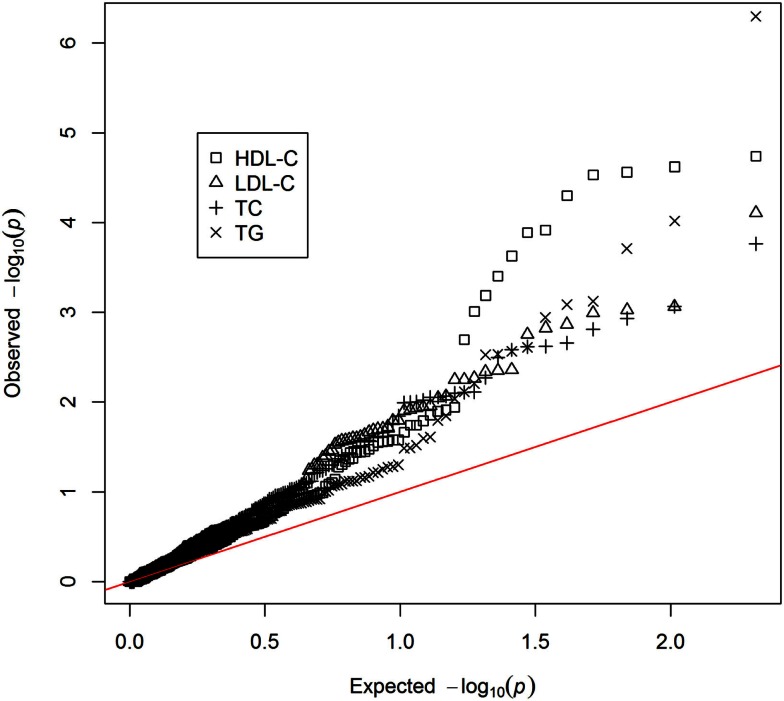
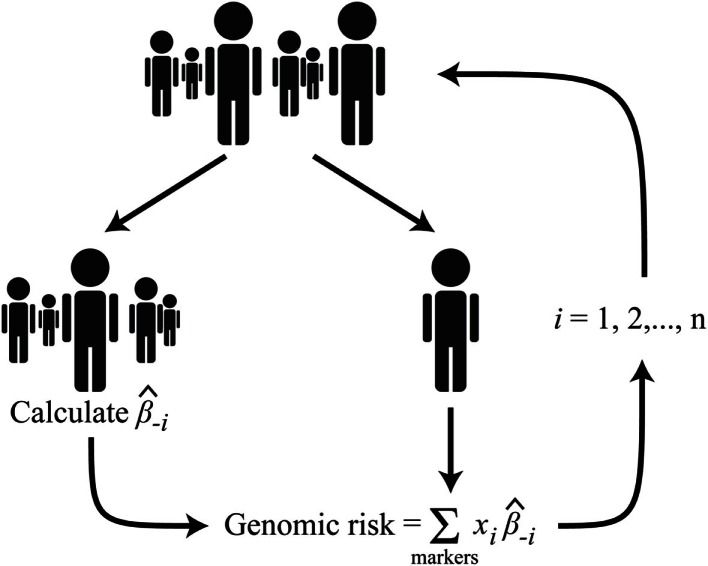
In clinical medicine, lipids are commonly measured biomarkers used to assess an individual's risk for cardiovascular disease, heart attack, and stroke. Accurately predicting longitudinal lipid levels based on genomic information can inform therapeutic practices and decrease cardiovascular risk by identifying high-risk patients prior to onset. Using genotyped and imputed genetic data from 523 unrelated Caucasian Americans from the Bogalusa Heart Study, surveyed on 4,026 occasions from 4 to 48 years of age, we generated various lipid genomic risk models based on previously reported markers. We observed a significant improvement in prediction over non-genetic risk models in high density lipoprotein cholesterol (increase in the squared correlation between observed and predicted values, ΔR (2) = 0.032), low density lipoprotein cholesterol (ΔR (2) = 0.053), total cholesterol (ΔR (2) = 0.043), and triglycerides (ΔR (2) = 0.031). Many of our approaches are based on an n-fold cross-validation procedure that are, by design, adaptable to a clinical environment.
在临床医学中,脂质通常被用作衡量生物标志物,用于评估个体患心血管疾病、心脏病发作和中风的风险。基于基因组信息准确预测纵向脂质水平可以为治疗实践提供信息,并通过在发病前识别高危患者来降低心血管风险。我们使用来自博加卢萨心脏研究的 523 名无关白种美国人的基因分型和推断遗传数据,这些人在 4 至 48 岁期间接受了 4026 次调查,根据先前报道的标记物,我们生成了各种基于基因组的脂质风险模型。我们观察到,与非遗传风险模型相比,高密度脂蛋白胆固醇(观察值和预测值之间平方相关系数的增加,ΔR (2) = 0.032)、低密度脂蛋白胆固醇(ΔR (2) = 0.053)、总胆固醇(ΔR (2) = 0.043)和甘油三酯(ΔR (2) = 0.031)的预测有显著改善。我们的许多方法都是基于 n 折交叉验证程序,这些程序是为适应临床环境而设计的。