Ecology, Evolution, and Marine Biology Department, University of California, Santa Barbara, CA 93106, USA.
Oecologia. 2010 Jul;163(3):747-58. doi: 10.1007/s00442-010-1578-4. Epub 2010 Feb 19.
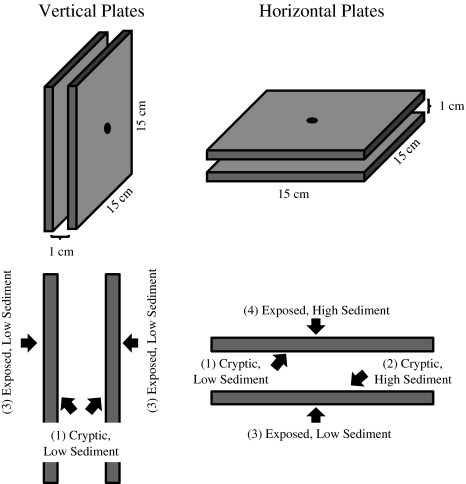
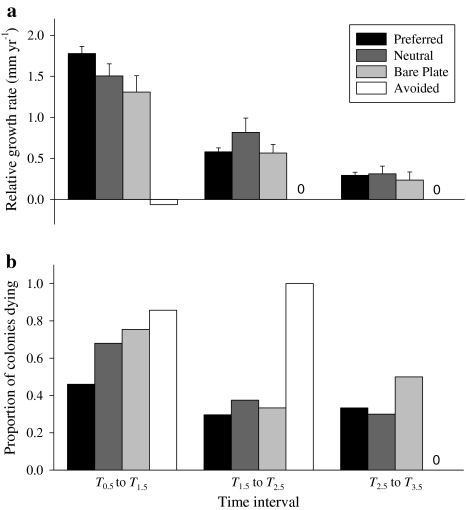
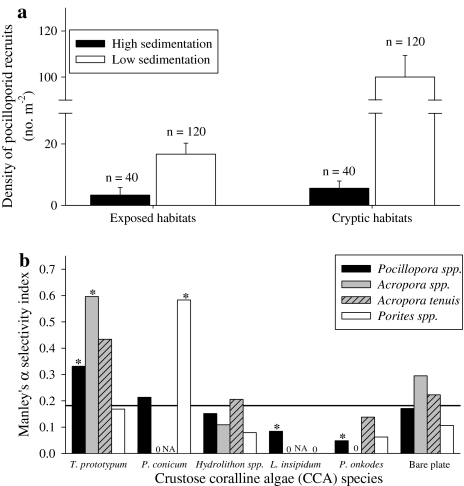
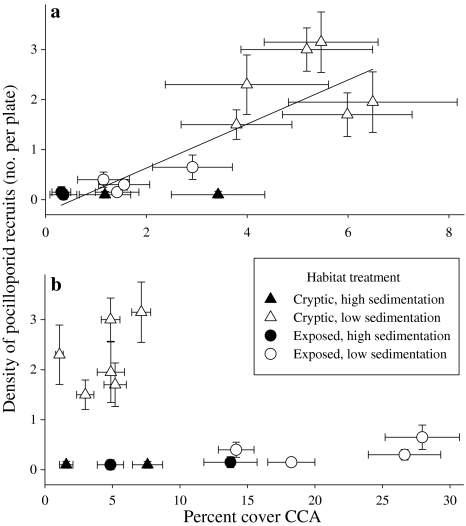
Habitat selection can determine the distribution and performance of individuals if the precision with which sites are chosen corresponds with exposure to risks or resources. Contrastingly, facilitation can allow persistence of individuals arriving by chance and potentially maladapted to local abiotic conditions. For marine organisms, selection of a permanent attachment site at the end of their larval stage or the presence of a facilitator can be a critical determinant of recruitment success. In coral reef ecosystems, it is well known that settling planula larvae of reef-building corals use coarse environmental cues (i.e., light) for habitat selection. Although laboratory studies suggest that larvae can also use precise biotic cues produced by crustose coralline algae (CCA) to select attachment sites, the ecological consequences of biotic cues for corals are poorly understood in situ. In a field experiment exploring the relative importance of biotic cues and variability in habitat quality to recruitment of hard corals, pocilloporid and acroporid corals recruited more frequently to one species of CCA, Titanoderma prototypum, and significantly less so to other species of CCA; these results are consistent with laboratory assays from other studies. The provision of the biotic cue accurately predicted coral recruitment rates across habitats of varying quality. At the scale of CCA, corals attached to the "preferred" CCA experienced increased survivorship while recruits attached elsewhere had lower colony growth and survivorship. For reef-building corals, the behavioral selection of habitat using chemical cues both reduces the risk of incidental mortality and indicates the presence of a facilitator.
如果个体选择的地点与风险或资源的暴露程度相对应,那么生境选择可以决定个体的分布和表现。相反,促进作用可以允许偶然到达且可能不适应当地非生物条件的个体持续存在。对于海洋生物来说,在幼虫阶段结束时选择一个永久的附着点,或者存在促进者,可能是决定其成功繁殖的关键决定因素。在珊瑚礁生态系统中,众所周知,造礁珊瑚的固着幼虫使用粗糙的环境线索(即光)来选择生境。尽管实验室研究表明,幼虫也可以使用由皮壳状珊瑚藻(CCA)产生的精确生物线索来选择附着点,但生物线索对珊瑚的生态后果在现场还知之甚少。在一项探索生物线索和栖息地质量变异性对硬珊瑚繁殖相对重要性的野外实验中,纽扣珊瑚和鹿角珊瑚更频繁地繁殖到一种皮壳状珊瑚藻,即 Titanoderma prototypum,而其他皮壳状珊瑚藻的繁殖频率显著降低;这些结果与其他研究的实验室测定结果一致。生物线索的提供准确地预测了不同质量栖息地中珊瑚的繁殖率。在皮壳状珊瑚藻的尺度上,附着在“首选”皮壳状珊瑚藻上的珊瑚存活率增加,而附着在其他地方的珊瑚的群体生长和存活率较低。对于造礁珊瑚来说,使用化学线索对栖息地的行为选择既降低了偶然死亡率的风险,又表明存在促进者。