Key Laboratory of Parasite and Vector Biology of MOH, Institute of Parasitic Diseases, Chinese Center for Disease Control and Prevention, 207 Rui-Jin Road II, Shanghai, China.
Parasit Vectors. 2013 Jun 5;6:162. doi: 10.1186/1756-3305-6-162.
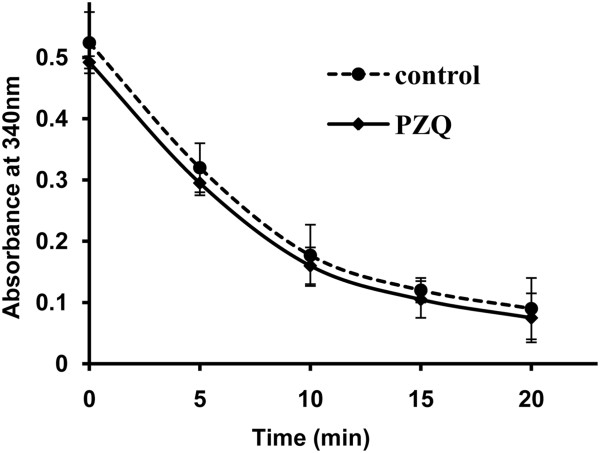
Schistosomiasis is a neglected tropical disease with high morbidity and mortality in the world. Currently, the treatment of this disease depends almost exclusively on praziquantel (PZQ); however, the emergence of drug resistance to PZQ in schistosomes makes the development of novel drugs an urgent task. Aldose reductase (AR), an important component that may be involved in the schistosome antioxidant defense system, is predicted as a potential drug target.
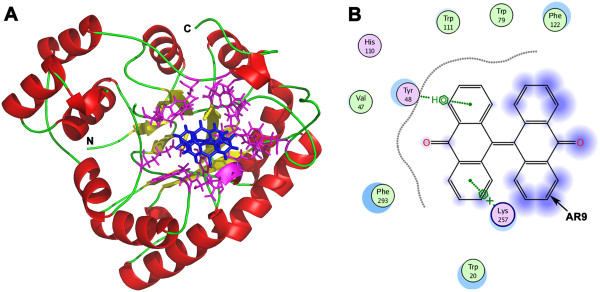
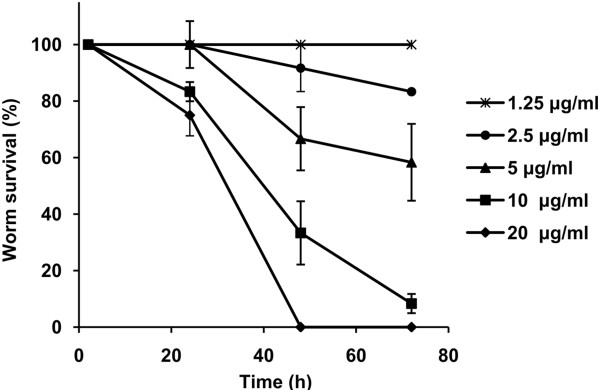
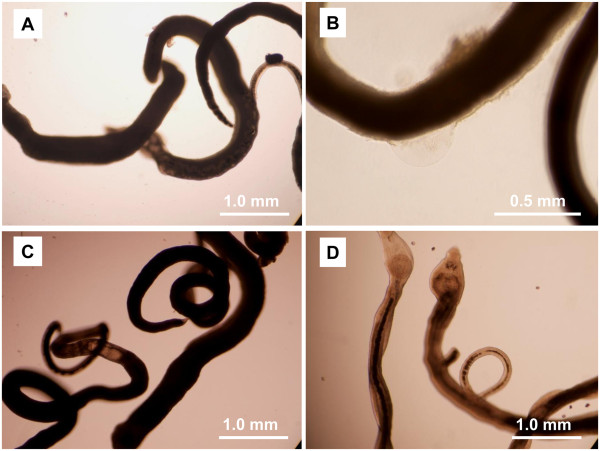
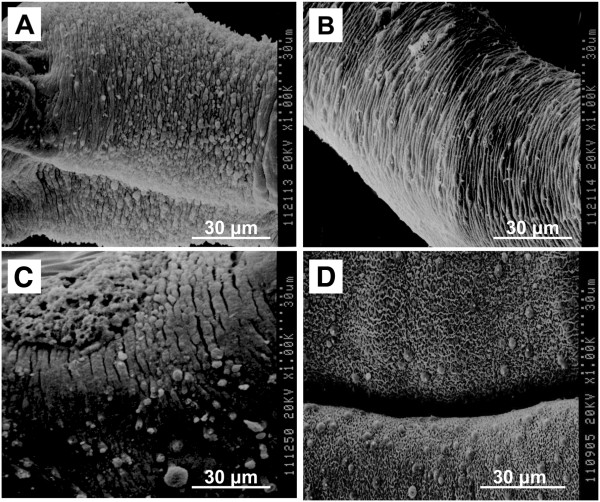
The tertiary structure of Schistosoma japonicum AR (SjAR) was obtained through X-ray diffraction method and then its potential inhibitors were identified from the Maybridge HitFinder library by virtual screening based on this structural model. The effects of these identified compounds on cultured adult worms were evaluated by observing mobility, morphological changes and mortality. To verify that SjAR was indeed the target of these identified compounds, their effects on recombinant SjAR (rSjAR) enzymatic activity were assessed. The cytotoxicity analysis was performed with three types of human cell lines using a Cell Counting Kit-8.
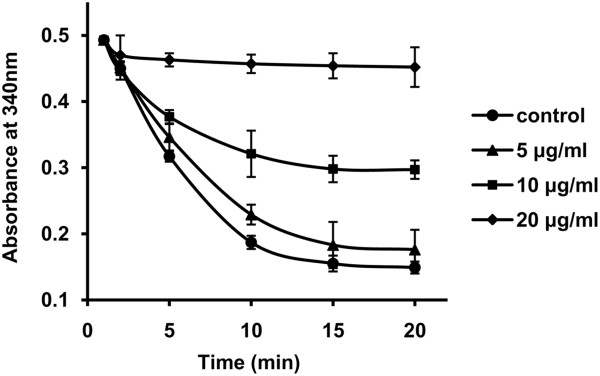
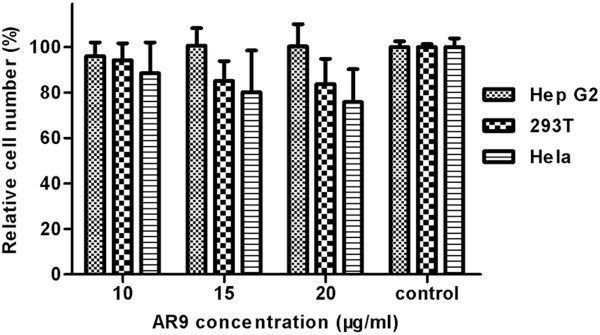
We firstly resolved the SjAR structure and identified 10 potential inhibitors based on this structural model. Further in vitro experiments showed that one of the compounds, renamed as AR9, exhibited significant inhibition in the activity of cultured worms as well as inhibition of enzymatic activity of rSjAR protein. Cytotoxicity analysis revealed that AR9 had relatively low toxicity towards host cells.
The work presented here bridges the gap between virtual screening and experimental validation, providing an effective and economical strategy for the development of new anti-parasitic drugs. Additionally, this study also found that AR9 may become a new potential lead compound for developing novel antischistosomal drugs against parasite AR.
血吸虫病是一种被忽视的热带病,在世界范围内发病率和死亡率都很高。目前,这种疾病的治疗几乎完全依赖于吡喹酮(PZQ);然而,血吸虫对 PZQ 的耐药性的出现使得开发新的药物成为当务之急。醛糖还原酶(AR)是一种可能参与血吸虫抗氧化防御系统的重要组成部分,被预测为一个潜在的药物靶点。
通过 X 射线衍射法获得日本血吸虫醛糖还原酶(SjAR)的三级结构,然后根据该结构模型通过虚拟筛选从 Maybridge HitFinder 文库中鉴定其潜在抑制剂。通过观察运动性、形态变化和死亡率来评估这些鉴定化合物对培养的成虫的影响。为了验证 SjAR 确实是这些鉴定化合物的靶标,评估了它们对重组 SjAR(rSjAR)酶活性的影响。使用 Cell Counting Kit-8 对三种类型的人细胞系进行了细胞毒性分析。
我们首次解析了 SjAR 结构,并基于该结构模型鉴定了 10 种潜在的抑制剂。进一步的体外实验表明,其中一种化合物,重新命名为 AR9,对培养的蠕虫的活性以及 rSjAR 蛋白的酶活性均具有显著的抑制作用。细胞毒性分析表明,AR9 对宿主细胞的毒性相对较低。
本研究填补了虚拟筛选和实验验证之间的空白,为开发新的抗寄生虫药物提供了一种有效且经济的策略。此外,这项研究还发现,AR9 可能成为开发针对寄生虫 AR 的新型抗血吸虫药物的新潜在先导化合物。