Animal and Rangeland Sciences, Oregon State University, Corvallis, OR 97330, USA.
PPAR Res. 2013;2013:684159. doi: 10.1155/2013/684159. Epub 2013 Apr 29.
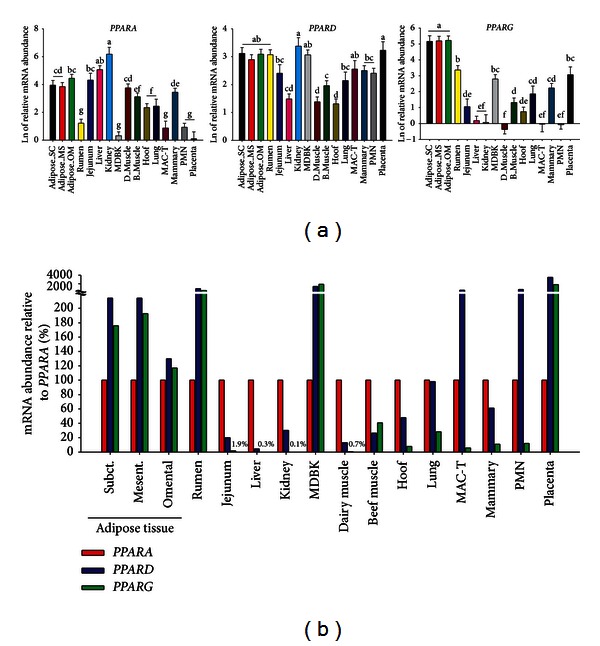
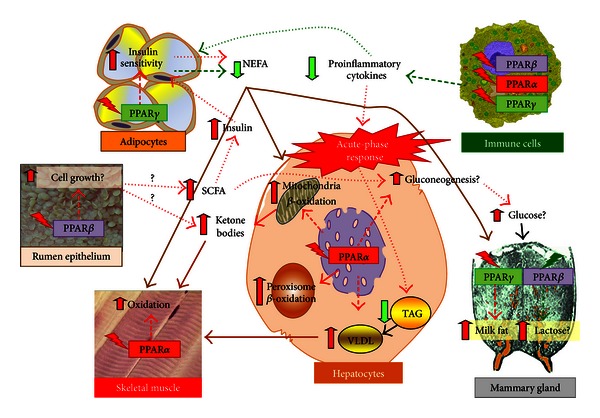
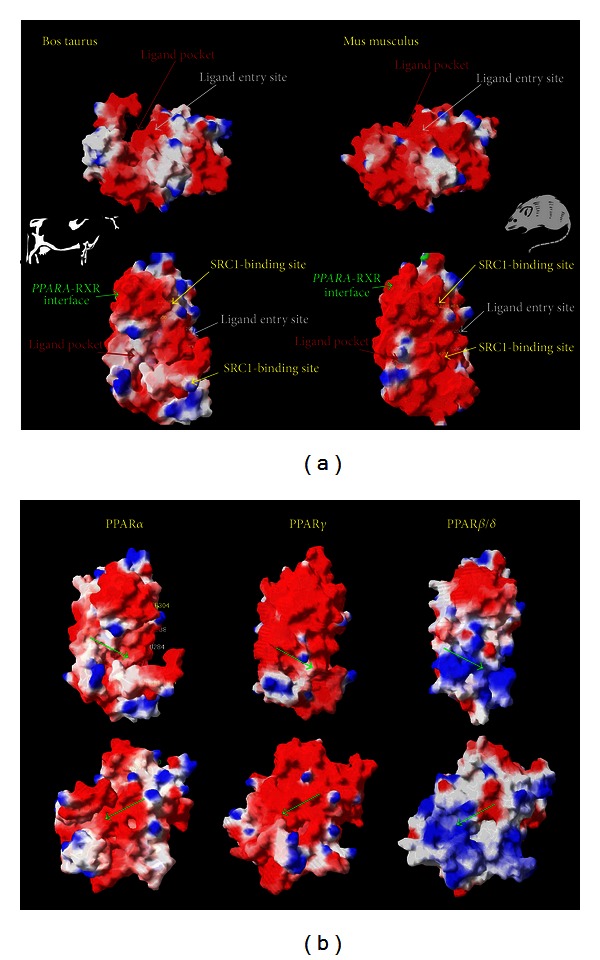
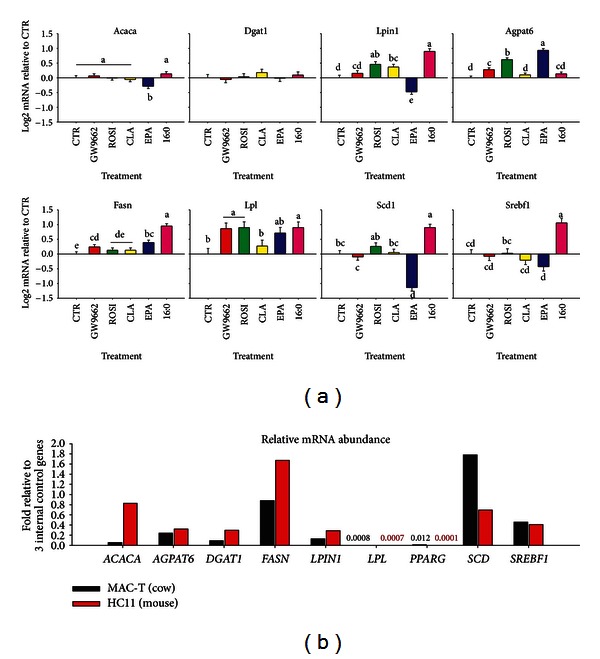
Characterization and biological roles of the peroxisome proliferator-activated receptor (PPAR) isotypes are well known in monogastrics, but not in ruminants. However, a wealth of information has accumulated in little more than a decade on ruminant PPARs including isotype tissue distribution, response to synthetic and natural agonists, gene targets, and factors affecting their expression. Functional characterization demonstrated that, as in monogastrics, the PPAR isotypes control expression of genes involved in lipid metabolism, anti-inflammatory response, development, and growth. Contrary to mouse, however, the PPARγ gene network appears to controls milk fat synthesis in lactating ruminants. As in monogastrics, PPAR isotypes in ruminants are activated by long-chain fatty acids, therefore, making them ideal candidates for fine-tuning metabolism in this species via nutrients. In this regard, using information accumulated in ruminants and monogastrics, we propose a model of PPAR isotype-driven biological functions encompassing key tissues during the peripartal period in dairy cattle.
过氧化物酶体增殖物激活受体(PPAR)同工型的特性和生物学作用在单胃动物中已得到充分研究,但在反刍动物中却知之甚少。然而,在过去的十多年中,人们积累了大量关于反刍动物 PPAR 的信息,包括同工型的组织分布、对合成和天然激动剂的反应、基因靶标以及影响其表达的因素。功能特征表明,与单胃动物一样,PPAR 同工型控制着参与脂代谢、抗炎反应、发育和生长的基因的表达。然而与小鼠不同的是,PPARγ 基因网络似乎控制着反刍动物泌乳期的乳脂合成。与单胃动物一样,反刍动物中的 PPAR 同工型也被长链脂肪酸激活,因此,它们是通过营养物质来精细调节该物种代谢的理想候选物。在这方面,我们利用在反刍动物和单胃动物中积累的信息,提出了一个在奶牛围产期关键组织中由 PPAR 同工型驱动的生物学功能模型。