Gupta Pankaj, Kumar Atin, Gamangatti Shivanand
Department of Radiodiagnosis, All India Institute of Medical Sciences, New Delhi, India.
J Craniovertebr Junction Spine. 2012 Jan;3(1):11-5. doi: 10.4103/0974-8237.110118.
To identify the fracture patterns and mechanism of injury, based on subaxial cervical spine injury classification system (SLIC), on non-contrast computed tomography (NCCT) of cervical spine predictive of vertebral artery injury (VAI).
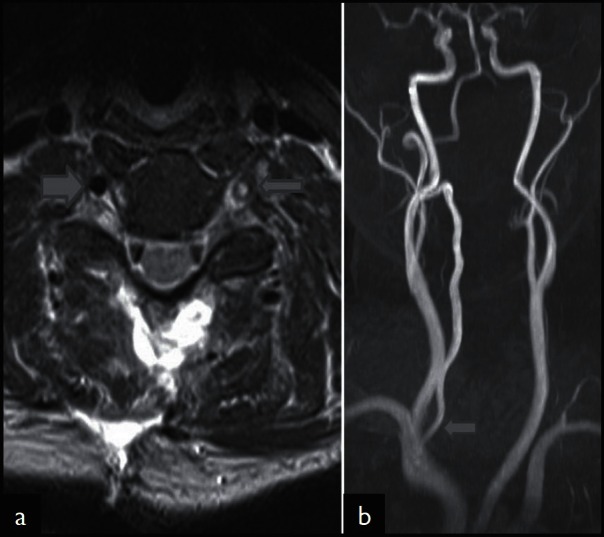
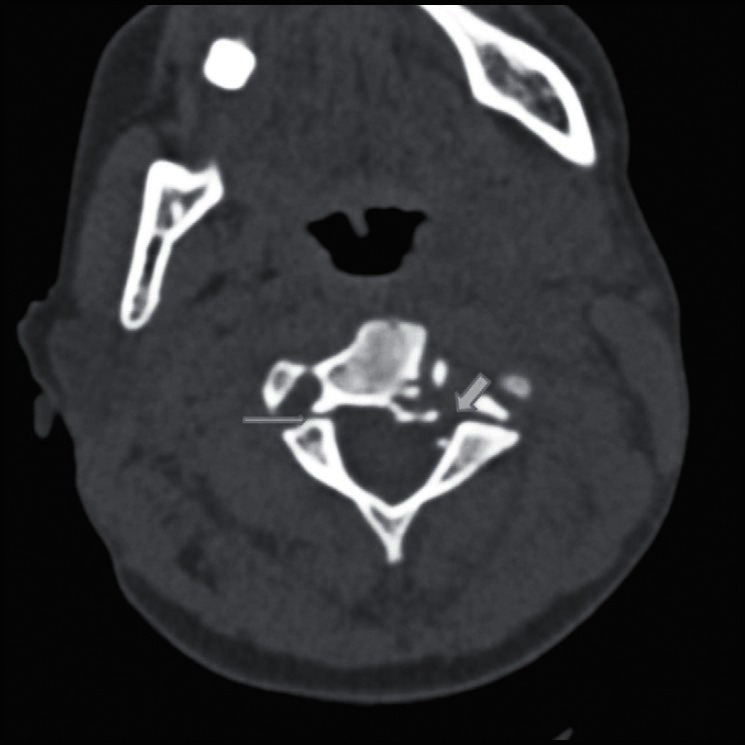
We retrospectively analyzed cervical spine magnetic resonance imaging (MRI) of 320 patients who were admitted with cervical spine injury in our level I regional trauma center over a period of two years (April 2010 to April 2012). Diagnosis of VAI was based on hyperintensity replacing the flow void on a T2-weighted axial image. NCCT images of the selected 43 patients with MRI diagnosis of VAI were then assessed for the pattern of injury. The cervical spinal injuries were classified into those involving the C1 and C2 and subaxial spine. For the latter, SLIC was used.
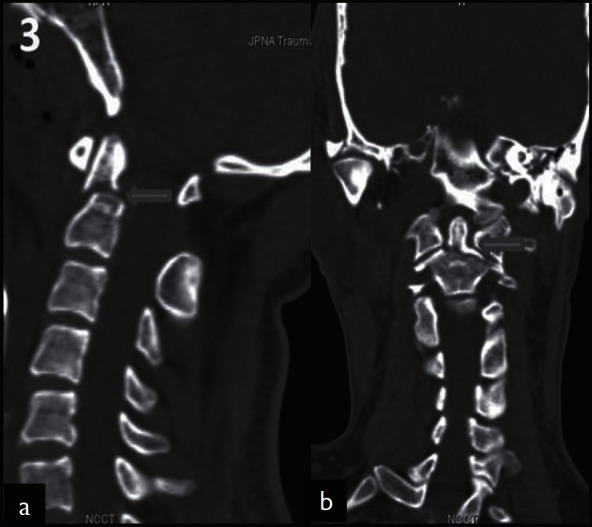
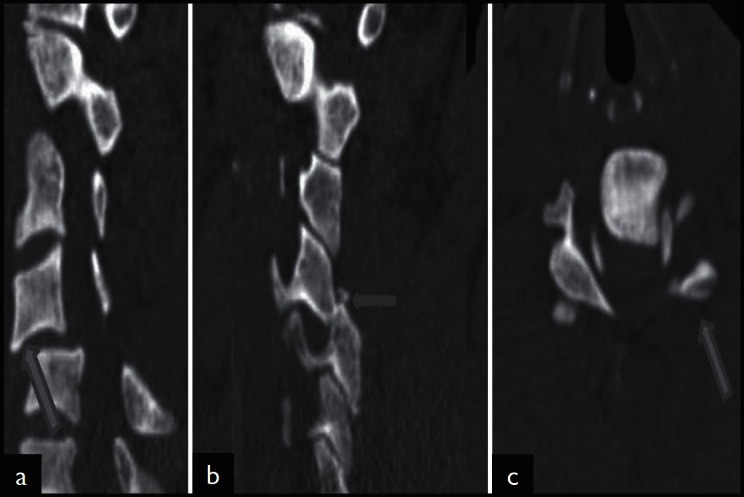
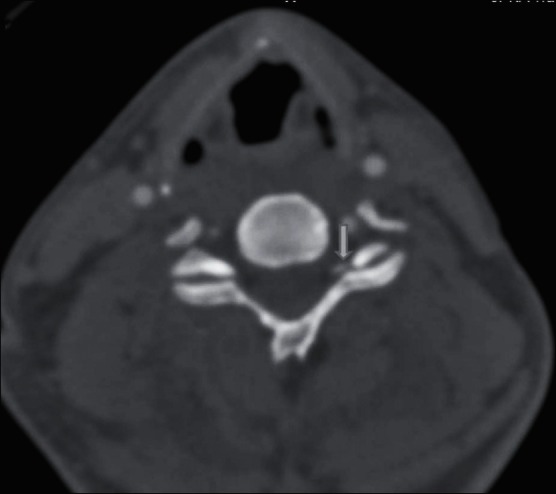
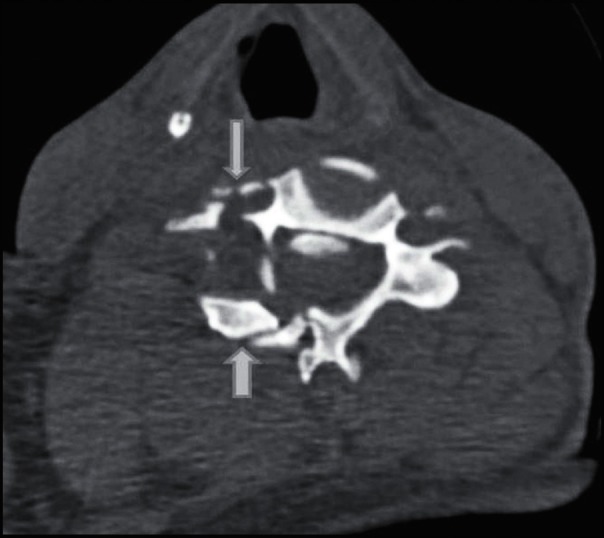
A total of 47 VAI were analyzed in 43 patients. Only one patient with VAI on MRI had no detectable abnormality on NCCT. C1 and C2 injuries were found in one and six patients respectively. In subaxial injuries, the most common mechanism of injury was distraction (37.5%) with facet dislocation with or without fracture representing the most common pattern of injury (55%). C5 was the single most common affected vertebral level. Extension to foramen transversarium was present in 20 (42.5%) cases.
CT represents a robust screening tool for patients with VAI. VAI should be suspected in patients with facet dislocation with or without fractures, foramina transversarium fractures and C1-C3 fractures, especially type III odontoid fractures and distraction mechanism of injury.
基于下颈椎损伤分类系统(SLIC),在颈椎非增强计算机断层扫描(NCCT)上确定骨折类型及损伤机制,以预测椎动脉损伤(VAI)。
我们回顾性分析了我院一级区域创伤中心在两年时间(2010年4月至2012年4月)内收治的320例颈椎损伤患者的颈椎磁共振成像(MRI)。VAI的诊断基于T2加权轴位图像上血流空洞被高信号取代。然后对43例经MRI诊断为VAI的患者的NCCT图像进行损伤类型评估。颈椎损伤分为涉及C1和C2的损伤以及下颈椎损伤。对于后者,采用SLIC分类。
共分析了43例患者的47处VAI。MRI显示VAI的患者中,只有1例在NCCT上未发现可检测到的异常。分别有1例和6例患者存在C1和C2损伤。在下颈椎损伤中,最常见的损伤机制是牵张(37.5%),伴或不伴骨折的小关节脱位是最常见的损伤类型(55%)。C5是最常受累的单个椎体节段。20例(42.5%)病例存在横突孔延伸损伤。
CT是VAI患者的一种可靠筛查工具。对于伴或不伴骨折的小关节脱位、横突孔骨折和C1 - C3骨折患者,尤其是III型齿状突骨折和牵张损伤机制的患者,应怀疑存在VAI。