Dobradin Andrew, Jugmohan Stephanie, Dabul Luis
JSLS. 2013 Jan-Mar;17(1):139-42. doi: 10.4293/108680812X13517013317518.
A common intraoperative complication during laparoscopic cholecystectomy is gallbladder perforation with spillage of gallstones. The undesirable consequence of spilled gallstones is the formation of abscesses months or years after an operation.
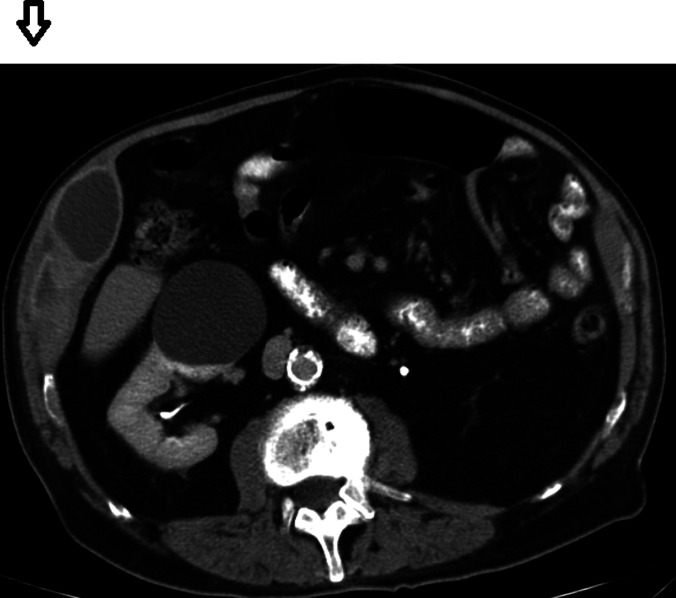
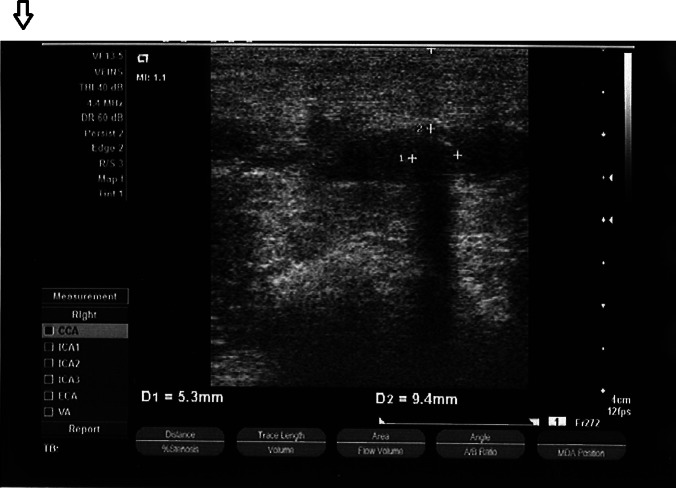
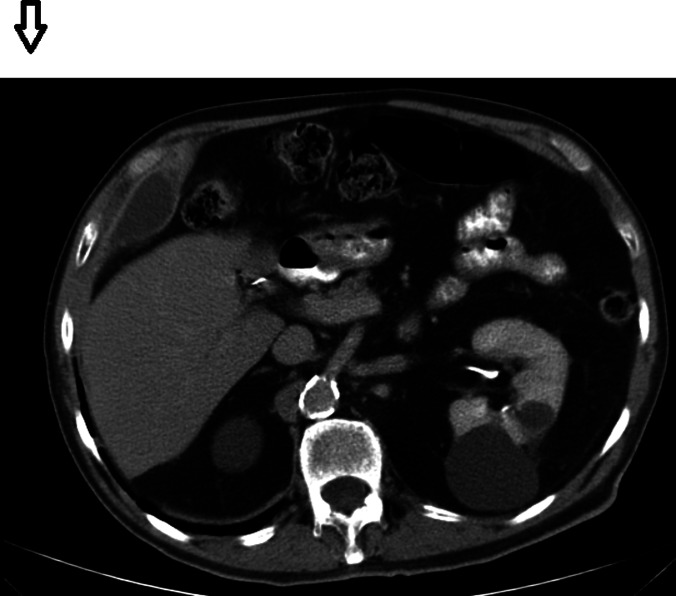
Our clinical report describes an intraabdominal abscess formation in an 82-year-old man that developed 8 years after a laparoscopic cholecystectomy. A computed tomography scan of the abdomen showed an elongated fluid collection in the right abdominal compartment musculature at the level of the internal oblique muscle. Abdominal ultrasonography confirmed a large fluid collection, with 2 echogenic masses in the dependent portion. Incision and drainage of the abscess were performed, and 2 gallstones were found.
Any unusual collection of fluid in the perihepatic space and abdominal wall in the area of the surgical incision in a patient with a remote history of cholecystectomy should be evaluated for abscess related to retained gallstone. Early abscess formation is usually diagnosed and treated by the surgeon. However, the late manifestation might be a clinical problem seen in the primary care physician's office. Therefore, the primary care physician should incorporate diagnosis of gallstone related abscess in patients with abdominal abscess formation of unknown etiology.
腹腔镜胆囊切除术中常见的术中并发症是胆囊穿孔伴胆结石溢出。胆结石溢出的不良后果是术后数月或数年形成脓肿。
我们的临床报告描述了一名82岁男性在腹腔镜胆囊切除术后8年发生的腹腔内脓肿形成。腹部计算机断层扫描显示在腹内斜肌水平的右腹腔隔肌中有一个细长的液体积聚。腹部超声检查证实有大量液体积聚,在下垂部位有2个回声团块。对脓肿进行了切开引流,发现了2颗胆结石。
对于有胆囊切除术远期病史的患者,手术切口区域肝周间隙和腹壁内任何异常的液体积聚都应评估是否与残留胆结石相关的脓肿。早期脓肿形成通常由外科医生诊断和治疗。然而,晚期表现可能是基层医疗医生办公室遇到的临床问题。因此,基层医疗医生应将病因不明的腹腔脓肿患者中与胆结石相关脓肿的诊断纳入其中。