Helmholtz Zentrum München, German Research Center for Environmental Health, Munich, Germany.
Cell Death Dis. 2013 Jun 6;4(6):e661. doi: 10.1038/cddis.2013.179.
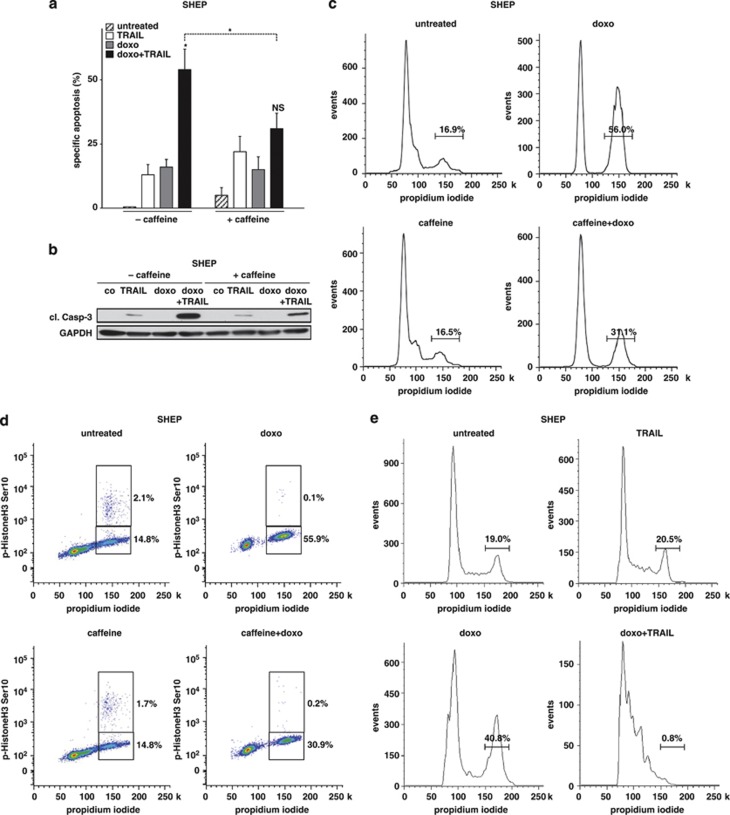
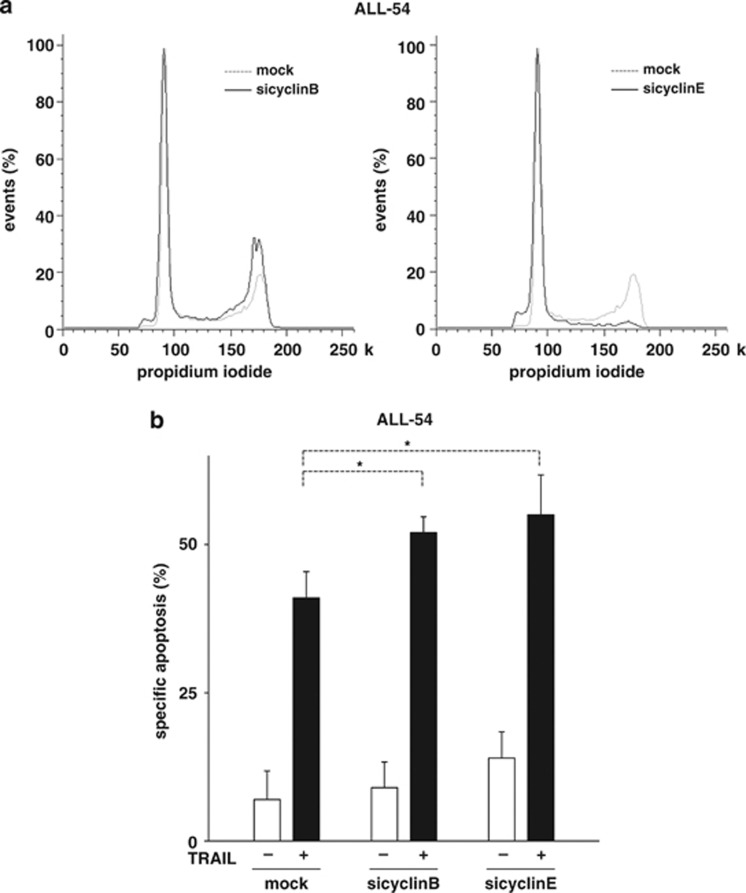
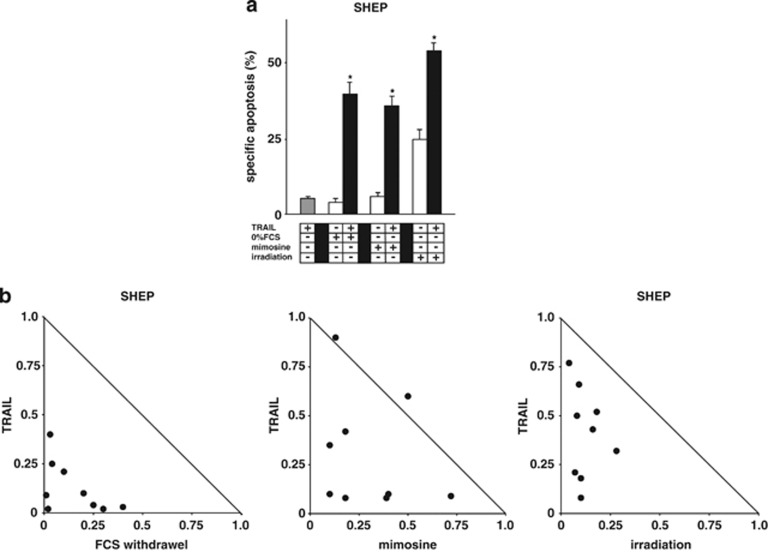
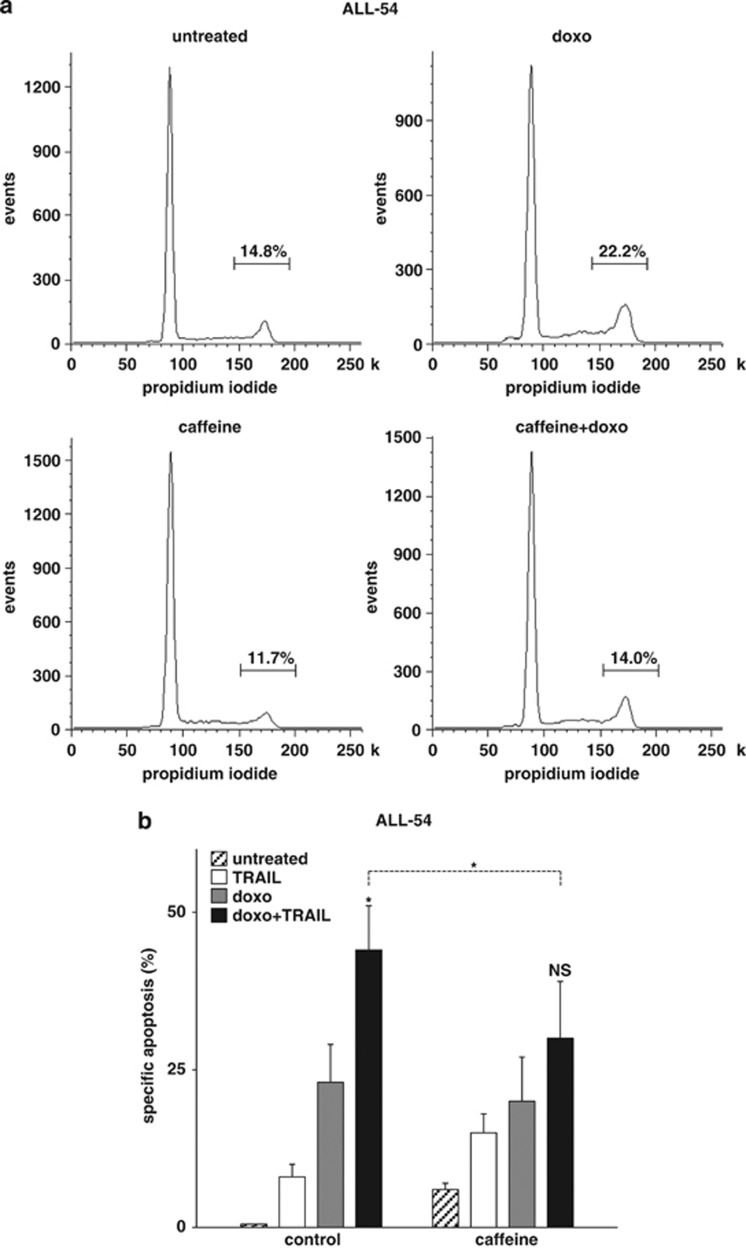
Resting tumor cells represent a huge challenge during anticancer therapy due to their increased treatment resistance. TNF-related apoptosis-inducing ligand (TRAIL) is a putative future anticancer drug, currently in phases I and II clinical studies. We recently showed that TRAIL is able to target leukemia stem cell surrogates. Here, we tested the ability of TRAIL to target cell cycle-arrested tumor cells. Cell cycle arrest was induced in tumor cell lines and xenografted tumor cells in G0, G1 or G2 using cytotoxic drugs, phase-specific inhibitors or RNA interference against cyclinB and E. Biochemical or molecular arrest at any point of the cell cycle increased TRAIL-induced apoptosis. Accordingly, when cell cycle arrest was disabled by addition of caffeine, the antitumor activity of TRAIL was reduced. Most important for clinical translation, tumor cells from three children with B precursor or T cell acute lymphoblastic leukemia showed increased TRAIL-induced apoptosis upon knockdown of either cyclinB or cyclinE, arresting the cell cycle in G2 or G1, respectively. Taken together and in contrast to most conventional cytotoxic drugs, TRAIL exerts enhanced antitumor activity against cell cycle-arrested tumor cells. Therefore, TRAIL might represent an interesting drug to treat static-tumor disease, for example, during minimal residual disease.
静止期肿瘤细胞对癌症治疗是一个巨大的挑战,因为它们的治疗耐药性增加。TNF 相关凋亡诱导配体(TRAIL)是一种潜在的抗癌药物,目前处于 I 期和 II 期临床研究阶段。我们最近表明,TRAIL 能够靶向白血病干细胞替代物。在这里,我们测试了 TRAIL 靶向细胞周期停滞肿瘤细胞的能力。使用细胞毒性药物、特异性抑制剂或针对 cyclinB 和 E 的 RNA 干扰,在 G0、G1 或 G2 期诱导肿瘤细胞系和异种移植肿瘤细胞的细胞周期停滞。在细胞周期的任何一点进行生化或分子停滞都会增加 TRAIL 诱导的细胞凋亡。因此,当通过添加咖啡因使细胞周期停滞失活时,TRAIL 的抗肿瘤活性降低。对于临床转化最重要的是,来自三个患有 B 前体或 T 细胞急性淋巴细胞白血病的儿童的肿瘤细胞,在敲低 cyclinB 或 cyclinE 后,分别使细胞周期停滞在 G2 或 G1 期,显示出 TRAIL 诱导的细胞凋亡增加。总的来说,与大多数传统细胞毒性药物相比,TRAIL 对细胞周期停滞的肿瘤细胞具有增强的抗肿瘤活性。因此,TRAIL 可能代表一种治疗静止期肿瘤疾病的有趣药物,例如在微小残留疾病期间。