Institute of Biodiversity, Animal Health and Comparative Medicine, University of Glasgow, Bearsden Road, G61 1QH, Scotland, UK.
Epidemics. 2013 Jun;5(2):67-76. doi: 10.1016/j.epidem.2013.03.001. Epub 2013 Mar 15.
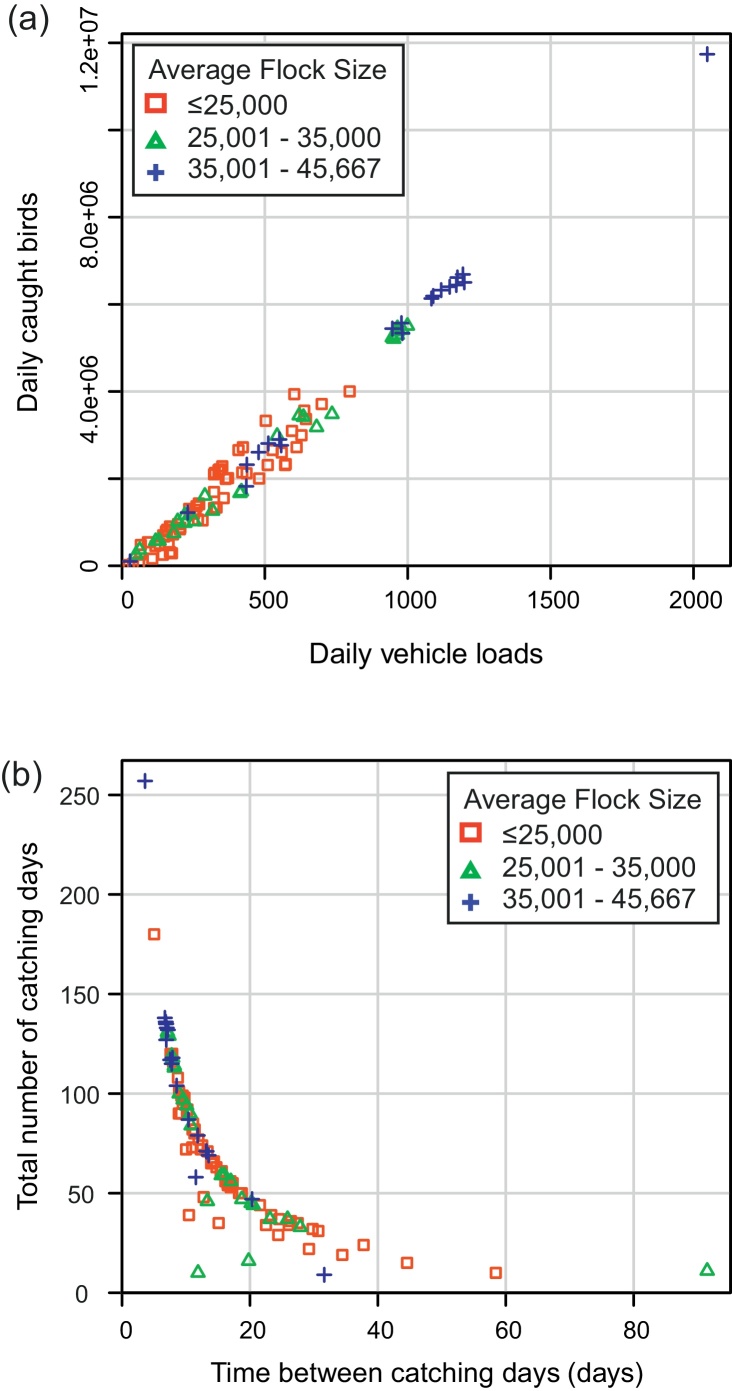
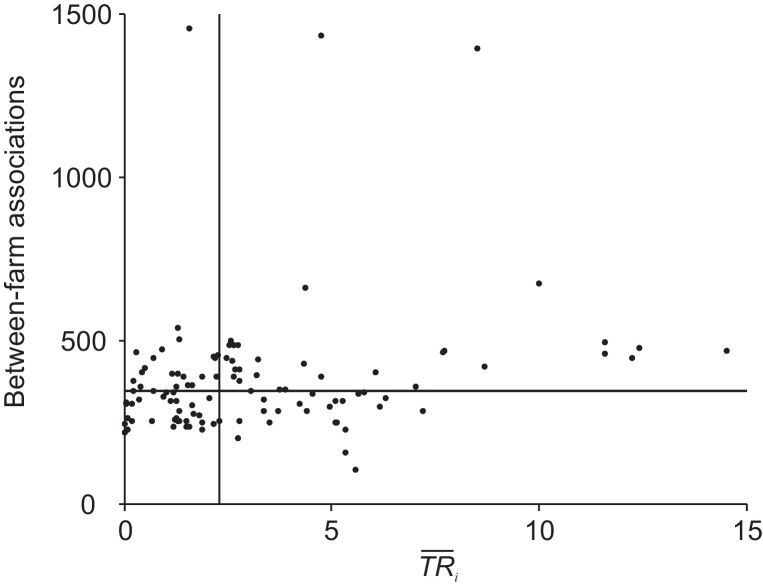
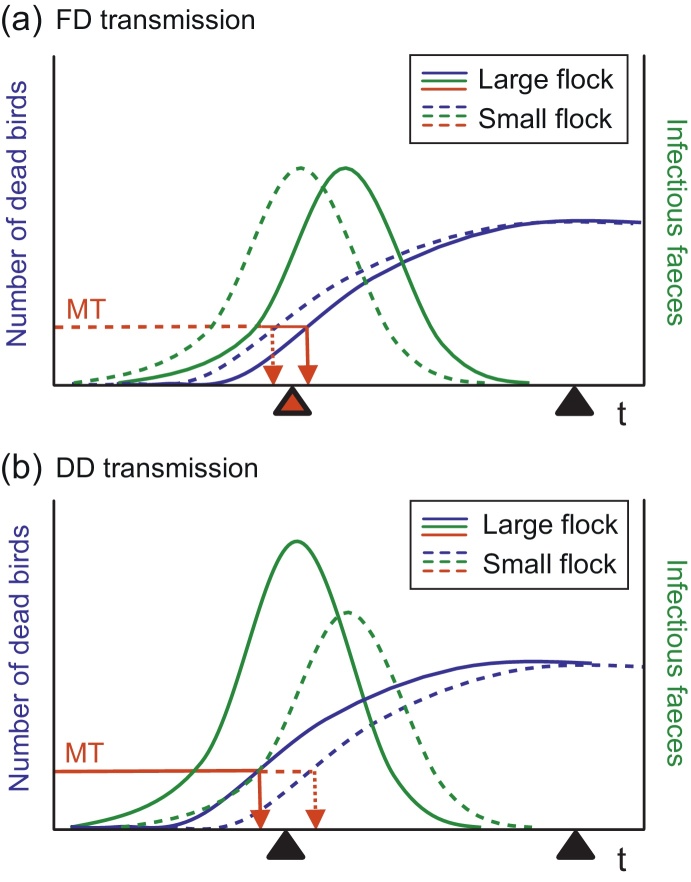
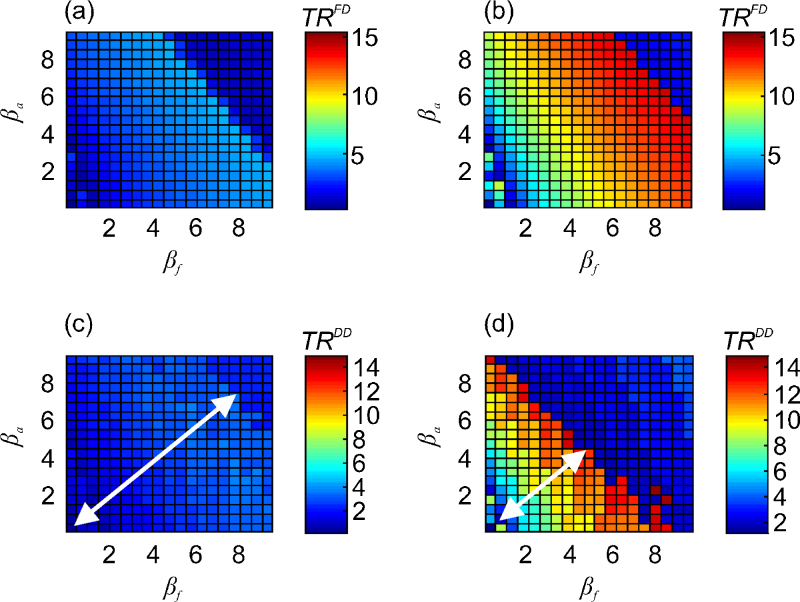
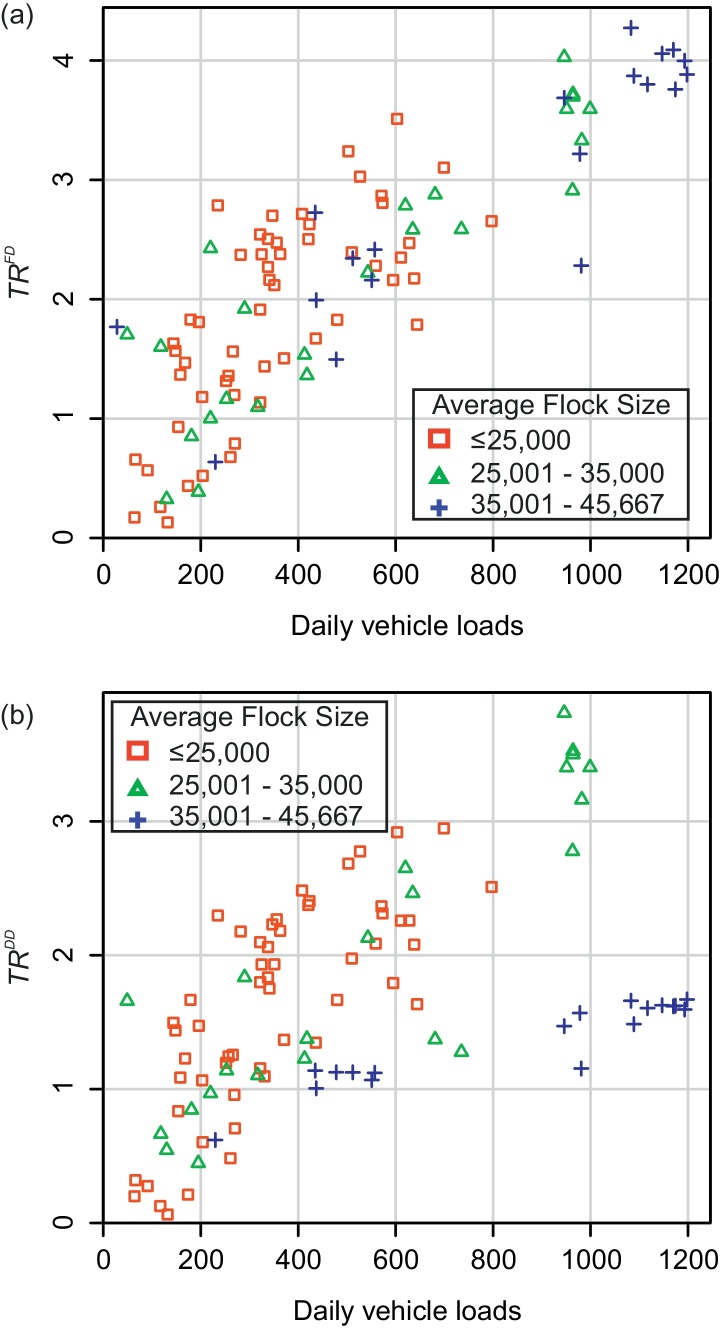
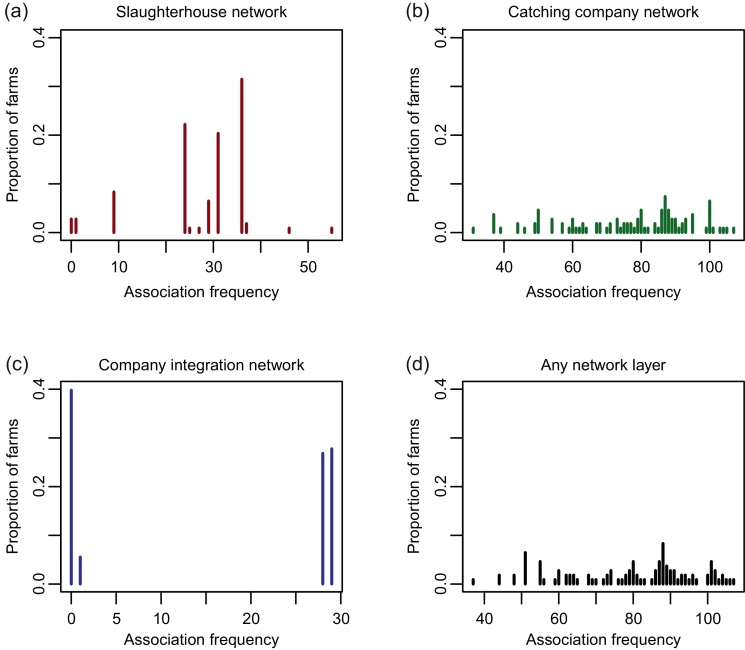
The importance of considering coupled interactions across multiple population scales has not previously been studied for highly pathogenic avian influenza (HPAI) in the British commercial poultry industry. By simulating the within-flock transmission of HPAI using a deterministic S-E-I-R model, and by incorporating an additional environmental class representing infectious faeces, we tracked the build-up of infectious faeces within a poultry house over time. A measure of the transmission risk (TR) was computed for each farm by linking the amount of infectious faeces present each day of an outbreak with data describing the daily on-farm visit schedules for a major British catching company. Larger flocks tended to have greater levels of these catching-team visits. However, where density-dependent contact was assumed, faster outbreak detection (according to an assumed mortality threshold) led to a decreased opportunity for catching-team visits to coincide with an outbreak. For this reason, maximum TR-levels were found for mid-range flock sizes (~25,000-35,000 birds). When assessing all factors simultaneously using multivariable linear regression on the simulated outputs, those related to the pattern of catching-team visits had the largest effect on TR, with the most important movement-related factor depending on the mode of transmission. Using social network analysis on a further database to inform a measure of between-farm connectivity, we identified a large fraction of farms (28%) that had both a high TR and a high potential impact at the between farm level. Our results have counter-intuitive implications for between-farm spread that could not be predicted based on flock size alone, and together with further knowledge of the relative importance of transmission risk and impact, could have implications for improved targeting of control measures.
在英国商业家禽业中,以前从未研究过高致病性禽流感 (HPAI) 在多个种群尺度上考虑耦合相互作用的重要性。通过使用确定性 S-E-I-R 模型模拟 HPAI 在鸡群中的传播,并结合代表传染性粪便的额外环境类别,我们跟踪了家禽舍内传染性粪便随时间的积累。通过将爆发期间每天存在的传染性粪便量与描述英国主要捕捞公司每天在农场访问计划的数据相关联,为每个农场计算了一个传播风险 (TR) 度量值。较大的禽群往往会有更多的捕捞队访问。然而,在假设密度依赖接触的情况下,更快的爆发检测(根据假设的死亡率阈值)导致捕捞队访问与爆发同时发生的机会减少。出于这个原因,中等规模的禽群(约 25,000-35,000 只)的最大 TR 水平。在使用模拟输出进行多变量线性回归同时评估所有因素时,与捕捞队访问模式相关的因素对 TR 的影响最大,最相关的移动相关因素取决于传播方式。我们使用进一步的数据库中的社交网络分析来告知农场间连通性的度量,发现很大一部分农场(28%)具有高 TR 和农场间高潜在影响。我们的结果对农场间传播具有反直觉的影响,这些影响不能仅基于禽群规模来预测,并且结合对传播风险和影响的相对重要性的进一步了解,可能对改进控制措施的针对性具有影响。