Ganguly A, Prockop D J
Department of Biochemistry and Molecular Biology, Jefferson Institute of Molecular Medicine, Jefferson Medical College, Thomas Jefferson University, Philadelphia, PA 19107.
Nucleic Acids Res. 1990 Jul 11;18(13):3933-9. doi: 10.1093/nar/18.13.3933.
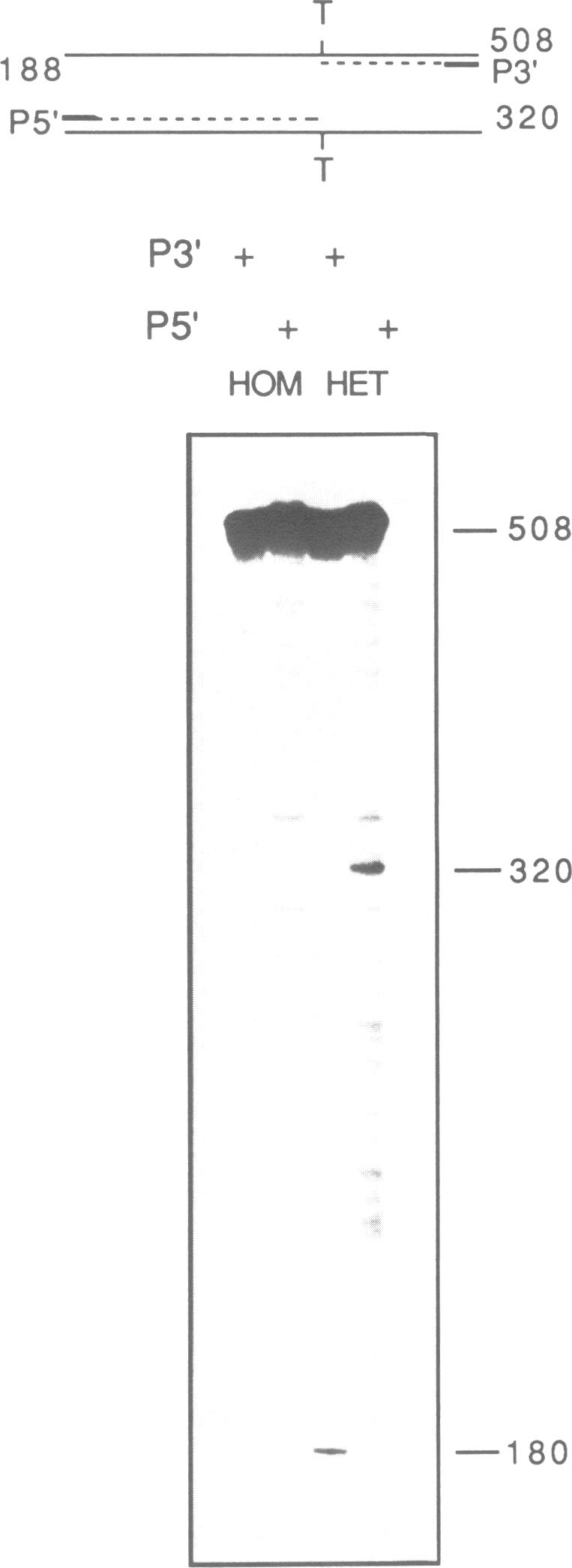
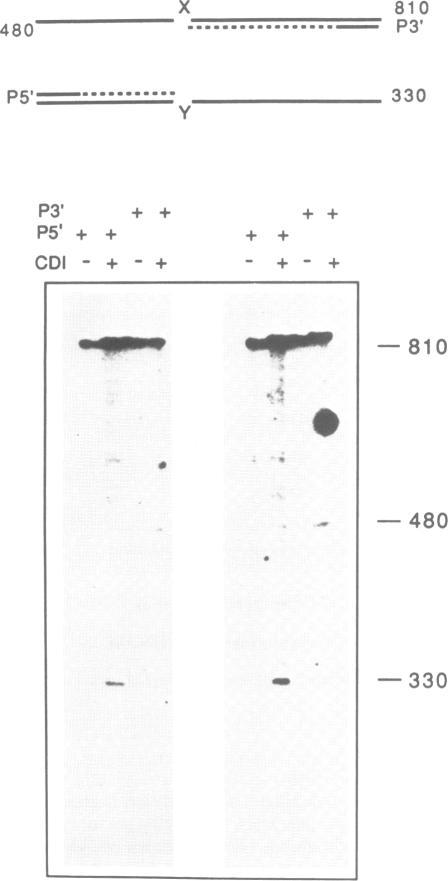
A new method was developed for the detection of single-base mutations in DNA. The polymerase chain reaction was used to prepare DNA fragments of up to 1 kb. Fragments that differed by a single-base were combined, denatured and renatured to generate heteroduplexes. The heteroduplexes were reacted with a water-soluble carbodiimide under conditions in which the carbodiimide modified Gs and Ts that were not base paired. The DNA was then used as a template for primer extension with Taq DNA polymerase under conditions in which extension terminated at the site of the carbodiimide-modified base and generated a 32P-labeled fragment that was identified by polyacrylamide gel electrophoresis as a fragment smaller than the full length product. The procedure detected all four general classes of single-base mutations in several different sequence contexts. The site of the mutation was located to within about 15 bp. Extension with both a 5'- and a 3'-primer made it possible to confirm the site of the mutation in most DNA samples or detect a mutation in heteroduplexes even if a G or T in one strand was unreactive because of its sequence context. The procedure appears to have several advantages over previously published techniques.
开发了一种用于检测DNA中单碱基突变的新方法。聚合酶链反应用于制备长达1 kb的DNA片段。相差一个碱基的片段被混合、变性和复性以产生异源双链体。异源双链体在碳二亚胺修饰未碱基配对的G和T的条件下与水溶性碳二亚胺反应。然后将DNA用作Taq DNA聚合酶进行引物延伸的模板,在延伸在碳二亚胺修饰碱基的位点终止并产生32P标记片段的条件下,该片段通过聚丙烯酰胺凝胶电泳鉴定为比全长产物小的片段。该程序在几种不同的序列背景下检测到了所有四种常见类型的单碱基突变。突变位点定位在约15 bp范围内。使用5'-引物和3'-引物进行延伸使得在大多数DNA样品中确认突变位点或检测异源双链体中的突变成为可能,即使一条链中的G或T由于其序列背景而无反应性。该程序似乎比以前发表的技术有几个优点。