Brunel University London Institute for the Environment, Uxbridge, Middlesex UB8 3PH, UK.
Aquat Toxicol. 2013 Sep 15;140-141:19-26. doi: 10.1016/j.aquatox.2013.05.002. Epub 2013 May 17.
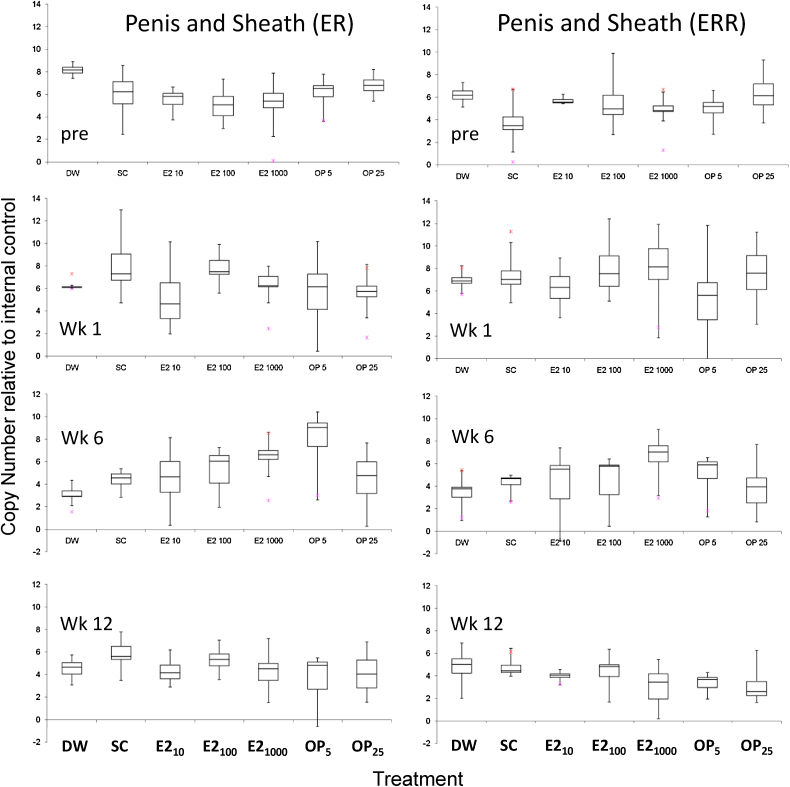
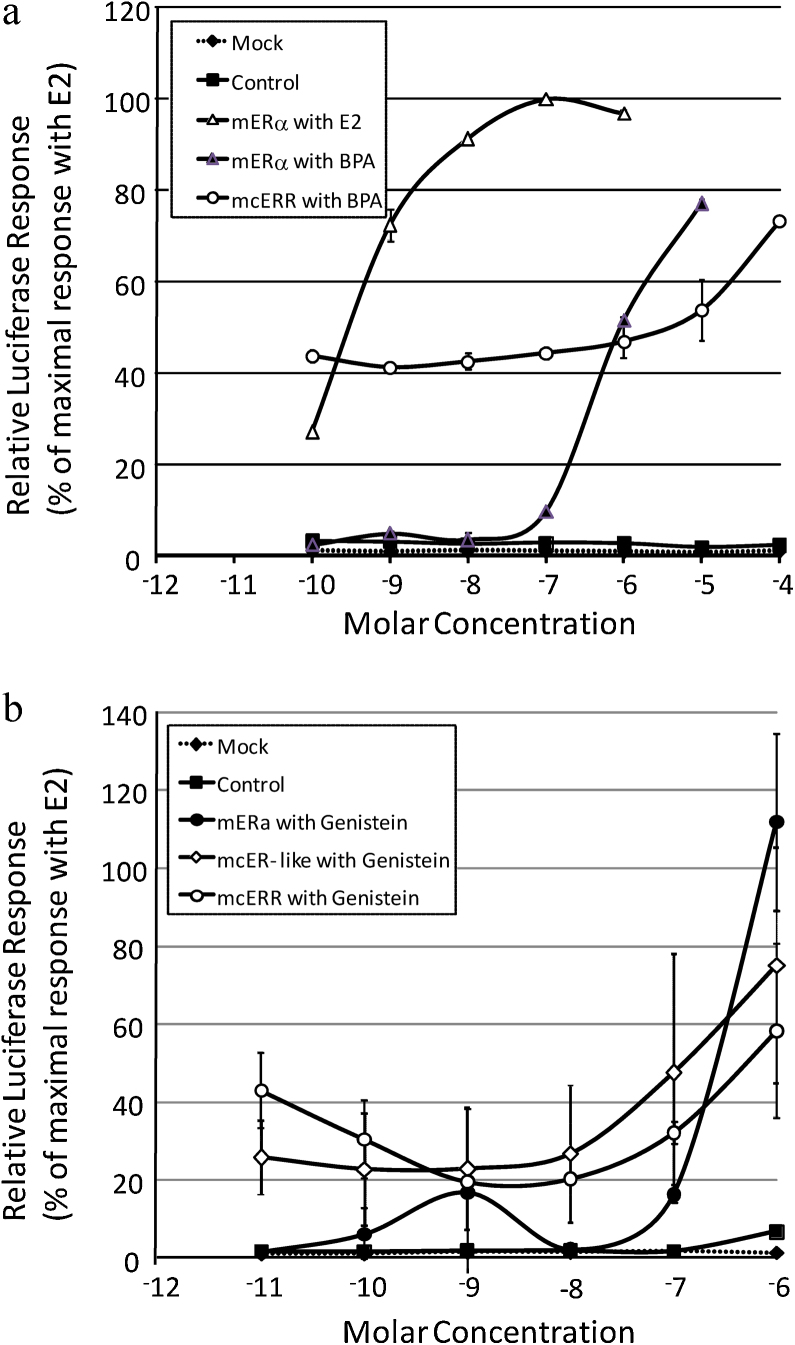
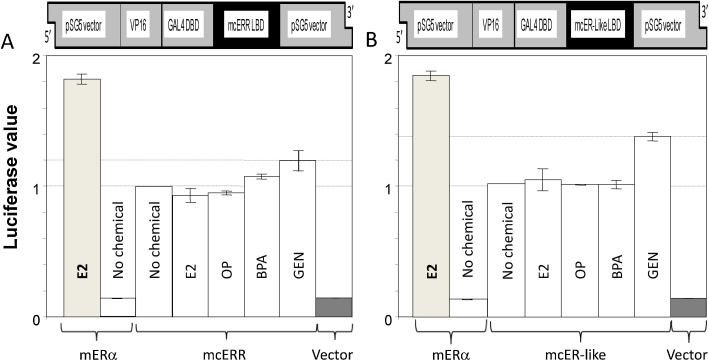
Estrogen receptor orthologues in molluscs may be targets for endocrine disruptors, although mechanistic evidence is lacking. Molluscs are reported to be highly susceptible to effects caused by very low concentrations of environmental estrogens which, if substantiated, would have a major impact on the risk assessment of many chemicals. The present paper describes the most thorough evaluation to-date of the susceptibility of Marisa cornuarietis ER and ERR gene transcription to modulation by vertebrate estrogens in vivo and in vitro. We investigated the effects of estradiol-17β and 4-tert-Octylphenol exposure on in vivo estrogen receptor (ER) and estrogen-related receptor (ERR) gene transcription in the reproductive and neural tissues of the gastropod snail M. cornuarietis over a 12-week period. There was no significant effect (p>0.05) of treatment on gene transcription levels between exposed and non-exposed snails. Absence of a direct interaction of estradiol-17β and 4-tert-Octylphenol with mollusc ER and ERR protein was also supported by in vitro studies in transfected HEK-293 cells. Additional in vitro studies with a selection of other potential ligands (including methyl-testosterone, 17α-ethinylestradiol, 4-hydroxytamoxifen, diethylstilbestrol, cyproterone acetate and ICI182780) showed no interaction when tested using this assay. In repeated in vitro tests, however, genistein (with mcER-like) and bisphenol-A (with mcERR) increased reporter gene expression at high concentrations only (>10(-6)M for Gen and >10(-5)M for BPA, respectively). Like vertebrate estrogen receptors, the mollusc ER protein bound to the consensus vertebrate estrogen-response element (ERE). Together, these data provide no substantial evidence that mcER-like and mcERR activation and transcript levels in tissues are modulated by the vertebrate estrogen estradiol-17β or 4-tert-Octylphenol in vivo, or that other ligands of vertebrate ERs and ERRs (with the possible exception of genistein and bisphenol A, respectively) would do otherwise.
软体动物中的雌激素受体同源物可能是内分泌干扰物的靶标,尽管缺乏机制证据。据报道,软体动物对环境雌激素的极低浓度非常敏感,如果这一事实得到证实,将对许多化学物质的风险评估产生重大影响。本文描述了迄今为止对贻贝 Marisa cornuarietis ER 和 ERR 基因转录对体内和体外脊椎动物雌激素调制的敏感性的最彻底评估。我们研究了在 12 周的时间内,暴露于雌二醇-17β和 4-叔辛基苯酚对腹足纲蜗牛 M. cornuarietis 生殖组织和神经组织中雌激素受体 (ER) 和雌激素相关受体 (ERR) 基因转录的影响。在暴露和未暴露的蜗牛之间,处理对基因转录水平没有显著影响 (p>0.05)。体外转染 HEK-293 细胞的研究也支持雌二醇-17β和 4-叔辛基苯酚与软体动物 ER 和 ERR 蛋白没有直接相互作用。其他一些潜在配体 (包括甲基睾酮、17α-乙炔基雌二醇、4-羟基他莫昔芬、己烯雌酚、醋酸环丙孕酮和 ICI182780) 的额外体外研究表明,在用该测定法测试时,没有相互作用。然而,在重复的体外测试中,染料木黄酮 (与 mcER 样) 和双酚 A (与 mcERR) 仅在高浓度 (>10(-6)M 用于 Gen 和 >10(-5)M 用于 BPA) 时才增加报告基因的表达。与脊椎动物雌激素受体一样,软体动物 ER 蛋白与共识脊椎动物雌激素反应元件 (ERE) 结合。综上所述,这些数据没有提供实质性证据表明 mcER 样和 mcERR 在组织中的激活和转录水平受体内脊椎动物雌激素雌二醇-17β或 4-叔辛基苯酚调节,或者其他脊椎动物 ER 和 ERR 的配体 (可能除了染料木黄酮和双酚 A 分别) 会有其他作用。