Hallmann Anna, Konieczna Lucyna, Swiezak Justyna, Milczarek Ryszard, Smolarz Katarzyna
Department of Pharmaceutical Biochemistry, Medical University of Gdańsk, Gdańsk, Poland.
Department of Pharmaceutical Chemistry, Medical University of Gdańsk, Gdańsk, Poland.
PeerJ. 2019 May 22;7:e6953. doi: 10.7717/peerj.6953. eCollection 2019.
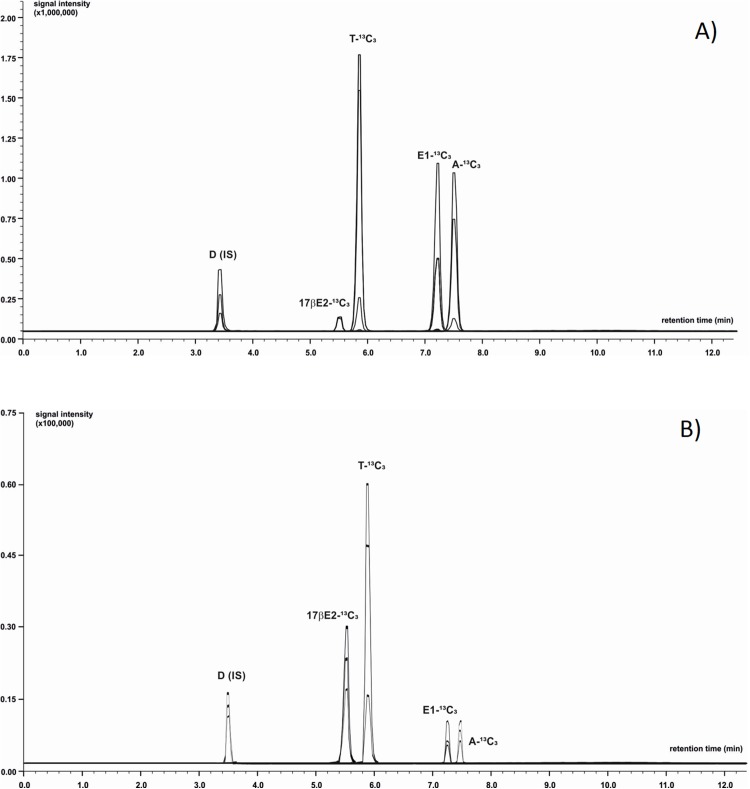
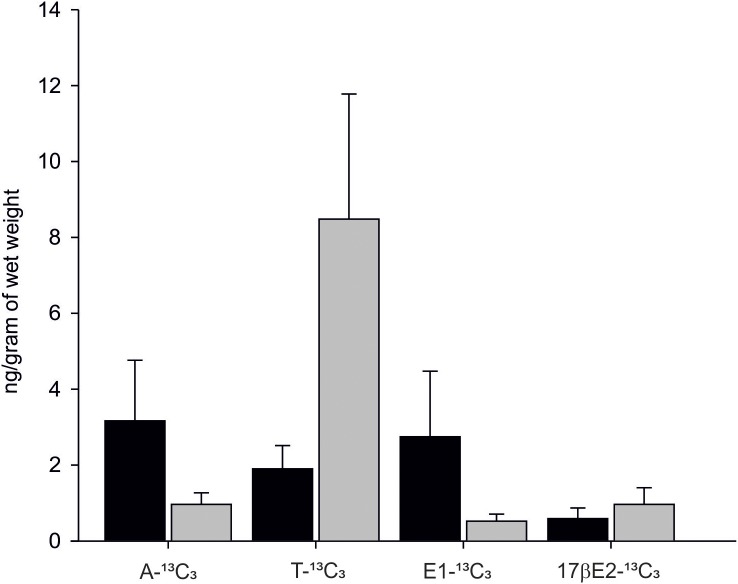
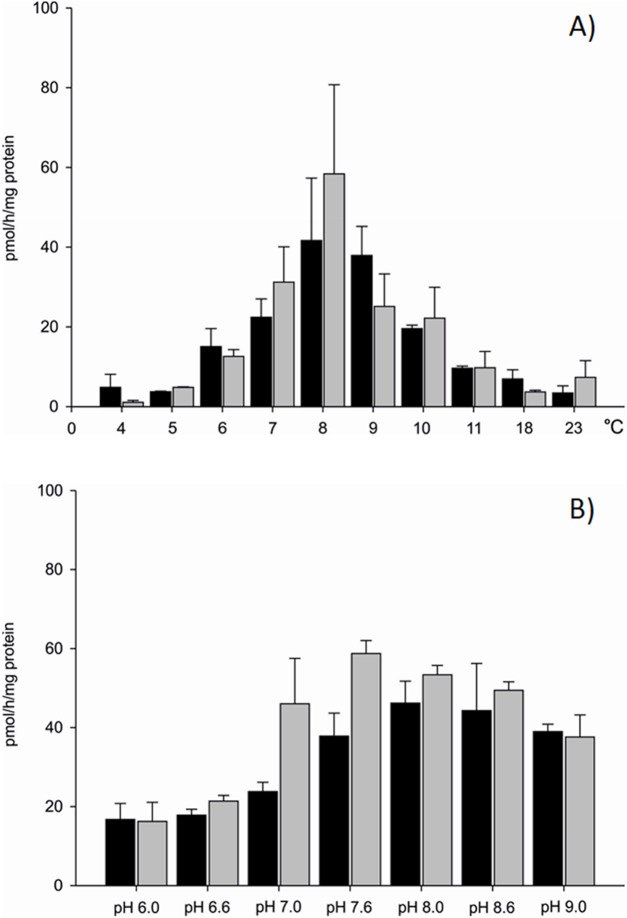
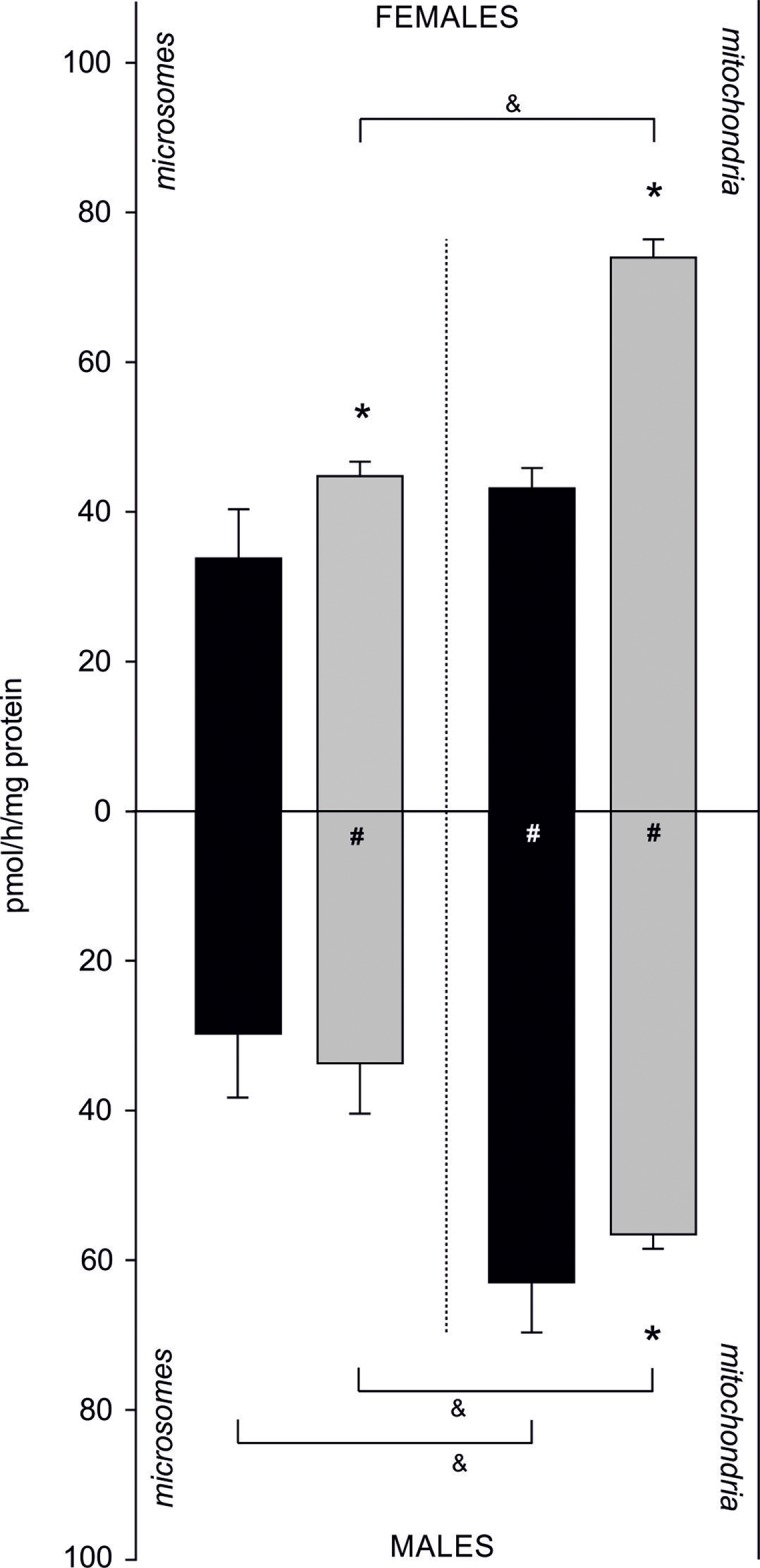
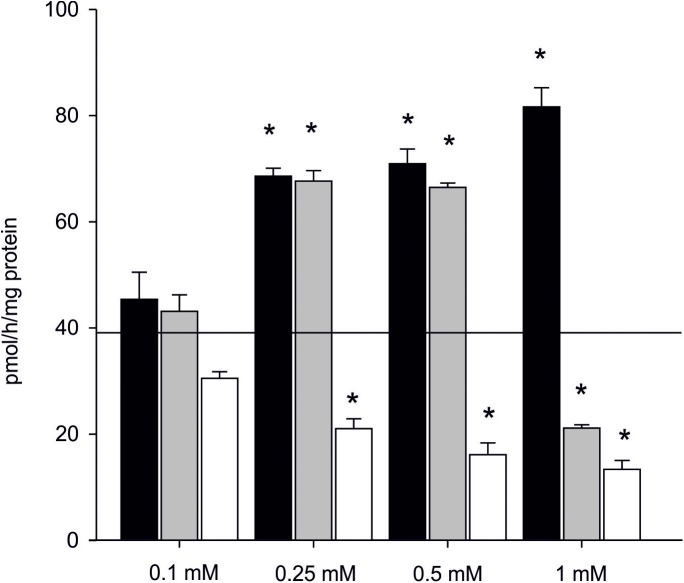
In this study, we demonstrated the presence of the enzymatic complex able to perform aromatization (estrogen synthesis) in both, the microsomal and mitochondrial fractions of gills and gonads from . Based on in vitro experiments, we highlighted the importance of temperature as the limiting factor of aromatisation efficiency (AE) in mussels. After testing range of temperatures (4-23 °C), the highest AE was found during incubation at 8 °C and pH 7.6 (41.66 pmol/h/mg protein in gills and 58.37 pmol/h/mg protein in gonads). The results were confirmed during field studies where the most efficient aromatisation occurred in bivalves collected in spring while the least effective in those collected in winter. During in vitro studies, AE turned out to be more intensive in female gonads than in male gonads. The process was also more intensive in mitochondrial fraction than in microsomal one (62.97 pmol/h/mg protein in male gills and 73.94 pmol/h/mg protein in female gonads). Enzymatic complex (aromatase-like enzyme) catalysing aromatisation in mussels was found to be insensitive to inhibitory effect of selective inhibitors of mammalian aromatase such as letrozole and anastrazole, suggesting its different structure from vertebrate aromatase. Further in vivo studies using C-labeled steroids at 8 °C temperature window confirmed that bivalves are able to uptake testosterone and androstenedione from the ambient environment and metabolise them to estrone and 17β-estradiol thus confirming endogenous estrogen' synthesis.
在本研究中,我们证明了在贻贝鳃和性腺的微粒体和线粒体部分中均存在能够进行芳香化作用(雌激素合成)的酶复合物。基于体外实验,我们强调了温度作为贻贝芳香化效率(AE)限制因素的重要性。在测试了一系列温度(4-23°C)后,发现在8°C和pH 7.6孵育期间AE最高(鳃中为41.66 pmol/h/mg蛋白质,性腺中为58.37 pmol/h/mg蛋白质)。该结果在实地研究中得到了证实,实地研究发现春季采集的双壳贝类中芳香化作用最有效,而冬季采集的双壳贝类中效果最差。在体外研究中,发现雌性性腺中的AE比雄性性腺更强烈。该过程在线粒体部分也比微粒体部分更强烈(雄性鳃中为62.97 pmol/h/mg蛋白质,雌性性腺中为73.94 pmol/h/mg蛋白质)。发现催化贻贝中芳香化作用的酶复合物(芳香化酶样酶)对哺乳动物芳香化酶的选择性抑制剂如来曲唑和阿那曲唑的抑制作用不敏感,这表明其结构与脊椎动物芳香化酶不同。在8°C温度窗口下使用C标记类固醇的进一步体内研究证实,双壳贝类能够从周围环境中摄取睾酮和雄烯二酮,并将它们代谢为雌酮和17β-雌二醇,从而证实了内源性雌激素的合成。