Committee on the Neurobiology of Addictive Disorders, The Scripps Research Institute, 10550 North Torrey Pines Road, SP30-2400, La Jolla, CA 92037, USA.
Neuropharmacology. 2014 Jan;76 Pt B(0 0):370-82. doi: 10.1016/j.neuropharm.2013.05.024. Epub 2013 Jun 6.
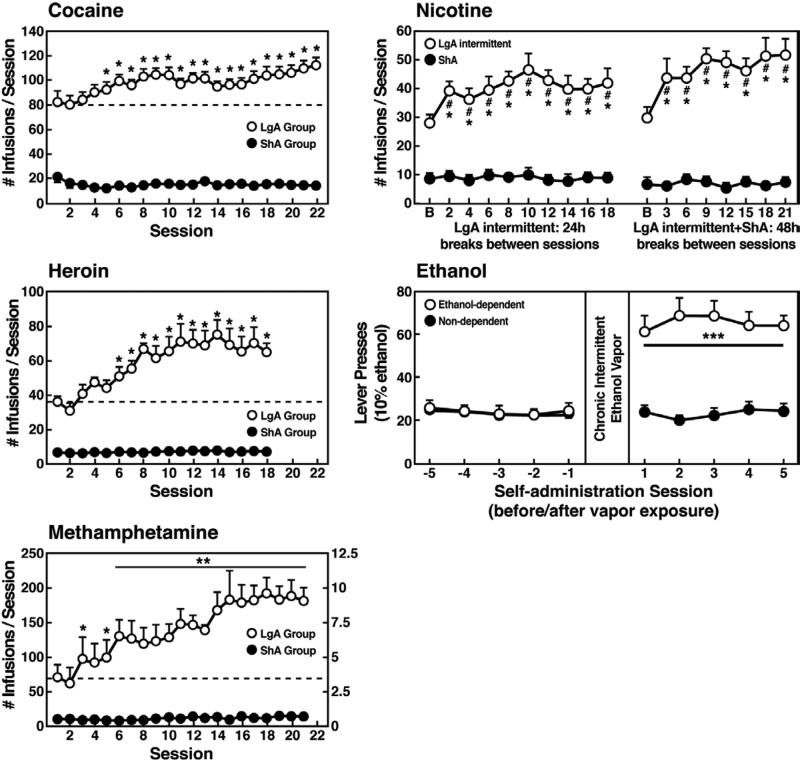
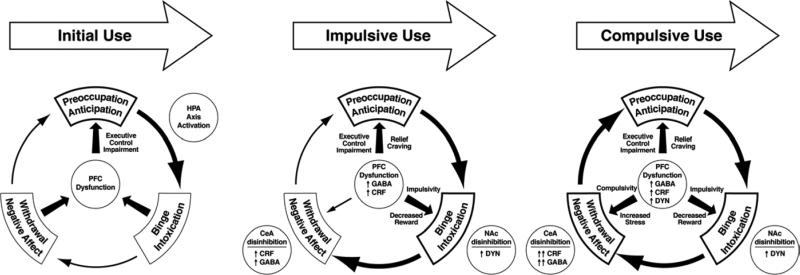
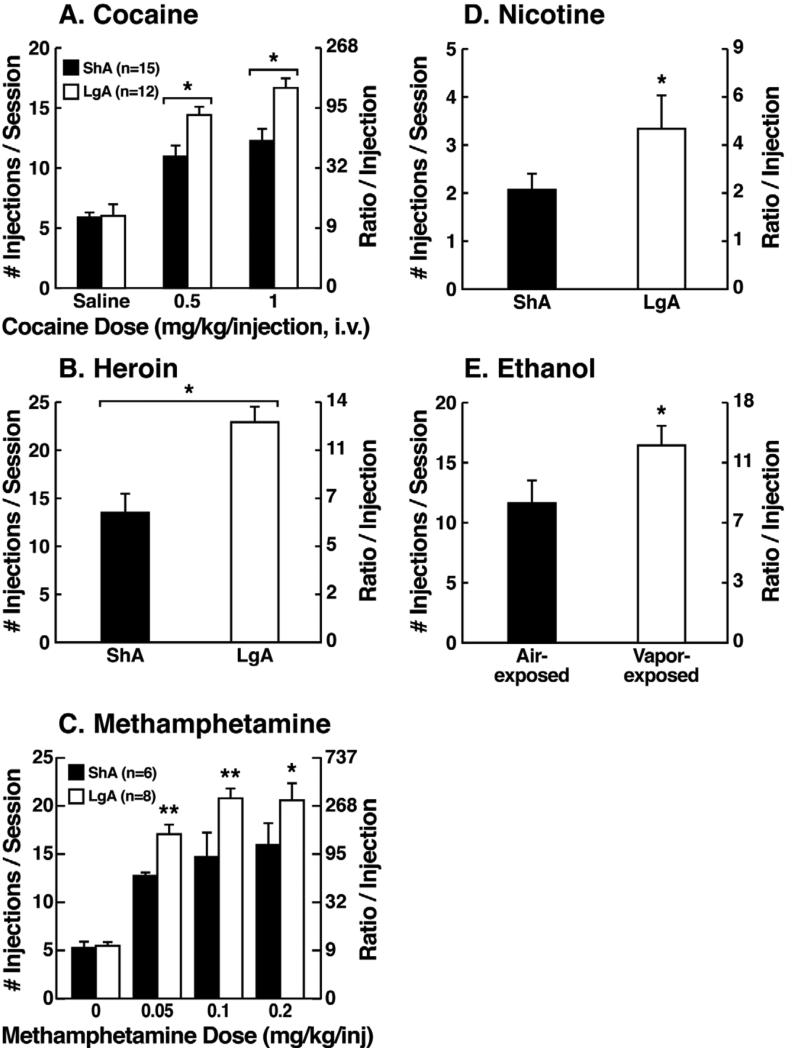
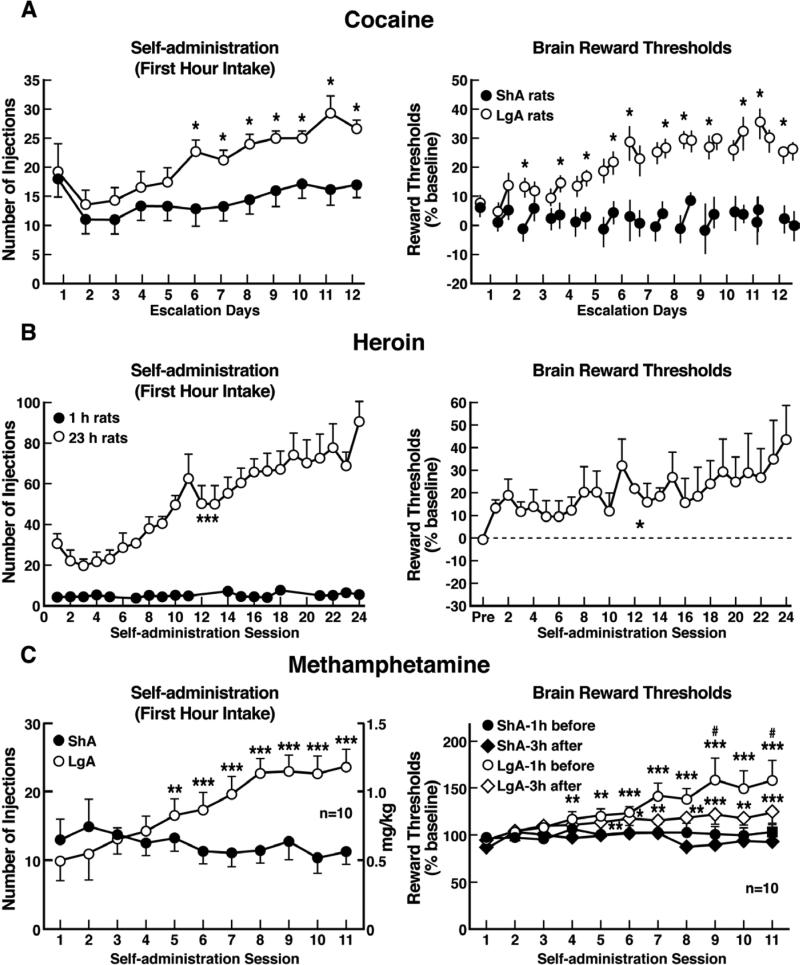
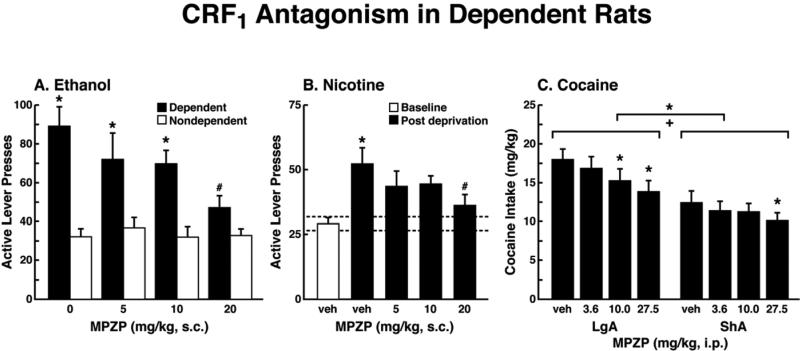
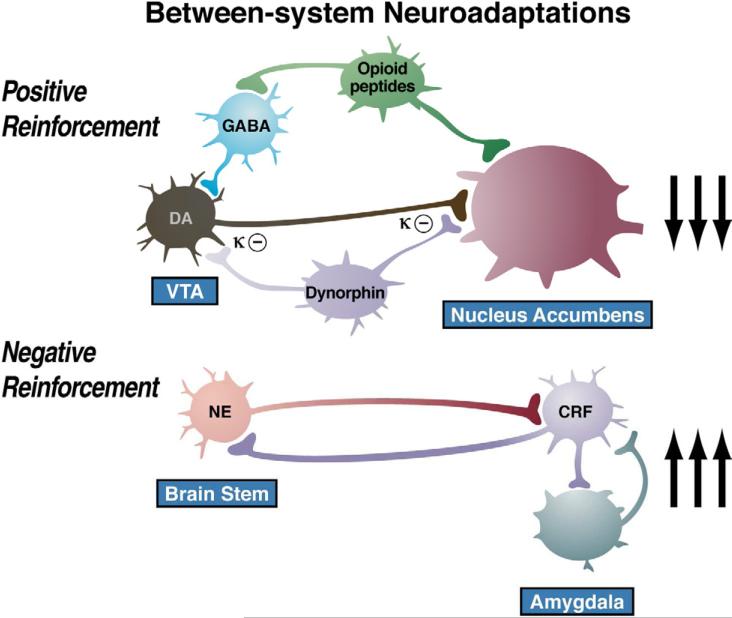
Drug addiction has been conceptualized as a chronically relapsing disorder of compulsive drug seeking and taking that progresses through three stages: binge/intoxication, withdrawal/negative affect, and preoccupation/anticipation. Drug addiction impacts multiple motivational mechanisms and can be conceptualized as a disorder that progresses from positive reinforcement (binge/intoxication stage) to negative reinforcement (withdrawal/negative affect stage). The construct of negative reinforcement is defined as drug taking that alleviates a negative emotional state. Our hypothesis is that the negative emotional state that drives such negative reinforcement is derived from dysregulation of key neurochemical elements involved in the brain stress systems within the frontal cortex, ventral striatum, and extended amygdala. Specific neurochemical elements in these structures include not only recruitment of the classic stress axis mediated by corticotropin-releasing factor (CRF) in the extended amygdala as previously hypothesized but also recruitment of dynorphin-κ opioid aversive systems in the ventral striatum and extended amygdala. Additionally, we hypothesized that these brain stress systems may be engaged in the frontal cortex early in the addiction process. Excessive drug taking engages activation of CRF not only in the extended amygdala, accompanied by anxiety-like states, but also in the medial prefrontal cortex, accompanied by deficits in executive function that may facilitate the transition to compulsive-like responding. Excessive activation of the nucleus accumbens via the release of mesocorticolimbic dopamine or activation of opioid receptors has long been hypothesized to subsequently activate the dynorphin-κ opioid system, which in turn can decrease dopaminergic activity in the mesocorticolimbic dopamine system. Blockade of the κ opioid system can also block anxiety-like and reward deficits associated with withdrawal from drugs of abuse and block the development of compulsive-like responding during extended access to drugs of abuse, suggesting another powerful brain stress/anti-reward system that contributes to compulsive drug seeking. Thus, brain stress response systems are hypothesized to be activated by acute excessive drug intake, to be sensitized during repeated withdrawal, to persist into protracted abstinence, and to contribute to the development and persistence of addiction. The recruitment of anti-reward systems provides a powerful neurochemical basis for the negative emotional states that are responsible for the dark side of addiction. This article is part of a Special Issue entitled 'NIDA 40th Anniversary Issue'.
药物成瘾被概念化为一种强迫性觅药和用药的慢性复发性疾病,可分为三个阶段:狂欢/中毒、戒断/负性情绪和专注/期待。药物成瘾影响多种动机机制,可被概念化为一种从正强化(狂欢/中毒阶段)发展到负强化(戒断/负性情绪阶段)的疾病。负强化的概念被定义为缓解负性情绪状态的药物使用。我们的假设是,驱动这种负强化的负性情绪状态源自额叶皮质、腹侧纹状体和扩展杏仁核内参与大脑应激系统的关键神经化学元素的失调。这些结构中的特定神经化学元素不仅包括先前假设的扩展杏仁核中由促肾上腺皮质释放因子(CRF)介导的经典应激轴的募集,还包括腹侧纹状体和扩展杏仁核中内啡肽-κ阿片厌恶系统的募集。此外,我们假设这些大脑应激系统可能在成瘾过程的早期就参与到额叶皮质中。过度的药物使用不仅会导致 CRF 在扩展杏仁核中的过度激活,伴随着焦虑样状态,还会导致内侧前额叶皮质的过度激活,伴随着执行功能的缺陷,这可能促进向强迫样反应的转变。通过释放中脑皮质边缘多巴胺或激活阿片受体,长期以来一直假设过度激活伏隔核会随后激活内啡肽-κ阿片系统,而内啡肽-κ阿片系统反过来又会降低中脑皮质边缘多巴胺系统中的多巴胺活性。κ阿片系统的阻断也可以阻断与滥用药物戒断相关的焦虑样和奖励缺陷,并阻断在滥用药物的延长获取期间强迫样反应的发展,这表明另一种强大的大脑应激/抗奖励系统有助于强迫性觅药。因此,大脑应激反应系统被假设在急性过度药物摄入时被激活,在反复戒断时被敏化,在长时间戒断时持续存在,并有助于成瘾的发展和持续存在。抗奖励系统的募集为导致成瘾黑暗面的负性情绪状态提供了强大的神经化学基础。本文是一篇题为“NIDA 40 周年特刊”的特刊文章的一部分。