Committee on the Neurobiology of Addictive Disorders, The Scripps Research Institute , La Jolla, CA , USA.
Front Psychiatry. 2013 Aug 1;4:72. doi: 10.3389/fpsyt.2013.00072. eCollection 2013.
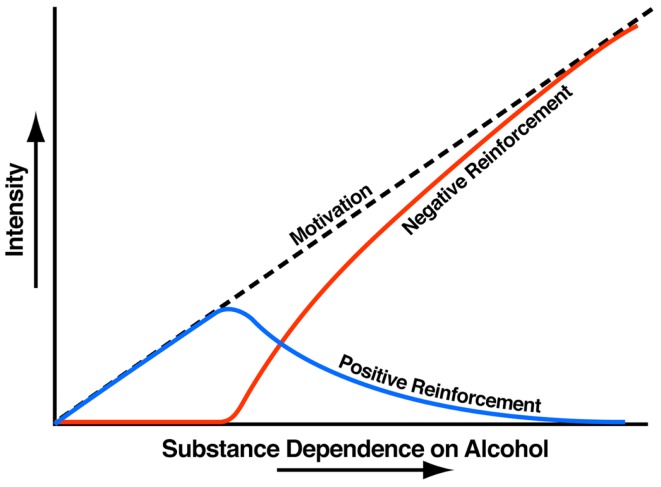
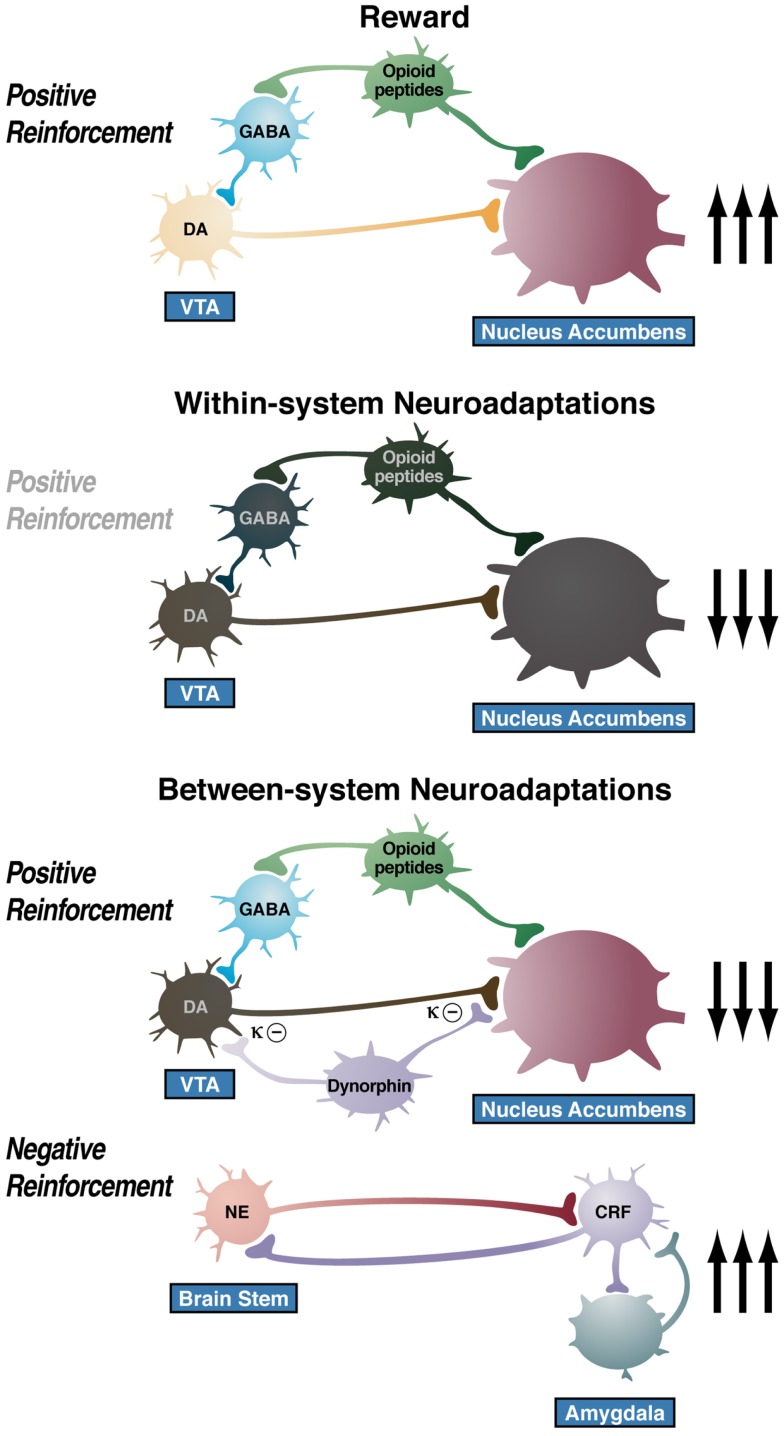
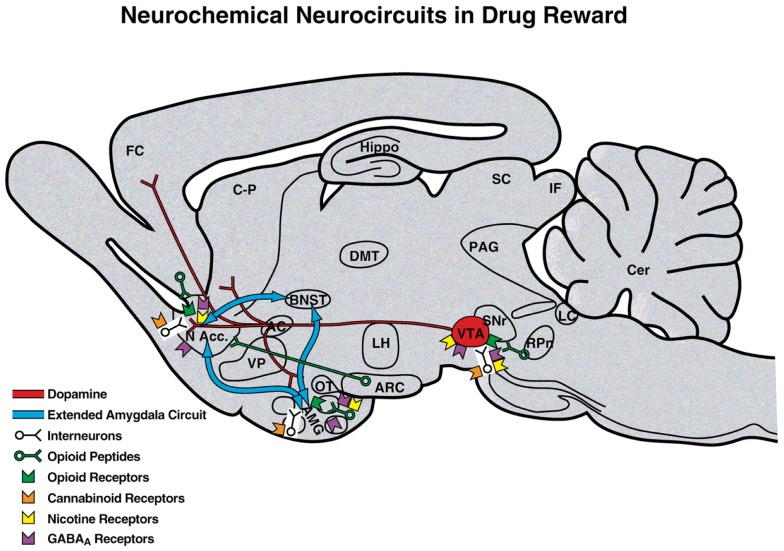
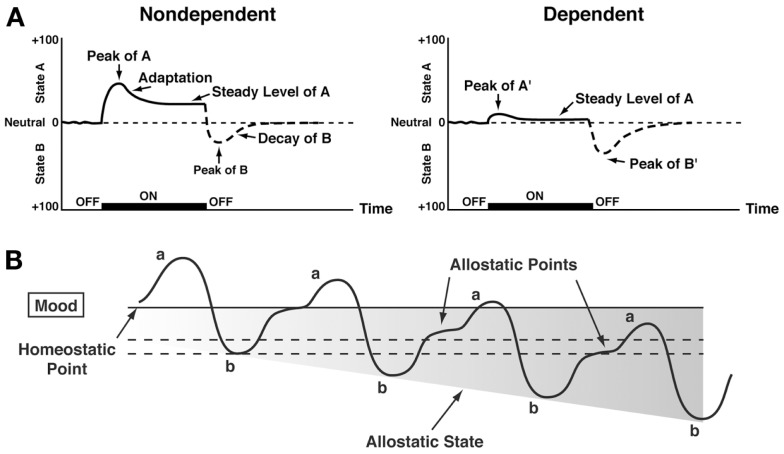
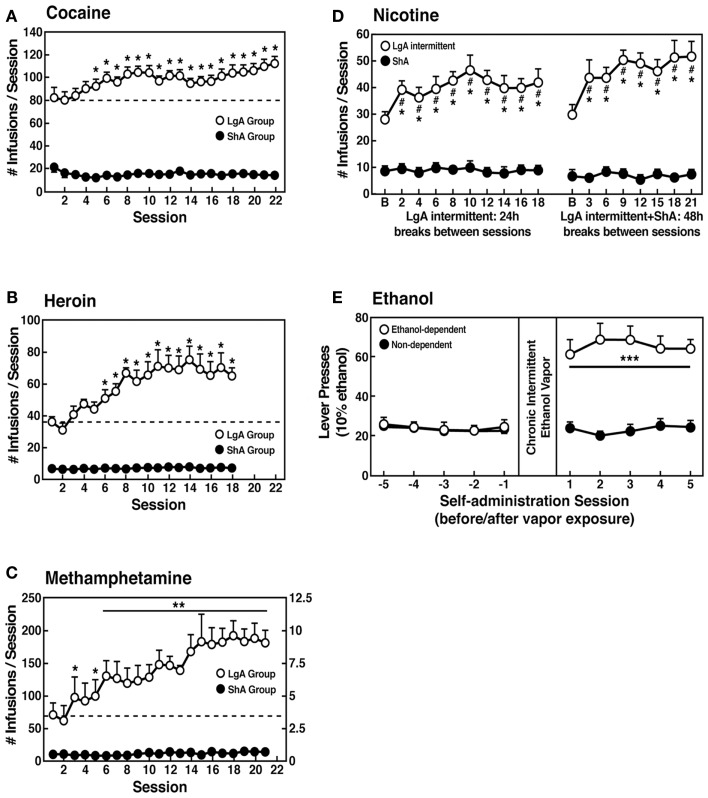
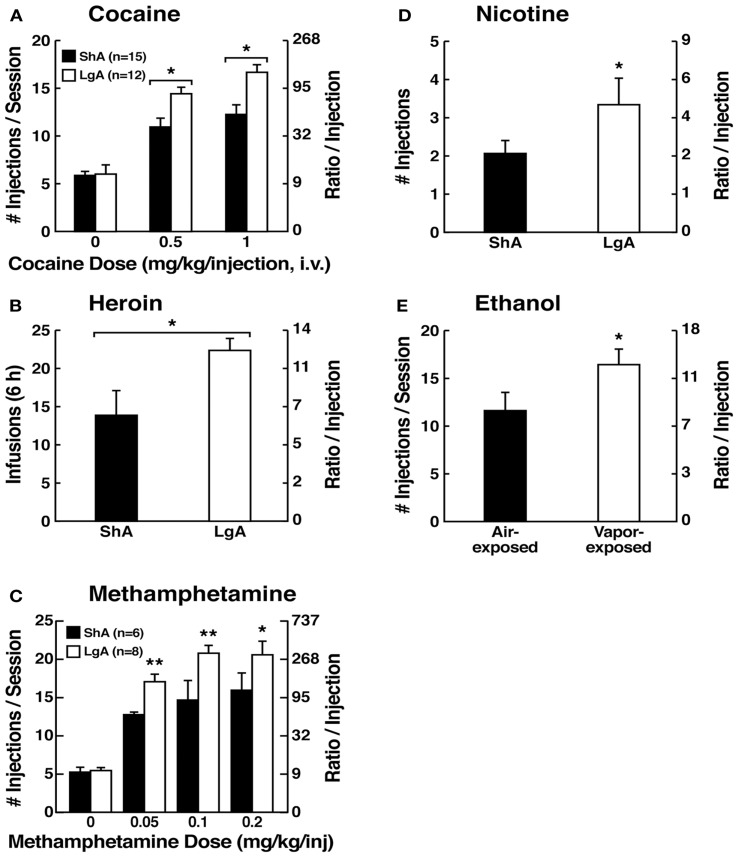
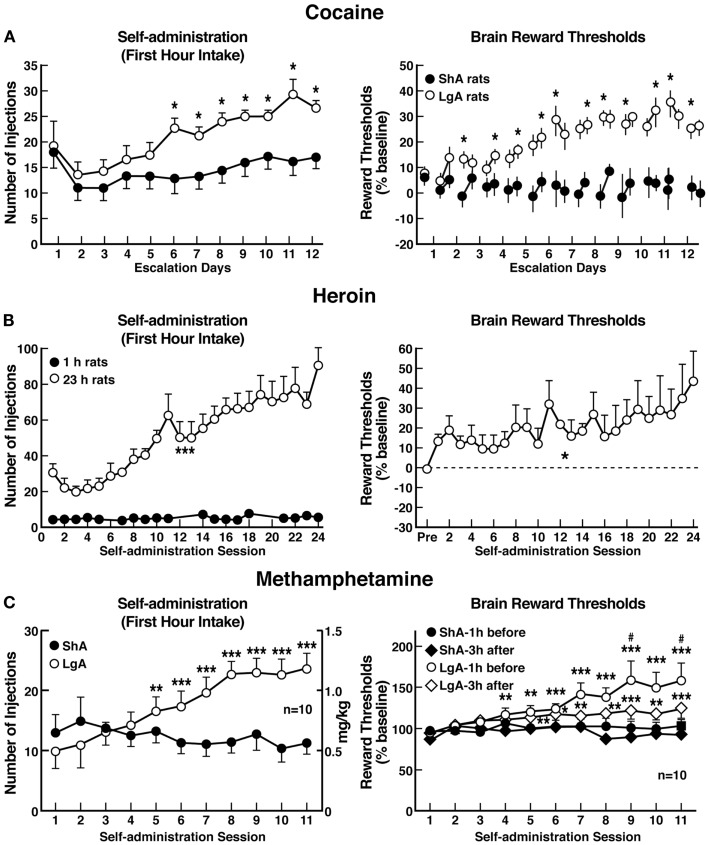
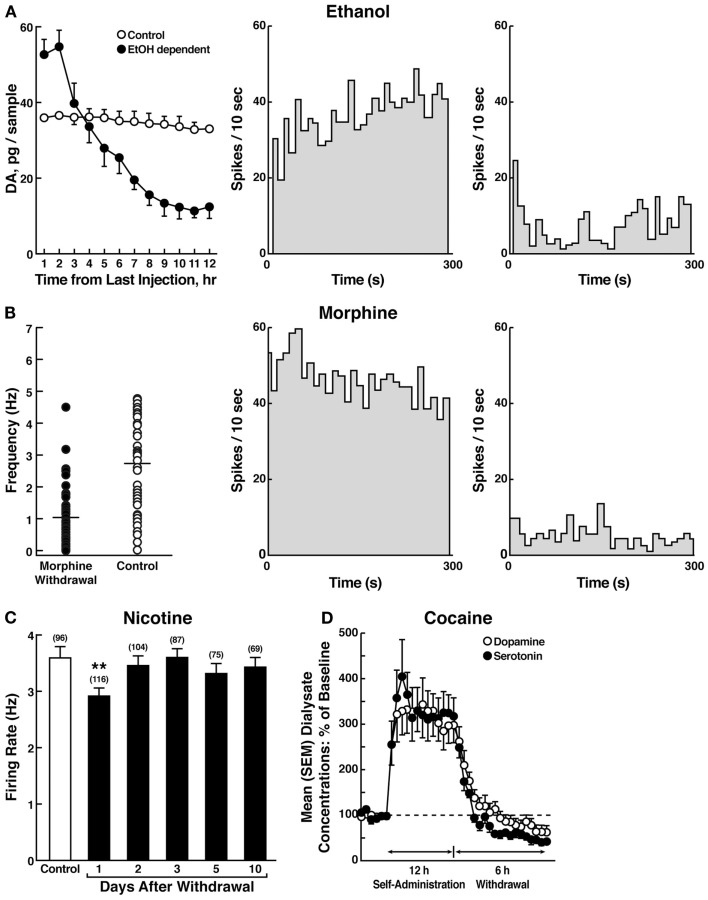
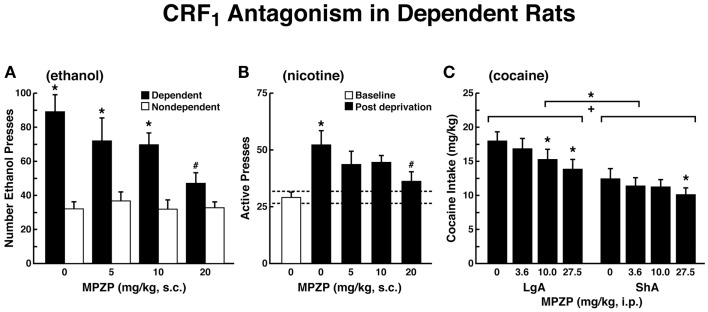
Drug addiction can be defined by a three-stage cycle - binge/intoxication, withdrawal/negative affect, and preoccupation/anticipation - that involves allostatic changes in the brain reward and stress systems. Two primary sources of reinforcement, positive and negative reinforcement, have been hypothesized to play a role in this allostatic process. The negative emotional state that drives negative reinforcement is hypothesized to derive from dysregulation of key neurochemical elements involved in the brain reward and stress systems. Specific neurochemical elements in these structures include not only decreases in reward system function (within-system opponent processes) but also recruitment of the brain stress systems mediated by corticotropin-releasing factor (CRF) and dynorphin-κ opioid systems in the ventral striatum, extended amygdala, and frontal cortex (both between-system opponent processes). CRF antagonists block anxiety-like responses associated with withdrawal, block increases in reward thresholds produced by withdrawal from drugs of abuse, and block compulsive-like drug taking during extended access. Excessive drug taking also engages the activation of CRF in the medial prefrontal cortex, paralleled by deficits in executive function that may facilitate the transition to compulsive-like responding. Neuropeptide Y, a powerful anti-stress neurotransmitter, has a profile of action on compulsive-like responding for ethanol similar to a CRF1 antagonist. Blockade of the κ opioid system can also block dysphoric-like effects associated with withdrawal from drugs of abuse and block the development of compulsive-like responding during extended access to drugs of abuse, suggesting another powerful brain stress system that contributes to compulsive drug seeking. The loss of reward function and recruitment of brain systems provide a powerful neurochemical basis that drives the compulsivity of addiction.
药物成瘾可以定义为一个三阶段的循环-狂欢/陶醉、戒断/负面情绪和专注/期待-涉及大脑奖励和应激系统的适应变化。两种主要的强化来源,正强化和负强化,被假设在这个适应过程中发挥作用。驱动负强化的负面情绪状态被假设来自于参与大脑奖励和应激系统的关键神经化学元素的失调。这些结构中的特定神经化学元素不仅包括奖励系统功能的降低(系统内对抗过程),还包括由促肾上腺皮质释放因子(CRF)和延髓腹侧纹状体、扩展杏仁核和前额皮质中的dynorphin-κ 阿片系统介导的大脑应激系统的招募(系统间对抗过程)。CRF 拮抗剂阻断与戒断相关的焦虑样反应,阻断由滥用药物戒断引起的奖励阈值增加,并阻断延长接触期间强迫性药物摄取。过度药物摄取还会激活内侧前额叶皮质中的 CRF,伴随着执行功能缺陷,这可能促进向强迫性反应的转变。神经肽 Y 是一种强大的抗应激神经递质,对乙醇的强迫样反应具有类似于 CRF1 拮抗剂的作用模式。κ 阿片系统的阻断也可以阻断与滥用药物戒断相关的抑郁样效应,并阻断滥用药物延长接触期间强迫性反应的发展,这表明另一种强大的大脑应激系统有助于强迫性药物寻求。奖励功能的丧失和大脑系统的招募为驱动成瘾的强迫性提供了强有力的神经化学基础。