Department of Plant Breeding, Swedish University of Agricultural Sciences Alnarp, Sweden.
Front Plant Sci. 2013 May 27;4:162. doi: 10.3389/fpls.2013.00162. eCollection 2013.
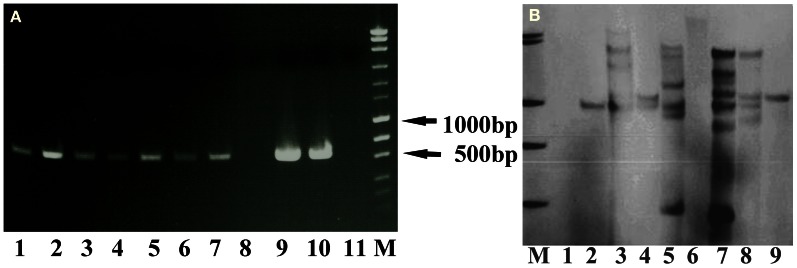
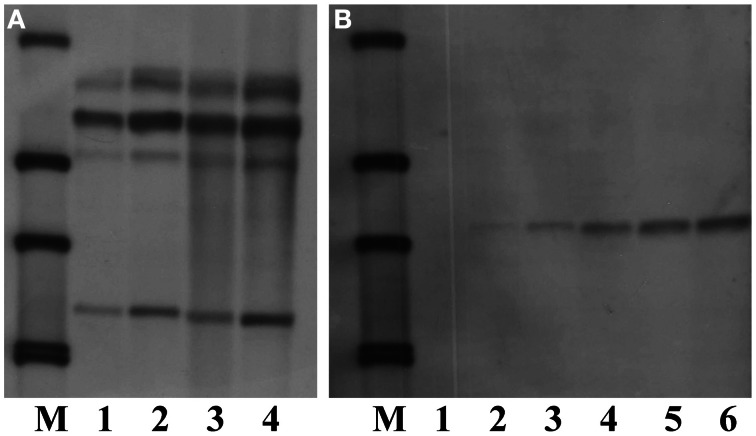
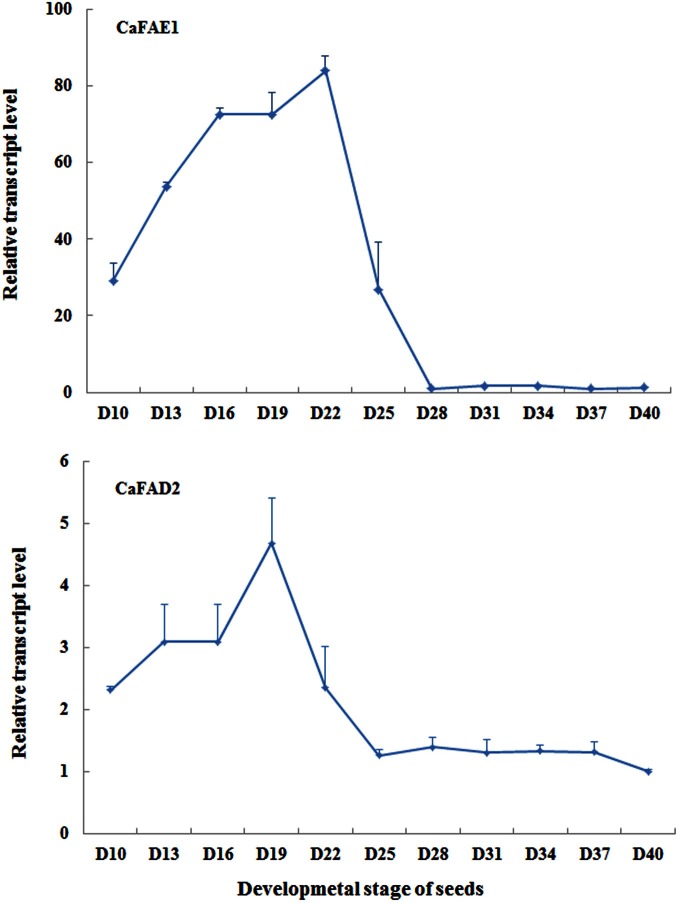
Crambe abyssinica is a dedicated oilseed crop suitable for production of industrial feedstocks. Genetic modification of crambe has progressed substantially in the last few years, but the transformation efficiency needs to be further improved. Meanwhile, developing a reliable molecular system including Southern blot and qRT-PCR analyses is desired for effectively evaluating transgenic lines and gene expression levels of both endogenous and transgenes. In this study, we have developed an efficient transformation protocol with hygromycin as the selective agent for crambe transformation. In the regeneration test, addition of hygromycin at concentration of 5 mg L(-1) resulted in 18% of shoot regeneration using crambe hypocotyls as explants, while no regeneration occurred when the hygromycin concentration reached 10 mg L(-1). Based on this result, the hygromycin concentration up to 10 mg L(-1) was used in the subsequent transformations. The results showed that the transformation efficiency under constant low selection pressure (H3-H3) was similar to that under higher selection pressure first, followed by transfer to lower selection pressure (H10-H3). The PCR, Southern blot and fatty acid composition analyses confirmed the integration of transgenes in the crambe genome. We have also optimized the Southern and qRT-PCR methods for future studies on crambe or related species. For Southern blot analysis on crambe, more than 50 μg DNA is required for a clear band. The choice of enzymes for DNA digestion was not rigid for confirmation of the T-DNA integration, while for determining the copy number of transgenes, suitable enzymes should be chosen. Increasing the enzyme concentration could improve the digestion and 20 μl enzyme was recomended for a complete digestion of up to 80 μg crambe DNA. For qRT-PCR analysis, around 20 days after flowering was observed to be the suitable sampling time for expresseion analysis of genes invovled in the seed oil biosynthesis.
埃塞俄比亚油芥是一种专门的油料作物,适合生产工业原料。在过去的几年中,油芥的遗传改良取得了实质性的进展,但转化效率需要进一步提高。同时,需要开发一种可靠的分子系统,包括 Southern blot 和 qRT-PCR 分析,以便有效地评估转基因株系和内源性和转基因的基因表达水平。在本研究中,我们开发了一种有效的转化方案,以潮霉素作为油芥转化的选择剂。在再生试验中,添加浓度为 5mg/L 的潮霉素可使油芥下胚轴外植体的芽再生率达到 18%,而当潮霉素浓度达到 10mg/L 时则没有再生。基于这一结果,在随后的转化中使用了高达 10mg/L 的潮霉素。结果表明,在恒定低选择压力(H3-H3)下的转化效率与较高选择压力下(H10-H3)的转化效率相似,然后再转移到较低的选择压力下。PCR、Southern blot 和脂肪酸组成分析证实了转基因在油芥基因组中的整合。我们还优化了 Southern 和 qRT-PCR 方法,以用于未来对油芥或相关物种的研究。对于油芥的 Southern blot 分析,需要超过 50μg 的 DNA 才能得到清晰的条带。用于 DNA 消化的酶的选择并不严格,以确认 T-DNA 的整合,而对于确定转基因的拷贝数,应选择合适的酶。增加酶浓度可以改善消化,推荐使用 20μl 酶来完全消化多达 80μg 的油芥 DNA。对于 qRT-PCR 分析,在开花后约 20 天观察到是参与种子油生物合成的基因表达分析的合适采样时间。