National Center for Biotechnology Information, National Institutes of Health, National Library of Medicine Bethesda, MD, USA.
Front Genet. 2013 May 31;3:227. doi: 10.3389/fgene.2012.00227. eCollection 2012.
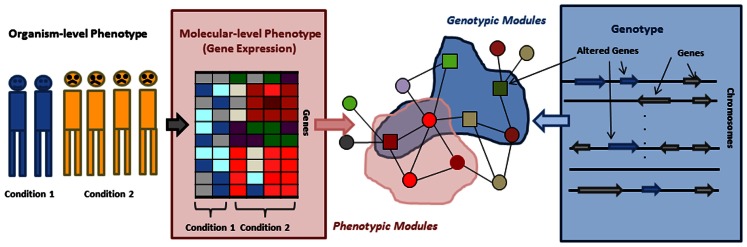
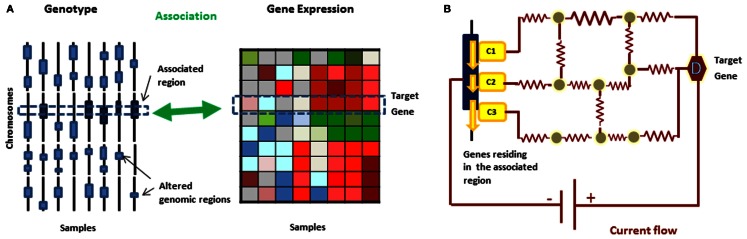
In the last few years we have witnessed tremendous progress in detecting associations between genetic variations and complex traits. While genome-wide association studies have been able to discover genomic regions that may influence many common human diseases, these discoveries created an urgent need for methods that extend the knowledge of genotype-phenotype relationships to the level of the molecular mechanisms behind them. To address this emerging need, computational approaches increasingly utilize a pathway-centric perspective. These new methods often utilize known or predicted interactions between genes and/or gene products. In this review, we survey recently developed network based methods that attempt to bridge the genotype-phenotype gap. We note that although these methods help narrow the gap between genotype and phenotype relationships, these approaches alone cannot provide the precise details of underlying mechanisms and current research is still far from closing the gap.
在过去的几年中,我们见证了在检测遗传变异与复杂特征之间的关联方面取得的巨大进展。虽然全基因组关联研究已经能够发现可能影响许多常见人类疾病的基因组区域,但这些发现产生了一种迫切的需求,即需要方法将基因型-表型关系的知识扩展到其背后的分子机制的水平。为了满足这一新兴需求,计算方法越来越多地利用以途径为中心的观点。这些新方法通常利用基因和/或基因产物之间已知或预测的相互作用。在这篇综述中,我们调查了最近开发的试图弥合基因型-表型差距的基于网络的方法。我们注意到,尽管这些方法有助于缩小基因型与表型关系之间的差距,但仅这些方法本身并不能提供潜在机制的精确细节,并且当前的研究仍远未弥合这一差距。