Mathematical Sciences, University of Gothenburg and Chalmers University of Technology, Gothenburg, Sweden.
Mol Syst Biol. 2011 Apr 26;7:486. doi: 10.1038/msb.2011.17.
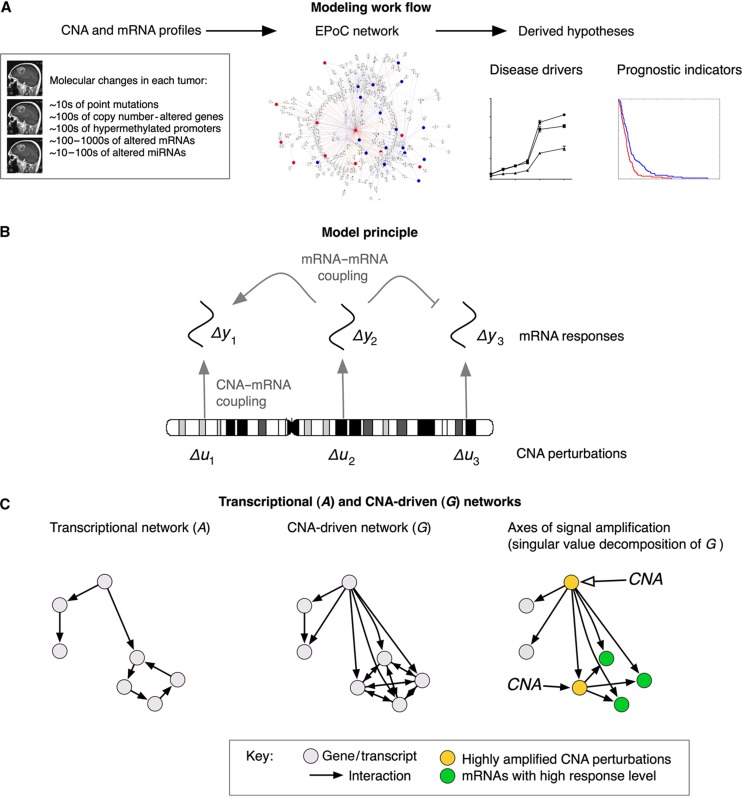
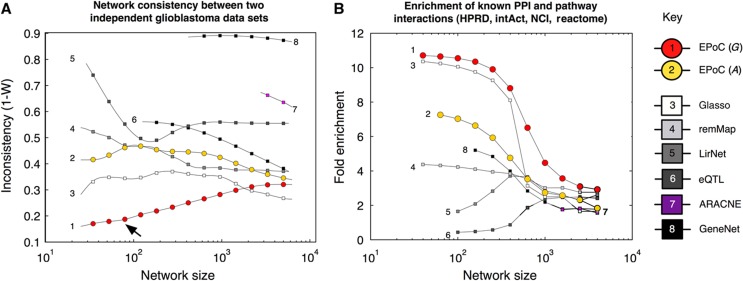
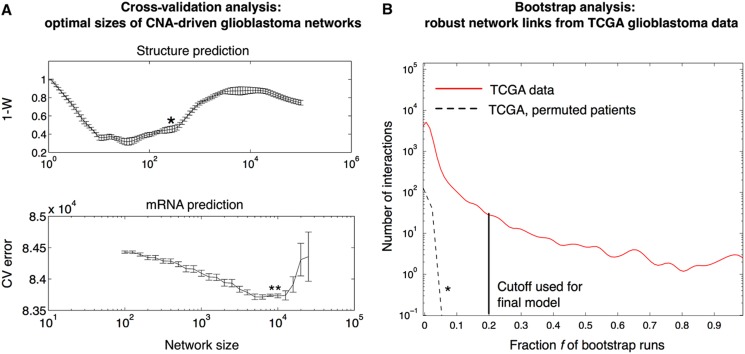
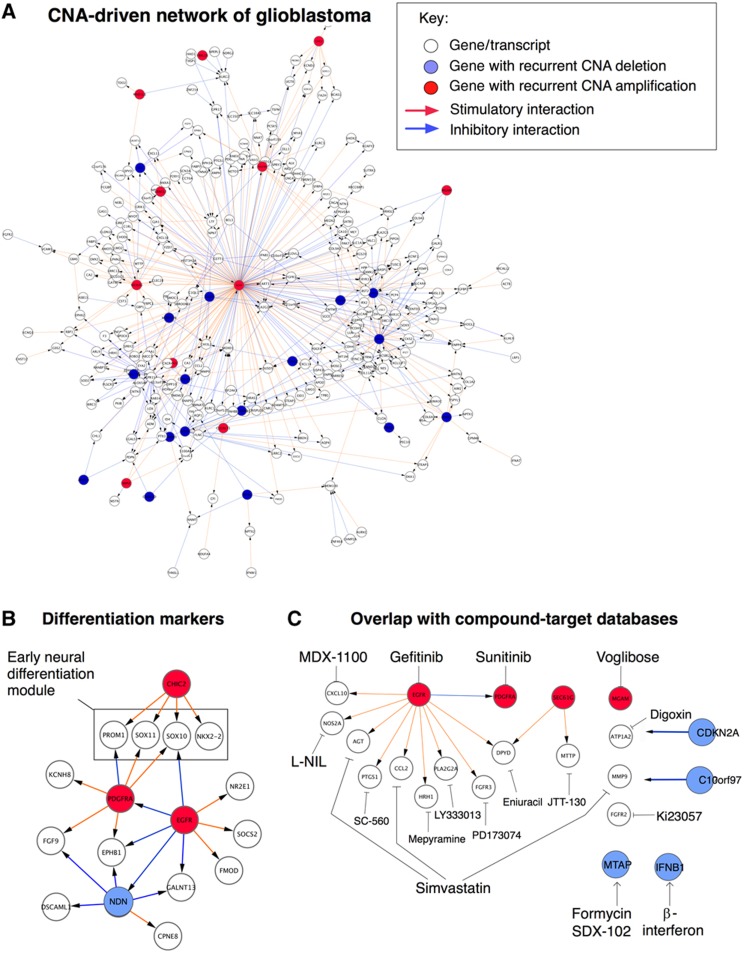
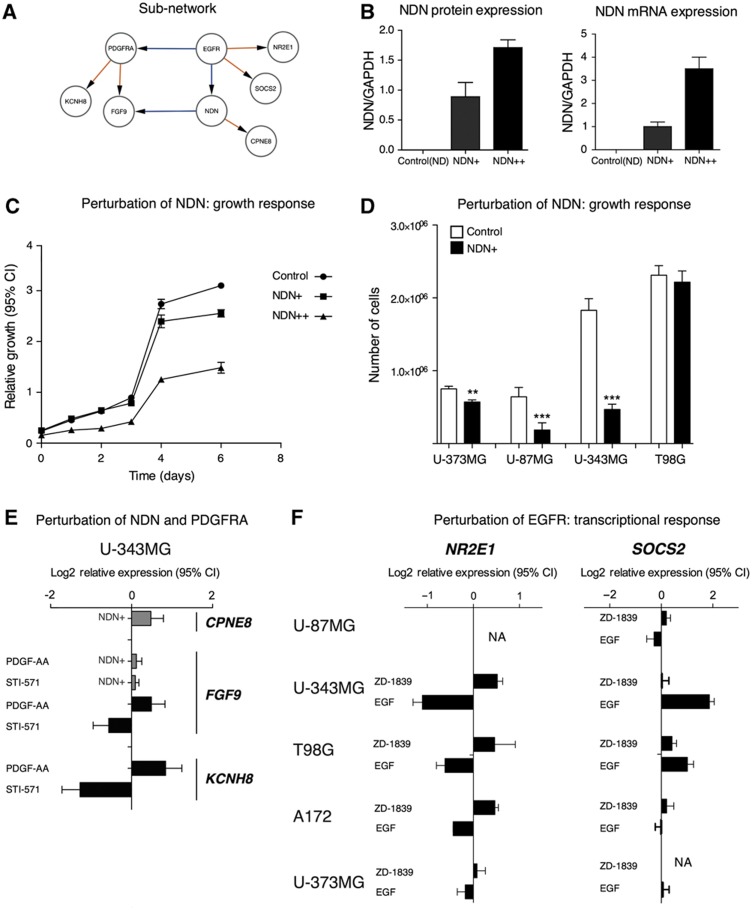
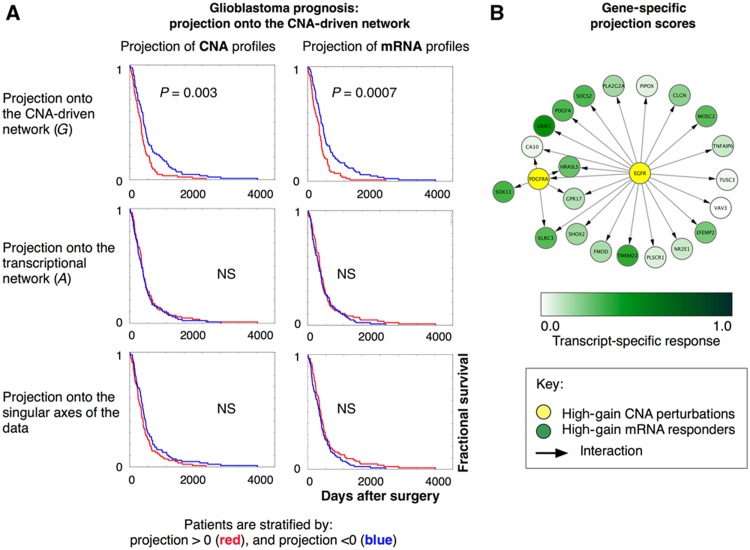
DNA copy number aberrations (CNAs) are a hallmark of cancer genomes. However, little is known about how such changes affect global gene expression. We develop a modeling framework, EPoC (Endogenous Perturbation analysis of Cancer), to (1) detect disease-driving CNAs and their effect on target mRNA expression, and to (2) stratify cancer patients into long- and short-term survivors. Our method constructs causal network models of gene expression by combining genome-wide DNA- and RNA-level data. Prognostic scores are obtained from a singular value decomposition of the networks. By applying EPoC to glioblastoma data from The Cancer Genome Atlas consortium, we demonstrate that the resulting network models contain known disease-relevant hub genes, reveal interesting candidate hubs, and uncover predictors of patient survival. Targeted validations in four glioblastoma cell lines support selected predictions, and implicate the p53-interacting protein Necdin in suppressing glioblastoma cell growth. We conclude that large-scale network modeling of the effects of CNAs on gene expression may provide insights into the biology of human cancer. Free software in MATLAB and R is provided.
DNA 拷贝数异常(CNAs)是癌症基因组的一个标志。然而,人们对这些变化如何影响全局基因表达知之甚少。我们开发了一种建模框架,EPoC(癌症内源性扰动分析),用于(1)检测疾病驱动的 CNA 及其对靶 mRNA 表达的影响,以及(2)将癌症患者分为长期和短期幸存者。我们的方法通过结合全基因组 DNA 和 RNA 水平的数据来构建基因表达的因果网络模型。预后评分是通过网络的奇异值分解获得的。通过将 EPoC 应用于来自癌症基因组图谱联盟的胶质母细胞瘤数据,我们证明了所得到的网络模型包含已知的与疾病相关的枢纽基因,揭示了有趣的候选枢纽基因,并发现了预测患者生存的因素。在四个胶质母细胞瘤细胞系中的靶向验证支持了一些预测,并表明 p53 相互作用蛋白 Necdin 抑制胶质母细胞瘤细胞生长。我们得出结论,大规模的 CNA 对基因表达影响的网络建模可能为人类癌症的生物学提供深入的了解。提供了 MATLAB 和 R 中的免费软件。