Institut de Biologie Physico-Chimique, UMR 7141 CNRS-UPMC, 13 rue P et M Curie, 75005 Paris, France.
Nat Commun. 2013;4:1954. doi: 10.1038/ncomms2954.
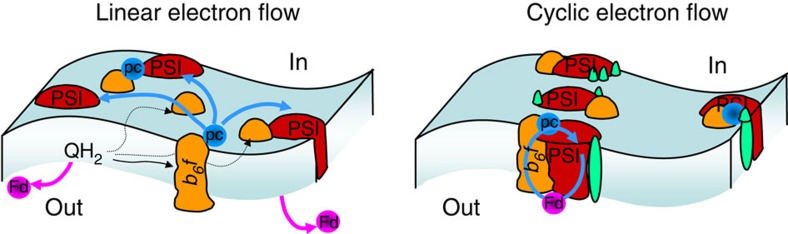
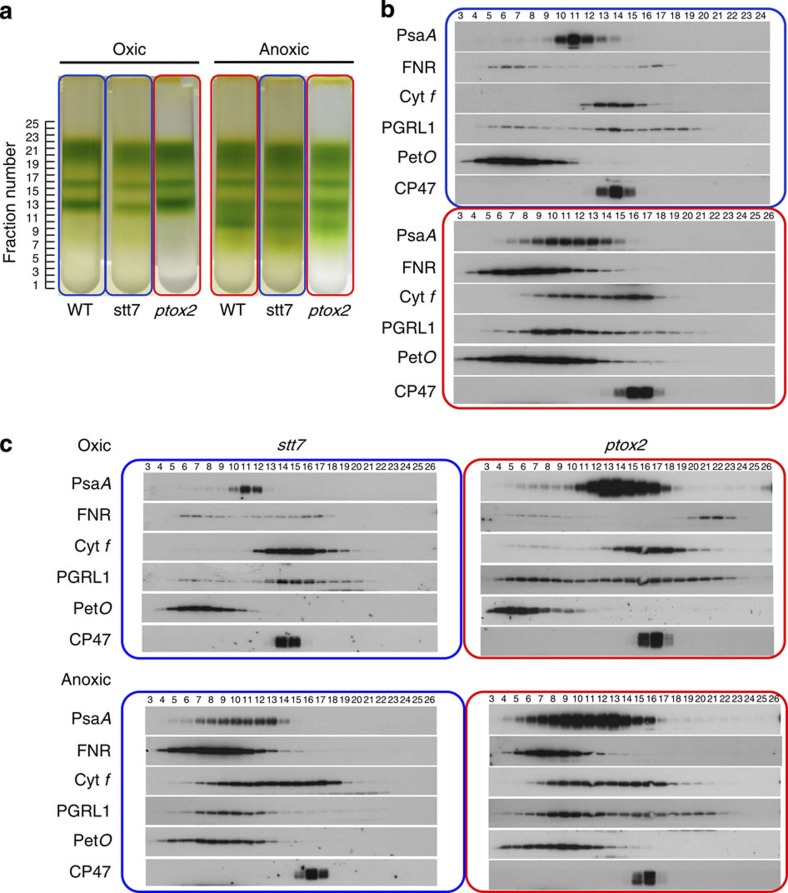
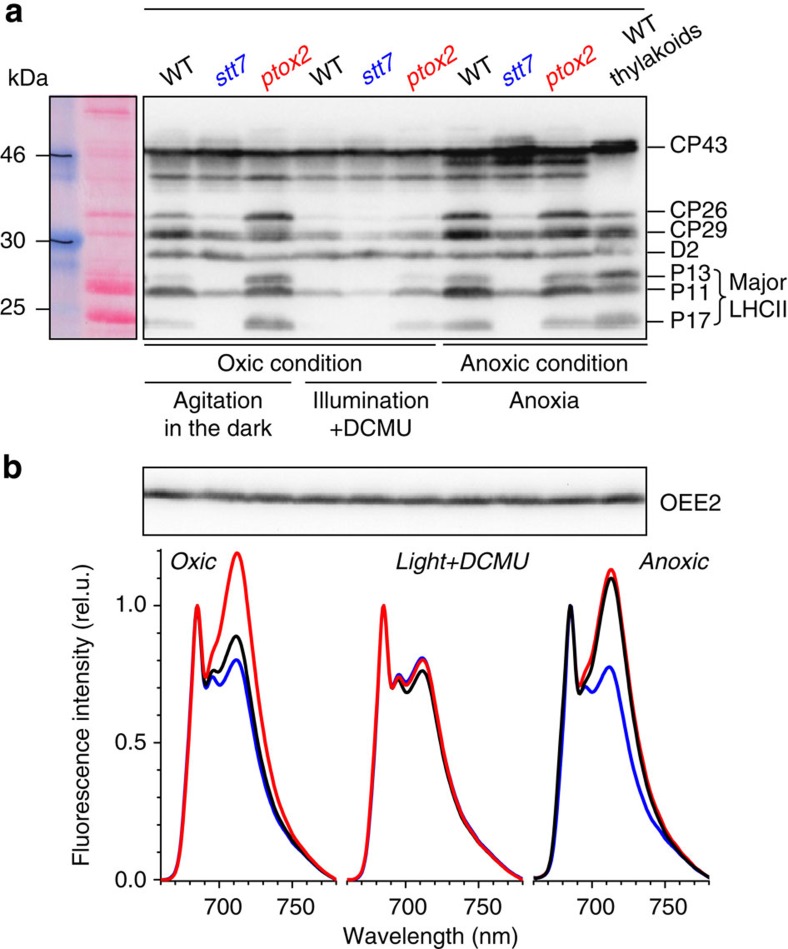
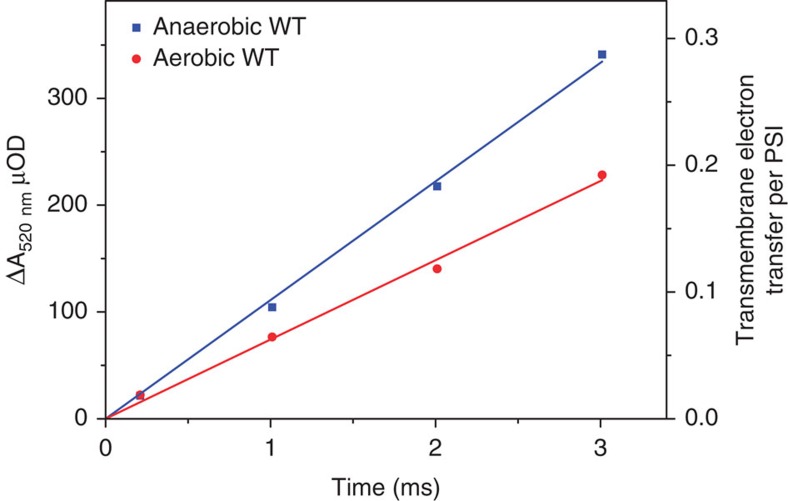
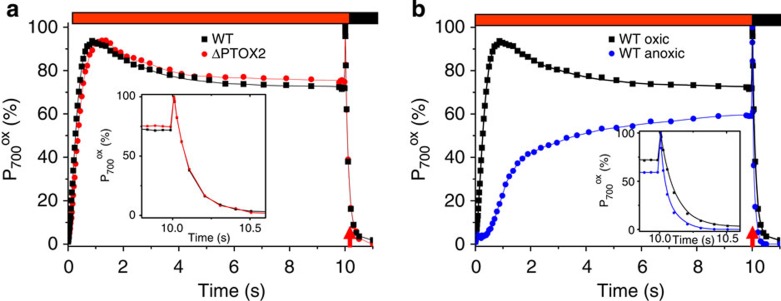
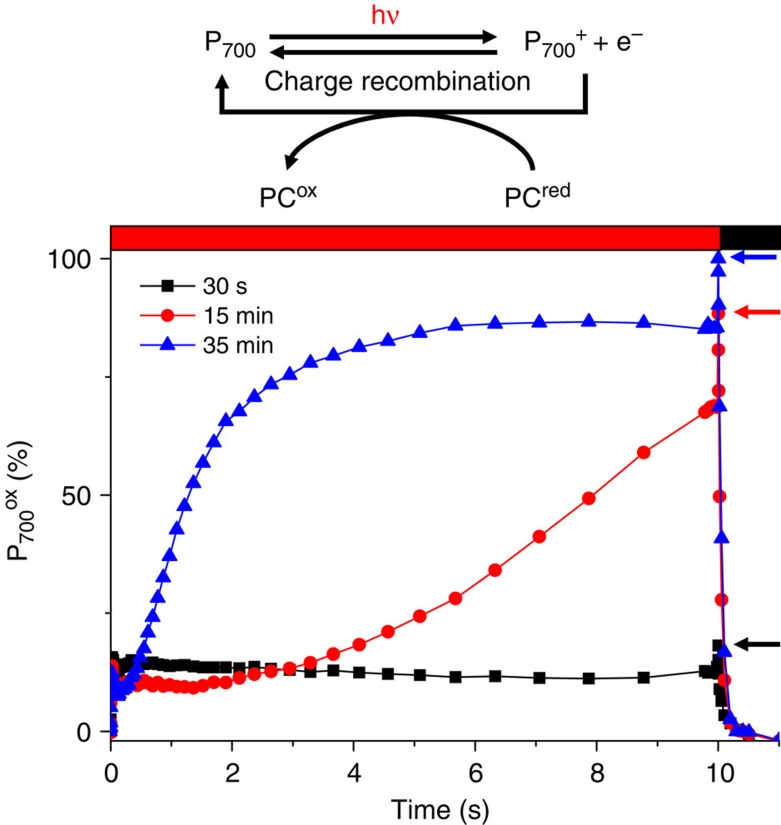
Photosynthesis is the biological process that feeds the biosphere with reduced carbon. The assimilation of CO2 requires the fine tuning of two co-existing functional modes: linear electron flow, which provides NADPH and ATP, and cyclic electron flow, which only sustains ATP synthesis. Although the importance of this fine tuning is appreciated, its mechanism remains equivocal. Here we show that cyclic electron flow as well as formation of supercomplexes, thought to contribute to the enhancement of cyclic electron flow, are promoted in reducing conditions with no correlation with the reorganization of the thylakoid membranes associated with the migration of antenna proteins towards Photosystems I or II, a process known as state transition. We show that cyclic electron flow is tuned by the redox power and this provides a mechanistic model applying to the entire green lineage including the vast majority of the cases in which state transition only involves a moderate fraction of the antenna.
光合作用是为生物圈提供还原碳的生物过程。CO2 的同化需要精细调节两种共存的功能模式:线性电子流,提供 NADPH 和 ATP;循环电子流,仅维持 ATP 合成。尽管这种精细调节的重要性已被认识到,但它的机制仍存在疑问。在这里,我们表明,循环电子流以及被认为有助于增强循环电子流的超复合物的形成,在还原条件下会被促进,与天线蛋白向 PSI 或 PSII 迁移相关的类囊体膜的重排无关,这个过程称为状态转变。我们表明,循环电子流受氧化还原电势的调节,这提供了一个适用于整个绿色谱系的机制模型,包括在大多数情况下,状态转变只涉及天线的一小部分。