Department of Psychology, University of Bonn Bonn, Germany ; Center for Economics and Neuroscience, University of Bonn Bonn, Germany.
Front Hum Neurosci. 2013 Jun 5;7:243. doi: 10.3389/fnhum.2013.00243. eCollection 2013.
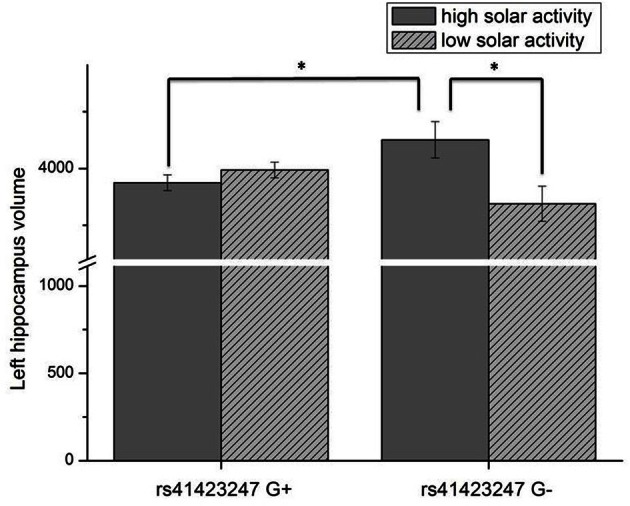
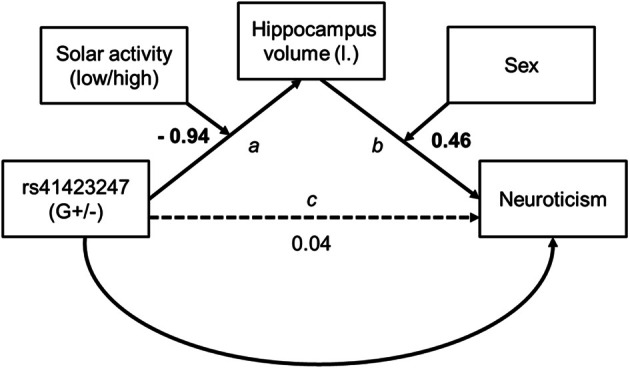
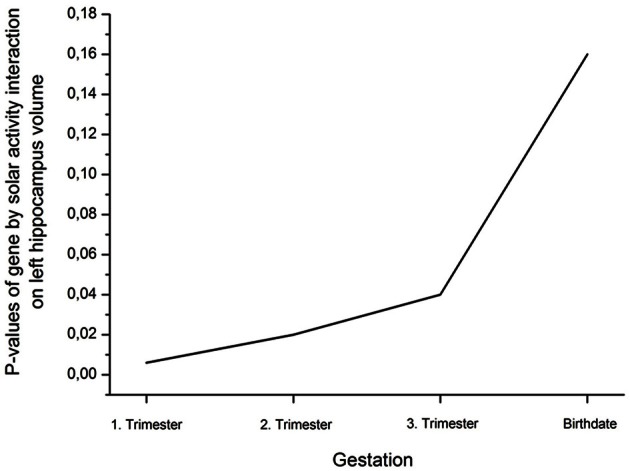
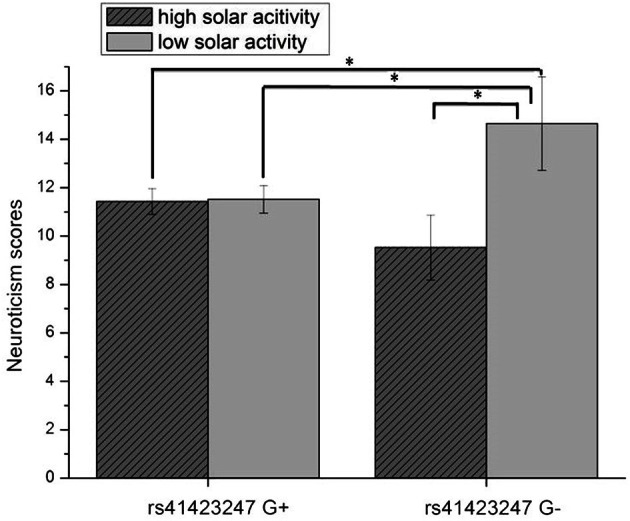
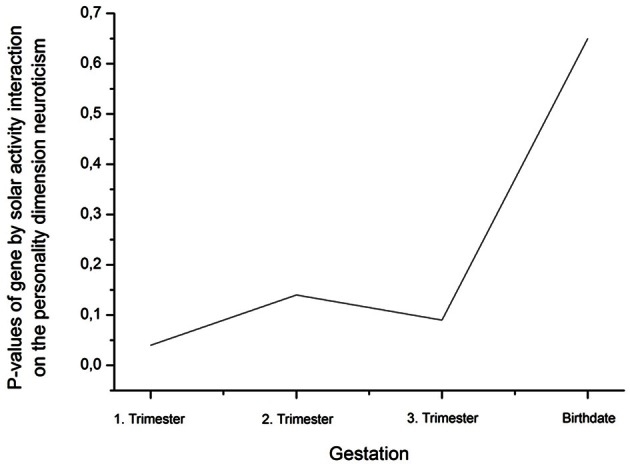
The investigation of the interaction of genes and environment in the context of mental health and personality yields important new insights for a better understanding of human nature. Both antenatal and postnatal environmental factors have been considered as potential modulators of genetic activity. Antenatally, especially smoking or alcohol drinking habits of the mother dramatically influence the health of the child during pregnancy and even later on in life. In the present study we would like to introduce a more "distant" factor that is not under the control of the becoming mother but that nevertheless plays a potential role for the health of the unborn child later on in adulthood. Here, we retrospectively investigate the influence of solar activity (while the child is still in the uterus of the becoming mother) on brain structure (with a focus on hippocampus and amygdala volume) and personality in adulthood. We observe an interaction of a genetic variant (rs41423247) of the glucocorticoid receptor gene (NR3C1) and solar activity in the first trimester after conception on both hippocampal volume and the personality trait neuroticism in adulthood in N = 254 participants. The NR3C1 gene is the focus of interest, because of its influence on the hypothalamic-pituitary-adrenal (HPA) axis and negative emotionality. Carriers of the CC variant of rs41423247 grown in the womb under the influence of high sun radiation (high solar activity) show both the highest hippocampal volume in the left hemisphere and lowest neuroticism scores. The present findings should encourage researchers in psychology and psychiatry to include also environmental influences such as solar activity besides genetics to better understand the etiogenesis of psychiatric disorders.
在心理健康和个性的背景下,研究基因与环境的相互作用为更好地理解人类本性提供了重要的新见解。产前和产后的环境因素都被认为是遗传活性的潜在调节剂。在产前,特别是母亲的吸烟或饮酒习惯会极大地影响胎儿在怀孕期间甚至以后的健康。在本研究中,我们想引入一个更“遥远”的因素,这个因素不受即将成为母亲的控制,但它仍然对孩子以后成年期的健康起着潜在的作用。在这里,我们回顾性地研究了太阳活动(当孩子还在母亲的子宫里时)对大脑结构(重点是海马体和杏仁核体积)和成年后个性的影响。我们观察到,在 254 名参与者中,糖皮质激素受体基因(NR3C1)的一个遗传变异(rs41423247)与受孕后第一个三个月的太阳活动之间存在相互作用,这会影响成年后的海马体体积和神经质人格特质。NR3C1 基因是研究的焦点,因为它会影响下丘脑-垂体-肾上腺(HPA)轴和负性情绪。在高太阳辐射(高太阳活动)下的子宫内生长的 rs41423247 的 CC 变异携带者表现出左半球最大的海马体体积和最低的神经质分数。本研究结果应鼓励心理学和精神病学领域的研究人员除了遗传因素外,还应包括太阳活动等环境影响因素,以更好地理解精神障碍的病因发生。