King's College London and National Institute for Health Research-NIHR, Biomedical Research Centres at South London and Maudsley NHS Foundation Trust and Guy's and St. Thomas' NHS Foundation Trust, London, United Kingdom.
PLoS One. 2013 Jun 10;8(6):e64971. doi: 10.1371/journal.pone.0064971. Print 2013.
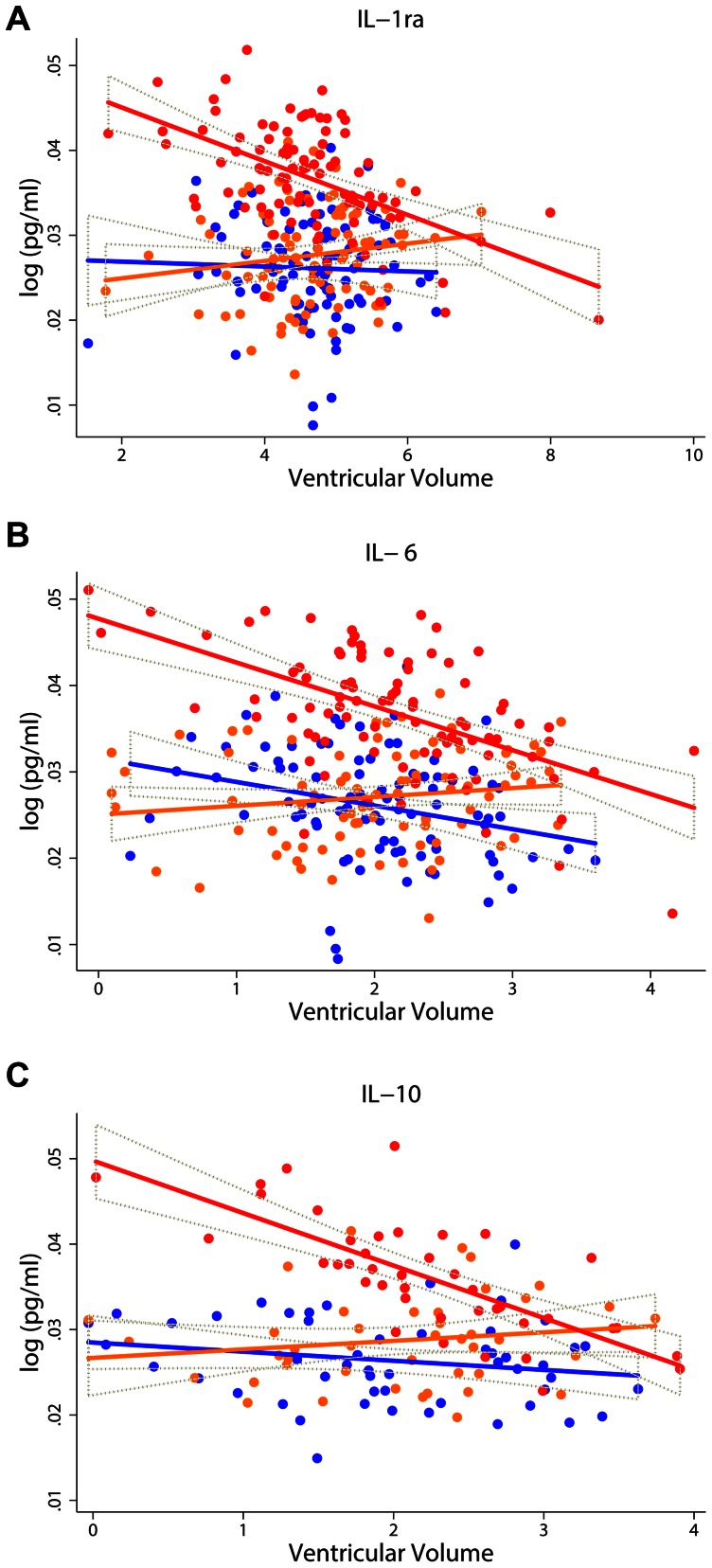
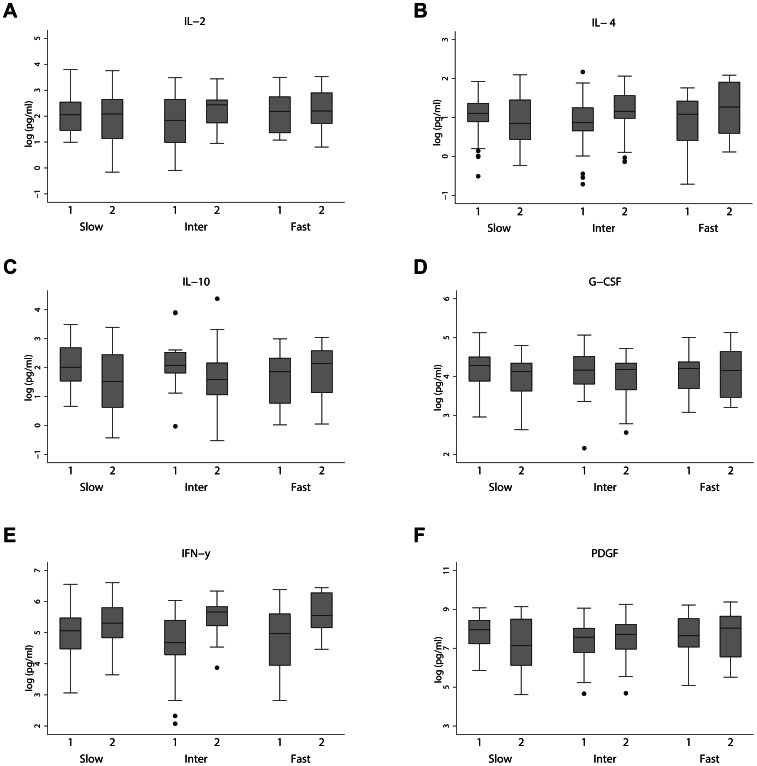
Markers of Alzheimer's disease (AD) are being widely sought with a number of studies suggesting blood measures of inflammatory proteins as putative biomarkers. Here we report findings from a panel of 27 cytokines and related proteins in over 350 subjects with AD, subjects with Mild Cognitive Impairment (MCI) and elderly normal controls where we also have measures of longitudinal change in cognition and baseline neuroimaging measures of atrophy. In this study, we identify five inflammatory proteins associated with evidence of atrophy on MR imaging data particularly in whole brain, ventricular and entorhinal cortex measures. In addition, we observed six analytes that showed significant change (over a period of one year) in people with fast cognitive decline compared to those with intermediate and slow decline. One of these (IL-10) was also associated with brain atrophy in AD. In conclusion, IL-10 was associated with both clinical and imaging evidence of severity of disease and might therefore have potential to act as biomarker of disease progression.
阿尔茨海默病(AD)的标志物正在被广泛研究,许多研究表明炎症蛋白的血液指标可能是潜在的生物标志物。在这里,我们报告了一项涉及 27 种细胞因子和相关蛋白的研究结果,该研究纳入了 350 多名 AD 患者、轻度认知障碍(MCI)患者和老年正常对照者,这些对照者还进行了认知的纵向变化和基线神经影像学萎缩的测量。在这项研究中,我们确定了与 MRI 成像数据中的萎缩证据相关的五种炎症蛋白,特别是在全脑、脑室和内嗅皮层的测量中。此外,我们观察到六个分析物在认知快速下降的人群中与认知中间和缓慢下降的人群相比有显著变化(在一年的时间内)。其中一种(IL-10)也与 AD 中的脑萎缩有关。总之,IL-10 与疾病严重程度的临床和影像学证据有关,因此可能有潜力作为疾病进展的生物标志物。