Laboratório de Microbiologia Experimental, Programa de Pós-Graduação em Ciências da Saúde, Unidade Acadêmica de Ciências da Saúde, Universidade do Extremo Sul Catarinense, Criciúma, SC, Brazil.
Oxid Med Cell Longev. 2013;2013:371465. doi: 10.1155/2013/371465. Epub 2013 May 9.
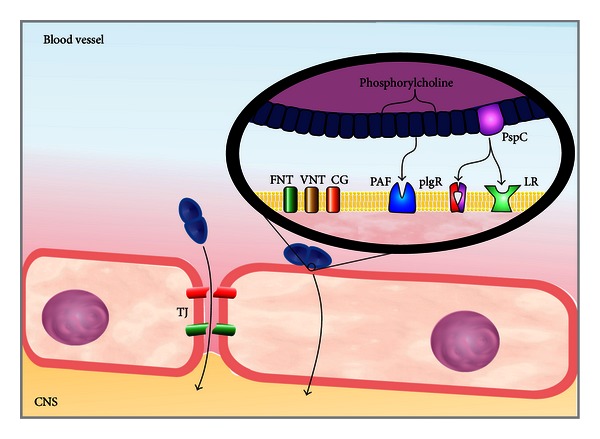
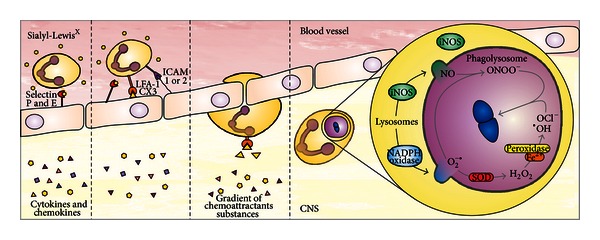
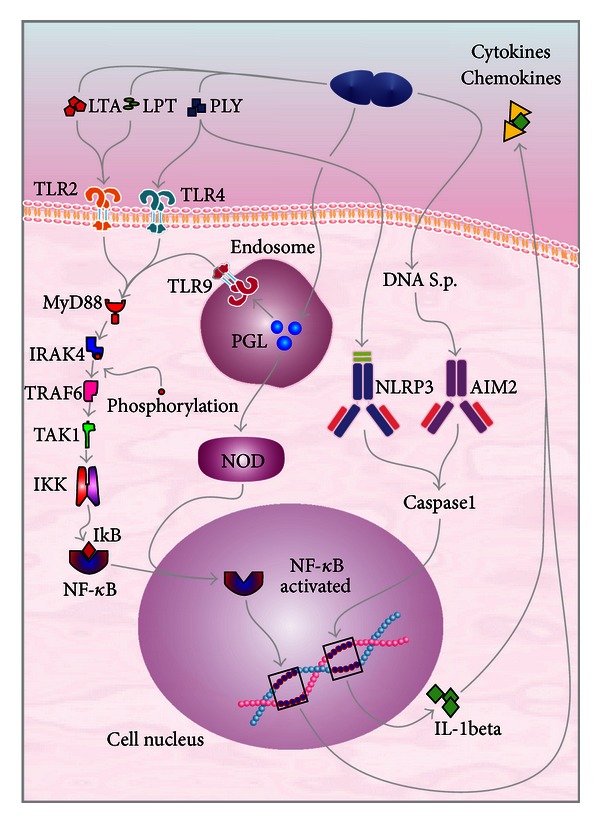
Pneumococcal meningitis is a life-threatening disease characterized by an acute purulent infection affecting the pia mater, the arachnoid, and the subarachnoid spaces. Streptococcus pneumoniae crosses the blood-brain barrier (BBB) by both transcellular traversal and disruption of the intraepithelial tight junctions to allow intercellular traversal. During multiplication, pneumococci release their bacterial products, which are highly immunogenic and may lead to an increased inflammatory response in the host. Thus, these compounds are recognized by antigen-presenting cells through the binding of toll-like receptors. These receptors induce the activation of myeloid differentiation factor 88 (MyD88), which interacts with various protein kinases, including IL-1 receptor-associated kinase-4 (IRAK4), which is phosphorylated and dissociated from MyD88. These products also interact with tumor necrosis factor receptor-associated factor 6 dependent signaling pathway (TRAF6). This cascade provides a link to NF- κ B-inducing kinase, resulting in the nuclear translocation of NF- κ B leading to the production of cytokines, chemokines, and other proinflammatory molecules in response to bacterial stimuli. Consequently, polymorphonuclear cells are attracted from the bloodstream and then activated, releasing large amounts of NO(•), O2(•), and H2O2. This formation generates oxidative and nitrosative stress, subsequently, lipid peroxidation, mitochondrial damage, and BBB breakdown, which contributes to cell injury during pneumococcal meningitis.
肺炎球菌性脑膜炎是一种危及生命的疾病,其特征为急性化脓性感染累及软脑膜、蛛网膜和蛛网膜下腔。肺炎链球菌通过细胞间穿越和破坏上皮细胞紧密连接穿过血脑屏障(BBB),从而允许细胞间穿越。在复制过程中,肺炎球菌释放其细菌产物,这些产物高度免疫原性,可能导致宿主的炎症反应增强。因此,这些化合物通过与 Toll 样受体结合被抗原呈递细胞识别。这些受体诱导髓样分化因子 88(MyD88)的激活,MyD88 与各种蛋白激酶相互作用,包括白细胞介素 1 受体相关激酶 4(IRAK4),IRAK4 磷酸化并与 MyD88 分离。这些产物还与肿瘤坏死因子受体相关因子 6 依赖的信号通路(TRAF6)相互作用。该级联反应提供了与 NF-κB 诱导激酶的联系,导致 NF-κB 的核转位,从而产生细胞因子、趋化因子和其他对细菌刺激的促炎分子。结果,多形核白细胞从血液中被吸引并被激活,释放大量的 NO(•)、O2(•)和 H2O2。这种形成产生氧化和硝化应激,随后发生脂质过氧化、线粒体损伤和 BBB 破裂,导致肺炎球菌性脑膜炎期间的细胞损伤。