Department of Comparative Biomedical Sciences, The Royal Veterinary College, University of London, Royal College Street, London NW1 OTU, UK.
FEBS Open Bio. 2012 Nov 30;3:30-4. doi: 10.1016/j.fob.2012.11.007. Print 2013.
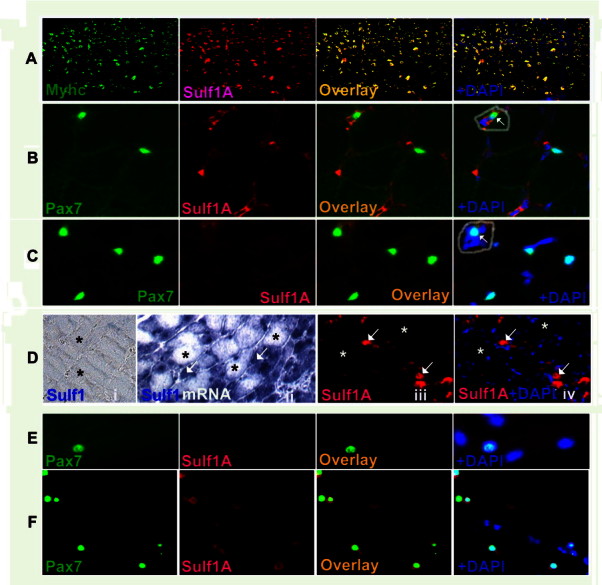
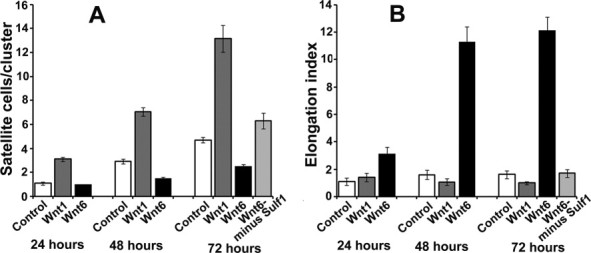
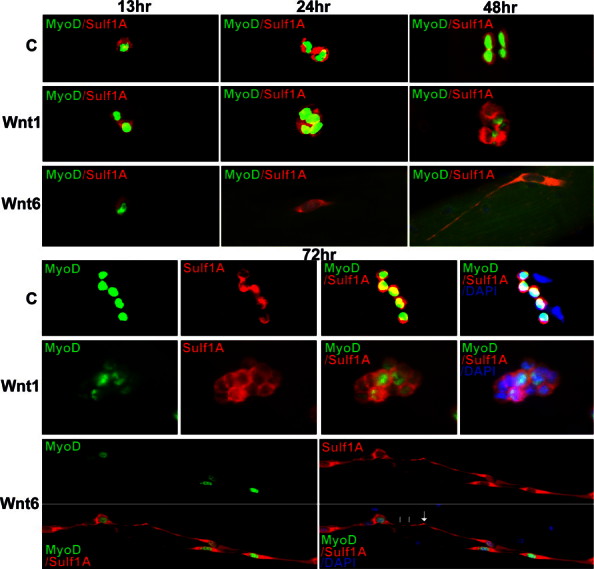
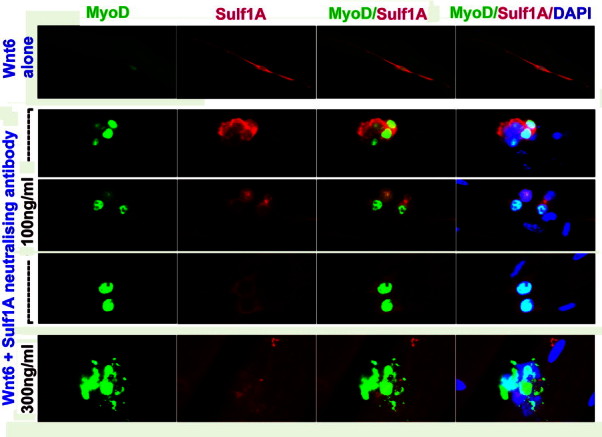
Sulf1A expression, which is a characteristic of embryonic muscle, is undetectable in mature muscle fibres and quiescent satellite cells, but is re-activated in vivo upon injury and in vitro following activation of satellite cells. Sulf1A is known to enhance canonical Wnt signalling, and its association with Wnt1-induced satellite cell proliferation in vitro in the present study further confirmed this. However, exogenous Wnt6 decreased satellite cell proliferation but promoted the adoption of a hyper-elongated cell morphology in myoblasts on isolated single fibres in culture. Such Wnt6-induced cellular hyper-elongation and inhibition of proliferation was found to be dependent upon Sulf1A, as treatment with Sulf1A neutralising antibodies abolished both these effects. This indicates that Sulf1A can regulate Wnt6 signalling and cellular differentiation in skeletal muscle.
Sulf1A 的表达是胚胎肌肉的特征,在成熟的肌肉纤维和静止的卫星细胞中无法检测到,但在体内损伤后和体外激活卫星细胞后会重新激活。已知 Sulf1A 可增强经典 Wnt 信号通路,本研究进一步证实了其与 Wnt1 诱导的卫星细胞体外增殖有关。然而,外源性 Wnt6 减少了卫星细胞的增殖,但促进了培养中分离的单个纤维上的成肌细胞呈现超伸长细胞形态。这种 Wnt6 诱导的细胞过度伸长和增殖抑制作用依赖于 Sulf1A,因为用 Sulf1A 中和抗体处理可消除这两种作用。这表明 Sulf1A 可以调节骨骼肌中的 Wnt6 信号通路和细胞分化。