Universiti Sains Malaysia, School of Pharmaceutical Sciences, Department of Pharmacology, Pulau Penang/Malaysia.
Clinics (Sao Paulo). 2013 Jun;68(6):865-75. doi: 10.6061/clinics/2013(06)23.
Ficus deltoidea leaves have been used in traditional medicine in Southeast Asia to treat diabetes, inflammation, diarrhea, and infections. The present study was conducted to assess the genotoxicity and acute and subchronic toxicity of a standardized methanol extract of F. deltoidea leaves.
Sprague Dawley rats were orally treated with five different single doses of the extract and screened for signs of toxicity for two weeks after administration. In the subchronic study, three different doses of the extract were administered for 28 days. Mortality, clinical signs, body weight changes, hematological and biochemical parameters, gross findings, organ weights, and histological parameters were monitored during the study. Genotoxicity was assessed using the Ames test with the TA98 and TA100 Salmonella typhimurium strains. Phytochemical standardization was performed using a colorimeter and high-performance liquid chromatography. Heavy metal detection was performed using an atomic absorption spectrometer.
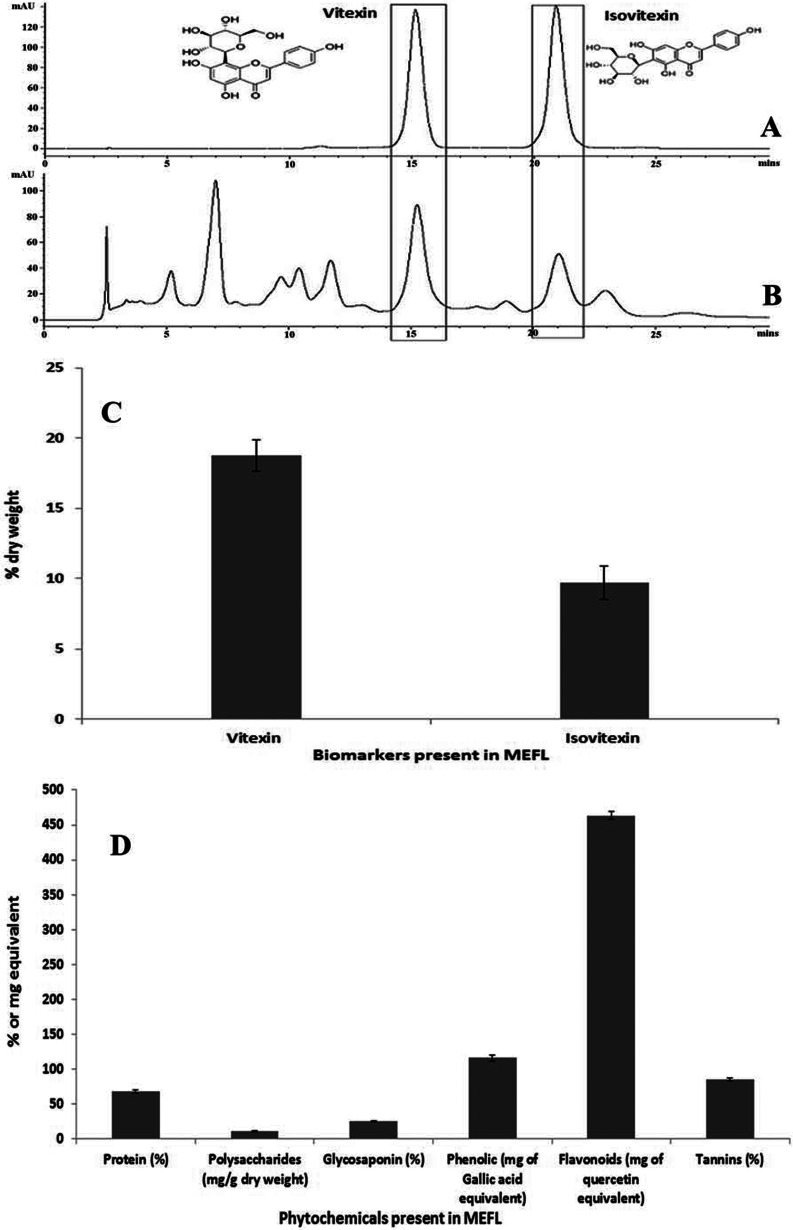
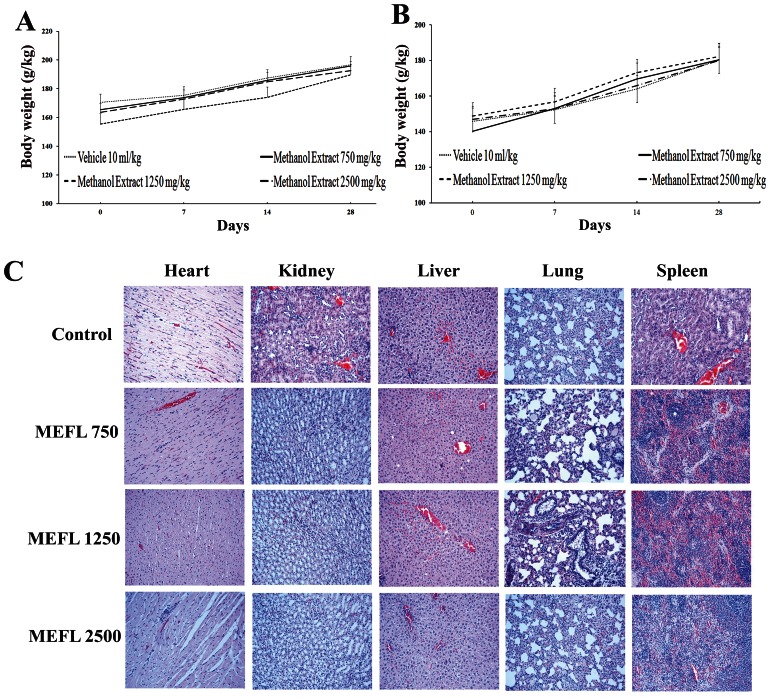
The acute toxicity study showed that the LD50 of the extract was greater than 5000 mg/kg. In the subchronic toxicity study, there were no significant adverse effects on food consumption, body weight, organ weights, mortality, clinical chemistry, hematology, gross pathology, or histopathology. However, a dose-dependent increase in the serum urea level was observed. The Ames test revealed that the extract did not have any potential to induce gene mutations in S. typhimurium, either in the presence or absence of S9 activation. Phytochemical analysis of the extract revealed high contents of phenolics, flavonoids, and tannins. High-performance liquid chromatography analysis revealed high levels of vitexin and isovitexin in the extract, and the levels of heavy metals were below the toxic levels.
The no-observed adverse effect level of F. deltoidea in rats was determined to be 2500 mg/kg.
在东南亚,榕树叶被传统医学用于治疗糖尿病、炎症、腹泻和感染。本研究旨在评估榕树叶甲醇提取物的遗传毒性、急性毒性和亚慢性毒性。
Sprague Dawley 大鼠经口给予不同剂量的提取物,在给药后两周内观察毒性症状。在亚慢性毒性研究中,大鼠连续 28 天给予三种不同剂量的提取物。在研究过程中监测死亡率、临床症状、体重变化、血液学和生化学参数、大体观察、器官重量和组织学参数。使用 TA98 和 TA100 鼠伤寒沙门氏菌进行 Ames 试验评估遗传毒性。使用分光光度计和高效液相色谱法进行植物化学标准化。使用原子吸收光谱仪检测重金属。
急性毒性研究表明,提取物的 LD50 大于 5000mg/kg。在亚慢性毒性研究中,提取物对食物消耗、体重、器官重量、死亡率、临床化学、血液学、大体病理学或组织病理学均无显著不良影响。然而,观察到血清尿素水平呈剂量依赖性升高。Ames 试验表明,提取物在有或没有 S9 激活的情况下,均不会引起鼠伤寒沙门氏菌的基因突变。提取物的植物化学分析显示,其含有丰富的酚类、类黄酮和单宁。高效液相色谱分析显示,提取物中含有丰富的牡荆素和异牡荆素,且重金属含量低于毒性水平。
大鼠中榕树叶的无明显不良作用水平为 2500mg/kg。