Maryńczak Laura, Adamek Dariusz, Drabik Grażyna, Kwiatkowski Stanisław, Herman-Sucharska Izabela, Lankosz-Lauterbach Janina
Department of Neurosurgery, Children's University Hospital, Wielicka 265 30-663, Kraków, Poland,
Childs Nerv Syst. 2014 Feb;30(2):357-60. doi: 10.1007/s00381-013-2191-8. Epub 2013 Jun 19.
"Fetus in fetu" (FIF) is defined as the abnormal monozygotic twin inside the body of its "host twin." Intracranial FIFs are extremely rare.
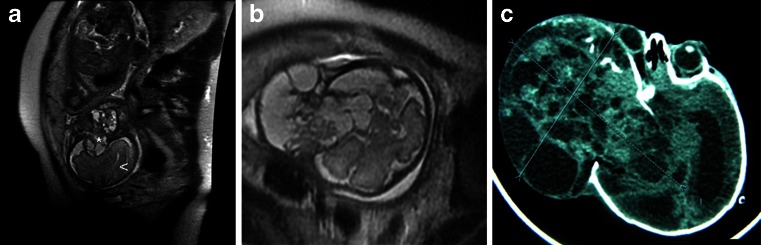
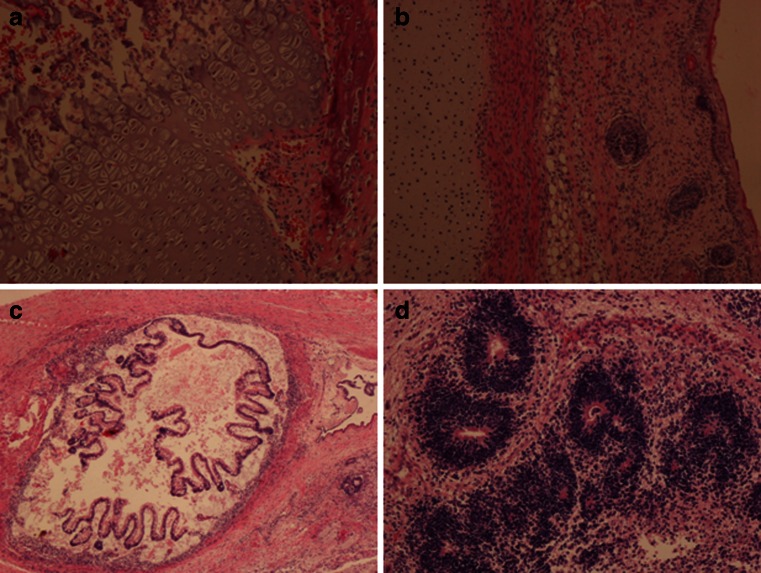
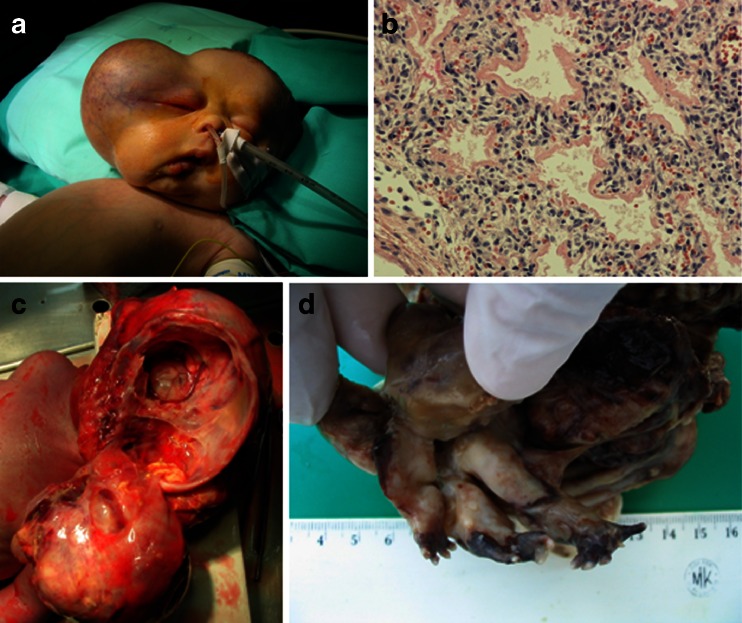
A male premature newborn was admitted to the hospital due to a large intracranial tumor diagnosed in the 31st week of gestation. The child died before surgical treatment because of failure of the respiratory system due to fetal respiratory distress syndrome. During general autopsy, a large intracranial tumor with four relatively well-developed limbs was found. Microscopically, apart from relatively well-formed musculoskeletal structures of limbs that were covered with skin, there were haphazardly distributed different tissues or fragments of organs. However, various neuroectodermal derivatives were dominant.
We believe that intracranial FIFs, theoretically with poor prognosis, can be successfully curable in cases revealed prenatally, provided that optimal treatment is introduced and the achievement of proper pulmonary maturity of the host is accomplished prior to the operation of the tumor.
“胎中胎”(FIF)被定义为其“宿主双胞胎”体内的异常单卵双胞胎。颅内胎中胎极为罕见。
一名男性早产新生儿因在妊娠第31周被诊断出患有巨大颅内肿瘤而入院。由于胎儿呼吸窘迫综合征导致呼吸系统衰竭,该患儿在手术治疗前死亡。在常规尸检中,发现一个带有四条发育相对良好肢体的巨大颅内肿瘤。显微镜下,除了四肢有相对发育良好的肌肉骨骼结构且覆盖有皮肤外,还有杂乱分布的不同组织或器官碎片。然而,各种神经外胚层衍生物占主导地位。
我们认为,颅内胎中胎理论上预后较差,但如果在产前发现,在进行肿瘤手术前引入最佳治疗方法并使宿主达到适当的肺成熟度,那么在这些病例中可以成功治愈。