James Graham Brown Cancer Center, University of Louisville, Louisville, KY 40202, United States.
Cancer Lett. 2013 Oct 10;339(2):175-84. doi: 10.1016/j.canlet.2013.06.012. Epub 2013 Jun 18.
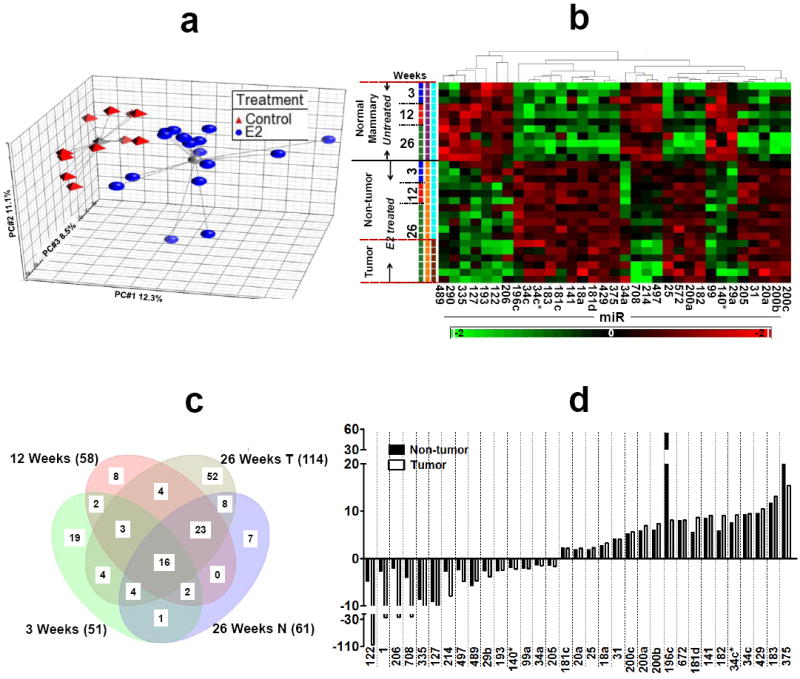
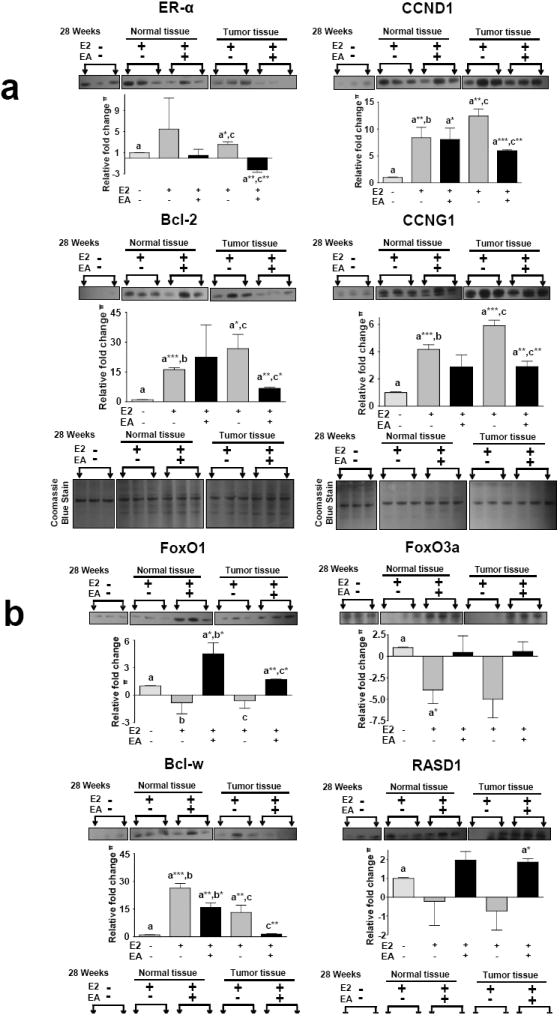
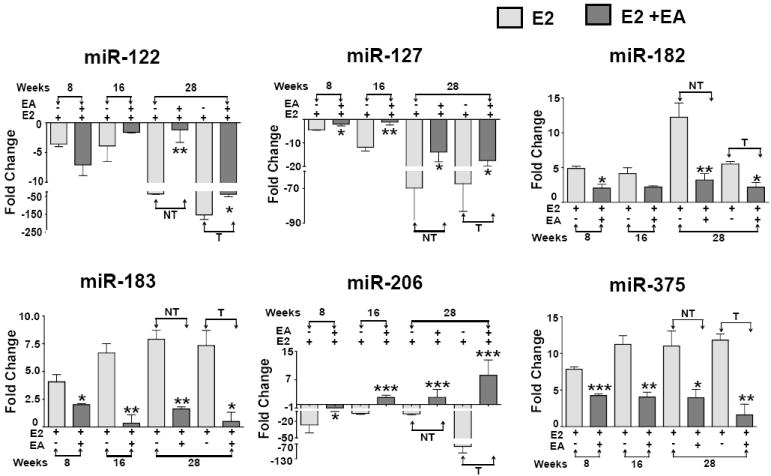
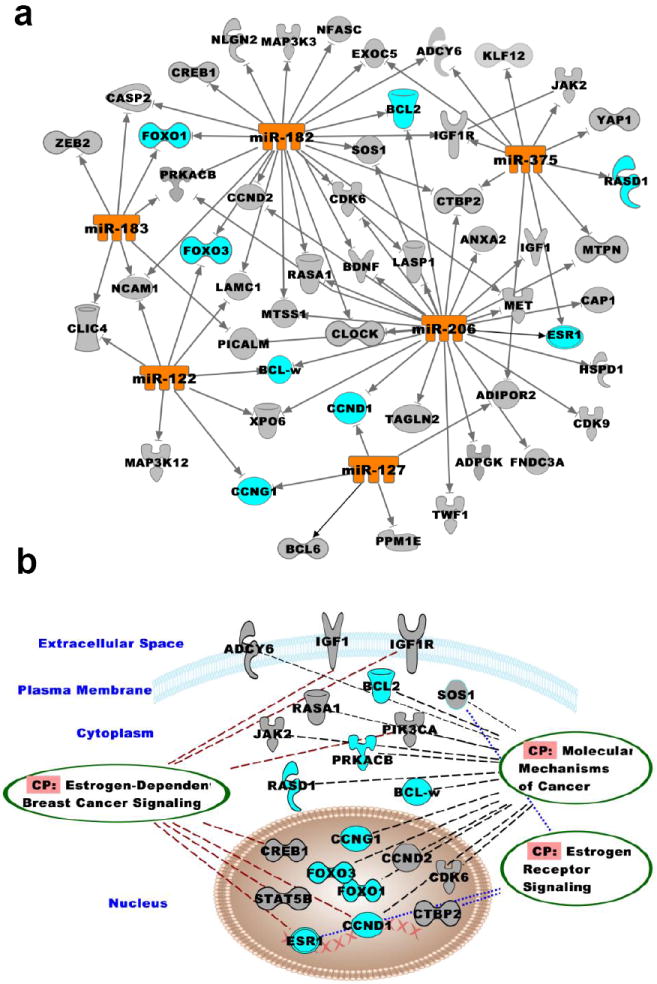
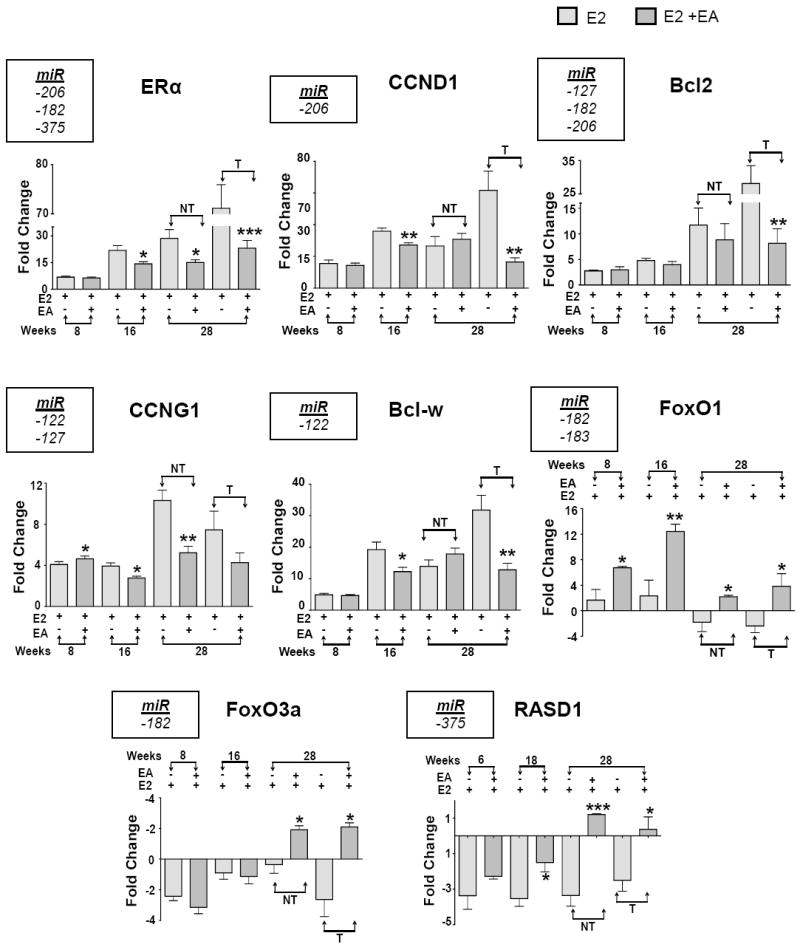
Dysregulated miRNA expression has been associated with the development and progression of cancers, including breast cancer. The role of estrogen (E2) in regulation of cell proliferation and breast carcinogenesis is well-known. Recent reports have associated several miRNAs with estrogen receptors in breast cancers. Investigation of the regulatory role of miRNAs is critical for understanding the effect of E2 in human breast cancer, as well as developing strategies for cancer chemoprevention. In the present study we used the well-established ACI rat model that develops mammary tumors upon E2 exposure and identified a 'signature' of 33 significantly modulated miRNAs during the process of mammary tumorigenesis. Several of these miRNAs were altered as early as 3 weeks after initial E2 treatment and their modulation persisted throughout the mammary carcinogenesis process, suggesting that these molecular changes are early events. Furthermore, ellagic acid, which inhibited E2-induced mammary tumorigenesis in our previous study, reversed the dysregulation of miR-375, miR-206, miR-182, miR-122, miR-127 and miR-183 detected with E2 treatment and modulated their target proteins (ERα, cyclin D1, RASD1, FoxO3a, FoxO1, cyclin G1, Bcl-w and Bcl-2). This is the first systematic study examining the changes in miRNA expression associated with E2 treatment in ACI rats as early as 3 week until tumor time point. The effect of a chemopreventive agent, ellagic acid in reversing miRNAs modulated during E2-mediated mammary tumorigenesis is also established. These observations provide mechanistic insights into the new molecular events behind the chemopreventive action of ellagic acid and treatment of breast cancer.
miRNA 表达失调与癌症的发生和发展有关,包括乳腺癌。雌激素(E2)在调节细胞增殖和乳腺癌发生中的作用是众所周知的。最近的报告将几种 miRNA 与乳腺癌中的雌激素受体相关联。研究 miRNA 的调节作用对于理解 E2 对人类乳腺癌的影响以及开发癌症化学预防策略至关重要。在本研究中,我们使用了经过充分验证的 ACI 大鼠模型,该模型在暴露于 E2 后会发展出乳腺肿瘤,并在乳腺肿瘤发生过程中鉴定出 33 个明显调节的 miRNA 的“特征”。这些 miRNA 中的几个早在最初 E2 治疗后 3 周就发生了改变,并且它们的调节一直持续到乳腺癌变过程中,这表明这些分子变化是早期事件。此外,在我们之前的研究中,鞣花酸抑制了 E2 诱导的乳腺肿瘤发生,它逆转了 E2 处理引起的 miR-375、miR-206、miR-182、miR-122、miR-127 和 miR-183 的失调,并调节了它们的靶蛋白(ERα、细胞周期蛋白 D1、RASD1、FoxO3a、FoxO1、细胞周期蛋白 G1、Bcl-w 和 Bcl-2)。这是首次系统研究 E2 处理后与 ACI 大鼠早期(3 周至肿瘤时间点)相关的 miRNA 表达变化。还确定了化学预防剂鞣花酸在逆转 E2 介导的乳腺肿瘤发生过程中调节的 miRNA 的作用。这些观察结果为鞣花酸的化学预防作用和乳腺癌治疗背后的新分子事件提供了机制上的见解。