Halabchi Farzin, Mazaheri Reza, Mirshahi Maryam, Abbasian Ladan
Sports Medicine Research Center, Tehran University of Medical Sciences, Tehran, Iran ; Department of Sports & Exercise Medicine, Tehran University of Medical Sciences, Tehran, Iran.
Iran J Pediatr. 2013 Jun;23(3):247-60.
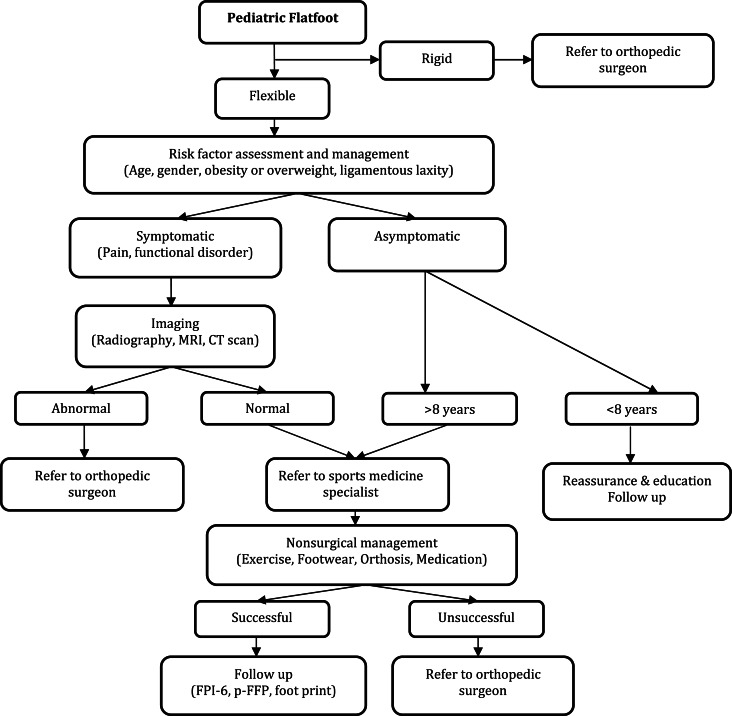
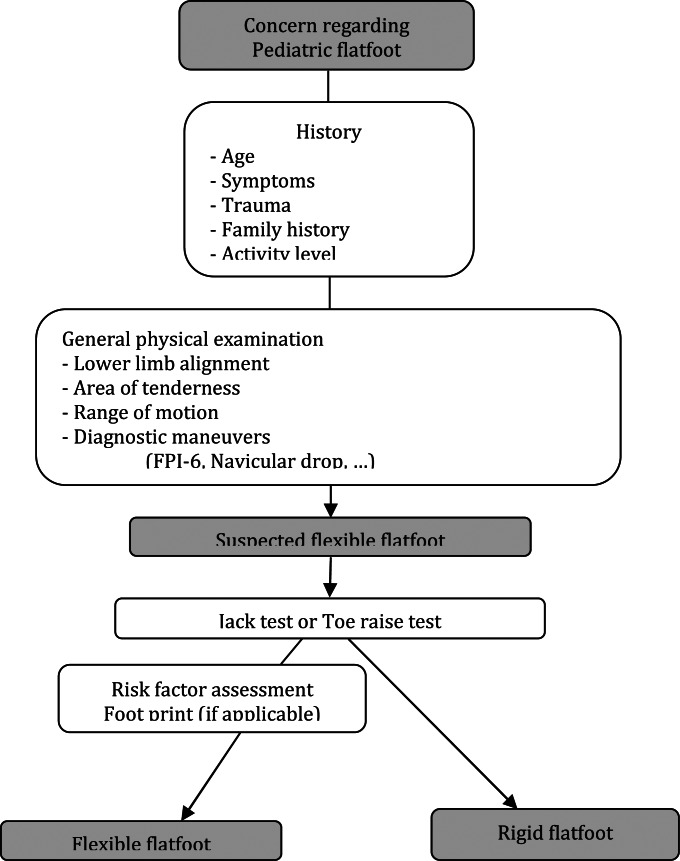
Flatfoot constitutes the major cause of clinic visits for pediatric foot problems. The reported prevalence of flatfoot varies widely due to numerous factors. It can be divided into flexible and rigid flatfoot. Diagnosis and management of pediatric flatfoot has long been the matter of controversy. Common assessment tools include visual inspection, anthropometric values, footprint parameters and radiographic evaluation. Most flexible flatfeet are physiologic, asymptomatic, and require no treatment. Otherwise, the physician should treat symptomatic flexible flatfeet. Initial treatment options include activity modification, proper shoe and orthoses, exercises and medication. Furthermore, comorbidities such as obesity and ligamenous laxity should be identified and managed, if applicable. When all nonsurgical treatment options faile, surgery can be considered. Our purpose in this article is to present a clinical algorithmic approach to pediatric flatfoot.
扁平足是儿童足部问题门诊就诊的主要原因。由于众多因素,报道的扁平足患病率差异很大。它可分为柔韧性扁平足和僵硬性扁平足。儿童扁平足的诊断和治疗长期以来一直存在争议。常见的评估工具包括视诊、人体测量值、足印参数和影像学评估。大多数柔韧性扁平足是生理性的,无症状,无需治疗。否则,医生应治疗有症状的柔韧性扁平足。初始治疗选择包括改变活动方式、合适的鞋子和矫形器、锻炼和药物治疗。此外,如有肥胖和韧带松弛等合并症,应予以识别和处理。当所有非手术治疗选择均失败时,可考虑手术治疗。本文的目的是提出一种针对儿童扁平足的临床算法方法。