IEEE Trans Med Imaging. 2013 Oct;32(10):1901-9. doi: 10.1109/TMI.2013.2268978. Epub 2013 Jun 17.
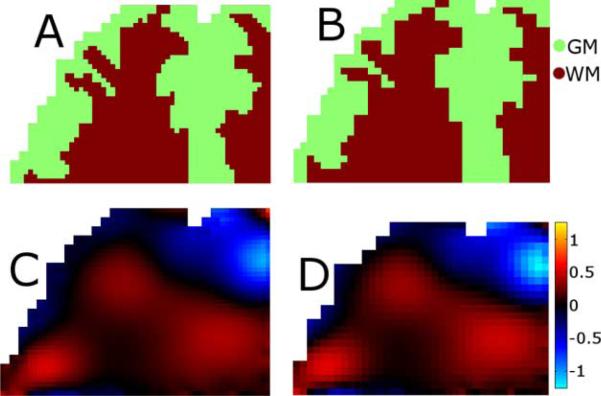
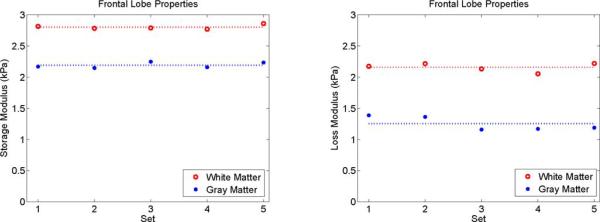
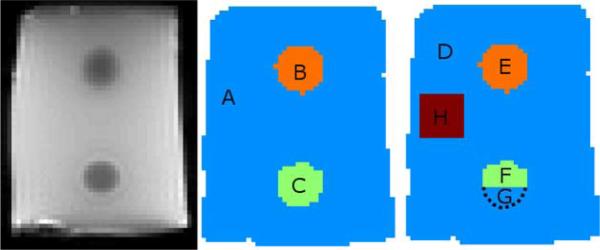
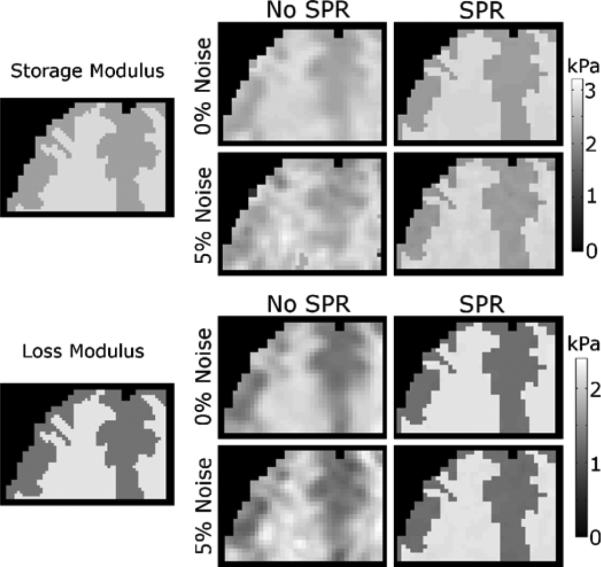
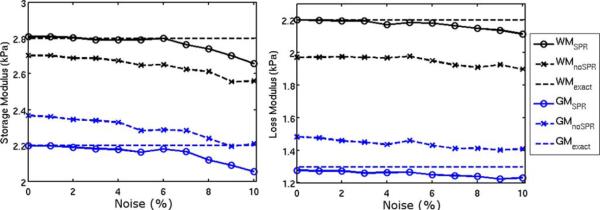
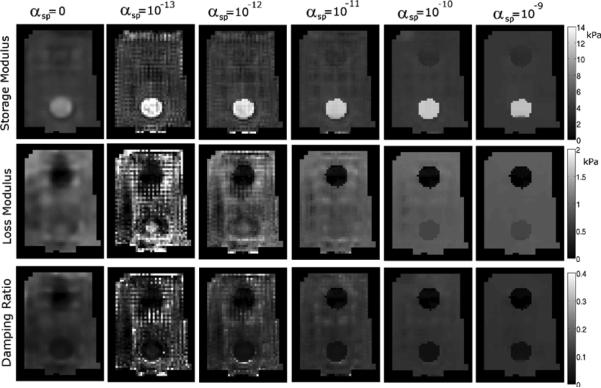
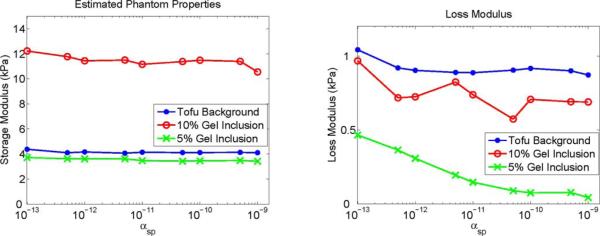
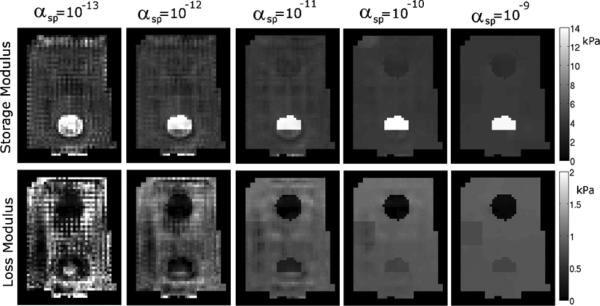
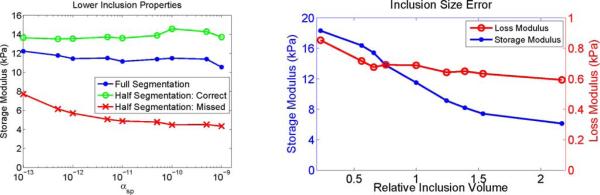
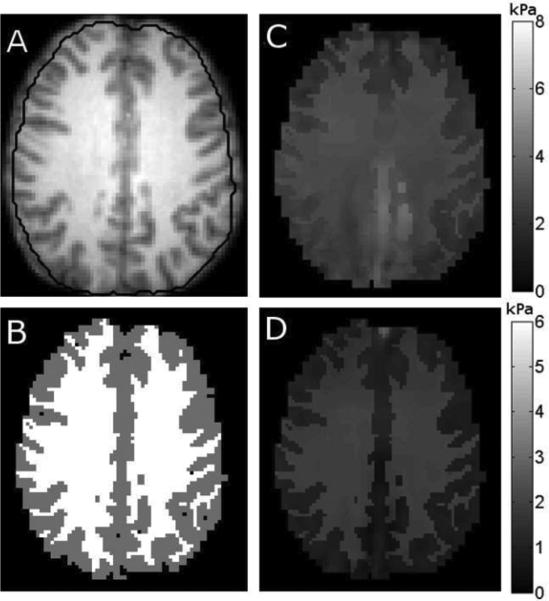
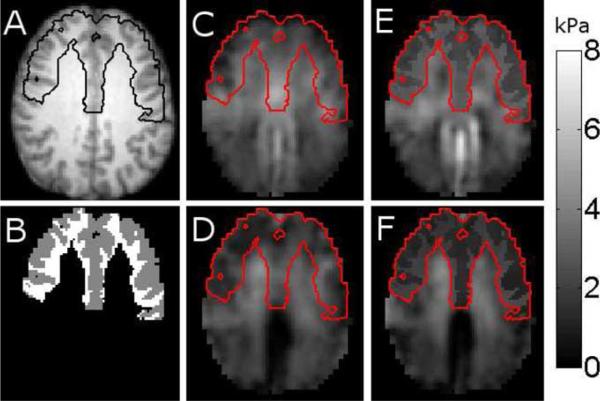
Tissue displacements required for mechanical property reconstruction in magnetic resonance elastography (MRE) are acquired in a magnetic resonance imaging (MRI) scanner, therefore, anatomical information is available from other imaging sequences. Despite its availability, few attempts to incorporate prior spatial information in the MRE reconstruction process have been reported. This paper implements and evaluates soft prior regularization (SPR), through which homogeneity in predefined spatial regions is enforced by a penalty term in a nonlinear inversion strategy. Phantom experiments and simulations show that when predefined regions are spatially accurate, recovered property values are stable for SPR weighting factors spanning several orders of magnitude, whereas inaccurate segmentation results in bias in the reconstructed properties that can be mitigated through proper choice of regularization weighting. The method was evaluated in vivo by estimating viscoelastic mechanical properties of frontal lobe gray and white matter for five repeated scans of a healthy volunteer. Segmentations of each tissue type were generated using automated software, and statistically significant differences between frontal lobe gray and white matter were found for both the storage modulus and loss modulus . Provided homogeneous property assumptions are reasonable, SPR produces accurate quantitative property estimates for tissue structures which are finer than the resolution currently achievable with fully distributed MRE.
在磁共振弹性成像 (MRE) 中,为了重建力学性质而需要获取组织位移,这些位移是在磁共振成像 (MRI) 扫描仪中获取的,因此,解剖学信息可以从其他成像序列中获得。尽管如此,在 MRE 重建过程中很少有尝试将先验空间信息纳入其中。本文实现并评估了软先验正则化 (SPR),通过在非线性反演策略中使用惩罚项来强制预定义空间区域的均匀性。体模实验和模拟表明,当预定义区域具有空间准确性时,对于跨越几个数量级的 SPR 加权因子,恢复的属性值是稳定的,而不准确的分割会导致重建属性的偏差,通过适当选择正则化权重可以减轻这种偏差。该方法通过对一名健康志愿者的五次重复扫描来估计额叶灰质和白质的粘弹性力学性质,在体内进行了评估。使用自动软件生成了每种组织类型的分割,并且在存储模量和损耗模量方面都发现了额叶灰质和白质之间的统计学显著差异。如果均匀性假设合理,则 SPR 可以为比目前完全分布式 MRE 所能达到的分辨率更精细的组织结构产生准确的定量属性估计。