Laboratório de Hanseníase, Instituto Oswaldo Cruz, Fundação Oswaldo Cruz, FIOCRUZ-RJ, Rio de Janeiro, Brazil.
PLoS One. 2013 Jun 14;8(6):e64748. doi: 10.1371/journal.pone.0064748. Print 2013.
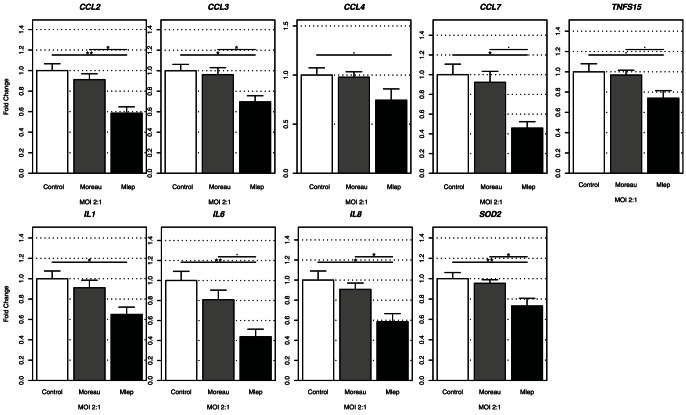
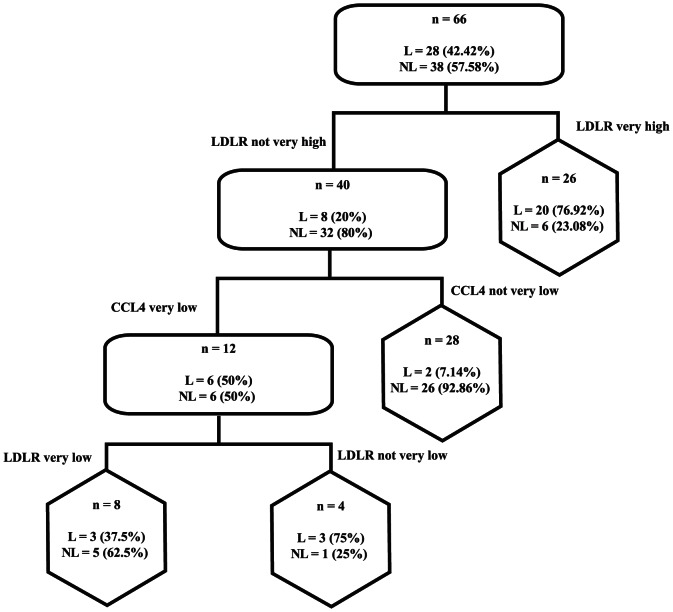
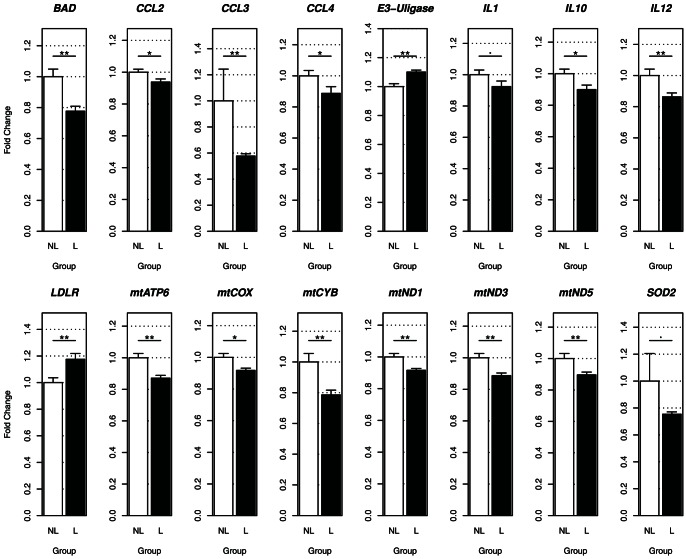
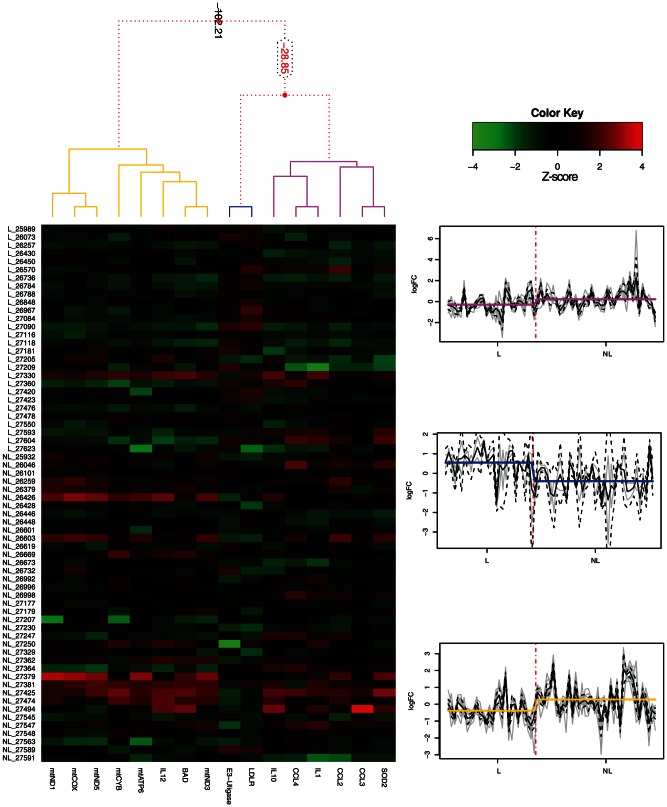
Herein, we performed microarray experiments in Schwann cells infected with live M. leprae and identified novel differentially expressed genes (DEG) in M. leprae infected cells. Also, we selected candidate genes associated or implicated with leprosy in genetic studies and biological experiments. Forty-seven genes were selected for validation in two independent types of samples by multiplex qPCR. First, an in vitro model using THP-1 cells was infected with live Mycobacterium leprae and M. bovis bacillus Calmette-Guérin (BCG). In a second situation, mRNA obtained from nerve biopsies from patients with leprosy or other peripheral neuropathies was tested. We detected DEGs that discriminate M. bovis BCG from M. leprae infection. Specific signatures of susceptible responses after M. leprae infection when compared to BCG lead to repression of genes, including CCL2, CCL3, IL8 and SOD2. The same 47-gene set was screened in nerve biopsies, which corroborated the down-regulation of CCL2 and CCL3 in leprosy, but also evidenced the down-regulation of genes involved in mitochondrial metabolism, and the up-regulation of genes involved in lipid metabolism and ubiquitination. Finally, a gene expression signature from DEG was identified in patients confirmed of having leprosy. A classification tree was able to ascertain 80% of the cases as leprosy or non-leprous peripheral neuropathy based on the expression of only LDLR and CCL4. A general immune and mitochondrial hypo-responsive state occurs in response to M. leprae infection. Also, the most important genes and pathways have been highlighted providing new tools for early diagnosis and treatment of leprosy.
在此,我们对感染活麻风分枝杆菌的施万细胞进行了微阵列实验,鉴定了麻风分枝杆菌感染细胞中新型差异表达基因(DEG)。此外,我们还选择了与遗传研究和生物实验中麻风病相关或有牵连的候选基因。通过多重 qPCR 在两种独立类型的样本中验证了 47 个基因。首先,使用 THP-1 细胞的体外模型感染活麻风分枝杆菌和牛分枝杆菌卡介苗。在第二种情况下,检测了来自麻风病或其他周围神经病患者神经活检的 mRNA。我们检测到了区分牛分枝杆菌卡介苗和麻风分枝杆菌感染的 DEG。与卡介苗相比,麻风分枝杆菌感染后的易感反应特异性特征导致包括 CCL2、CCL3、IL8 和 SOD2 在内的基因受到抑制。同一 47 个基因集在神经活检中进行了筛选,这证实了麻风病中 CCL2 和 CCL3 的下调,但也证明了参与线粒体代谢的基因下调,以及参与脂质代谢和泛素化的基因上调。最后,从 DEG 中鉴定了一个基因表达特征,该特征在确诊为麻风病的患者中得到了证实。基于 LDLR 和 CCL4 的表达,分类树能够确定 80%的病例为麻风病或非麻风性周围神经病。对麻风分枝杆菌感染的一般免疫和线粒体低反应状态发生。此外,还突出了最重要的基因和途径,为麻风病的早期诊断和治疗提供了新的工具。