Department of Orthopedic Surgery, Medical University of Graz, Graz, Austria.
PLoS One. 2013 Jun 14;8(6):e66300. doi: 10.1371/journal.pone.0066300. Print 2013.
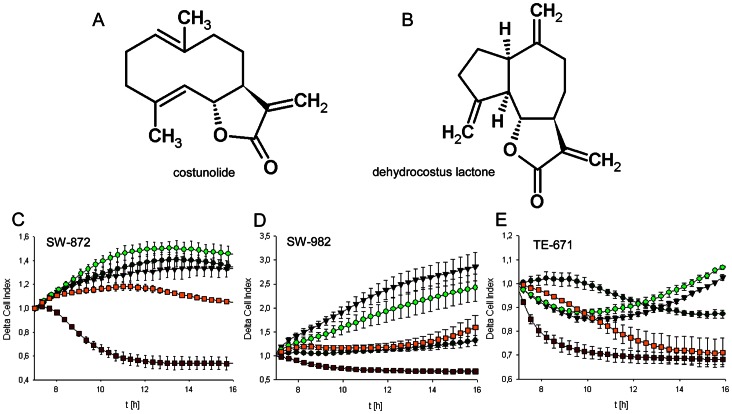
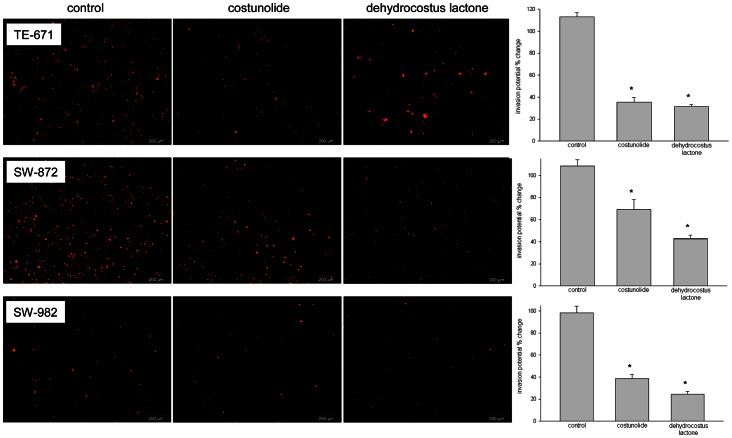
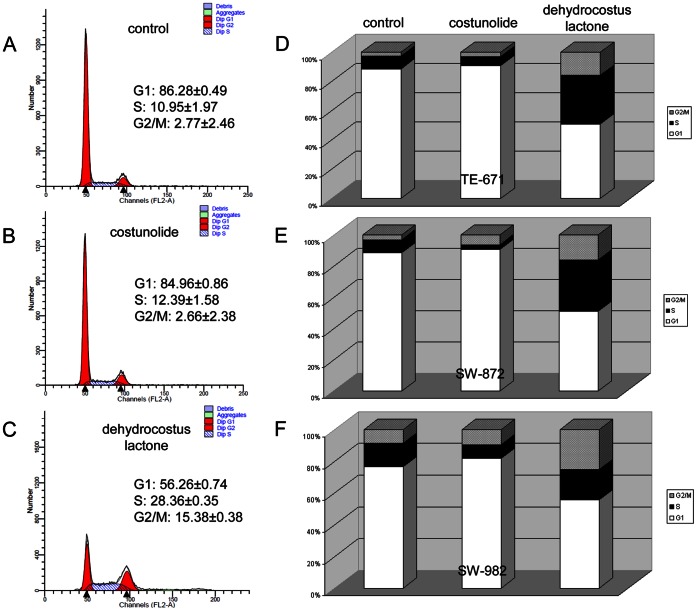
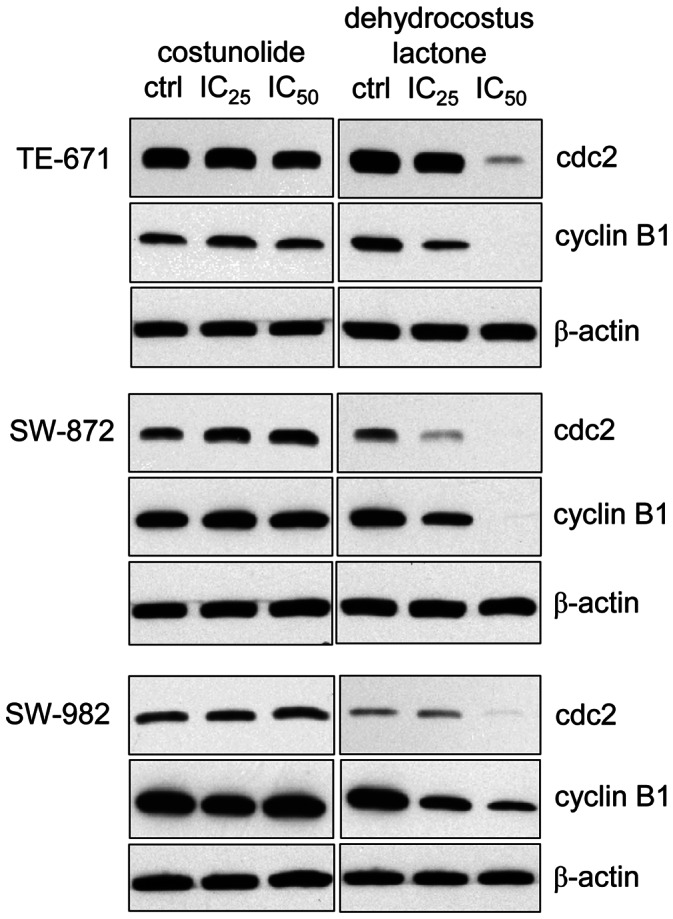
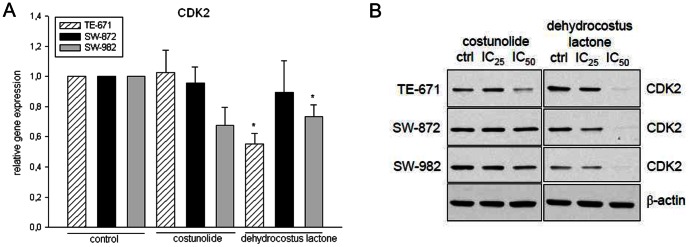
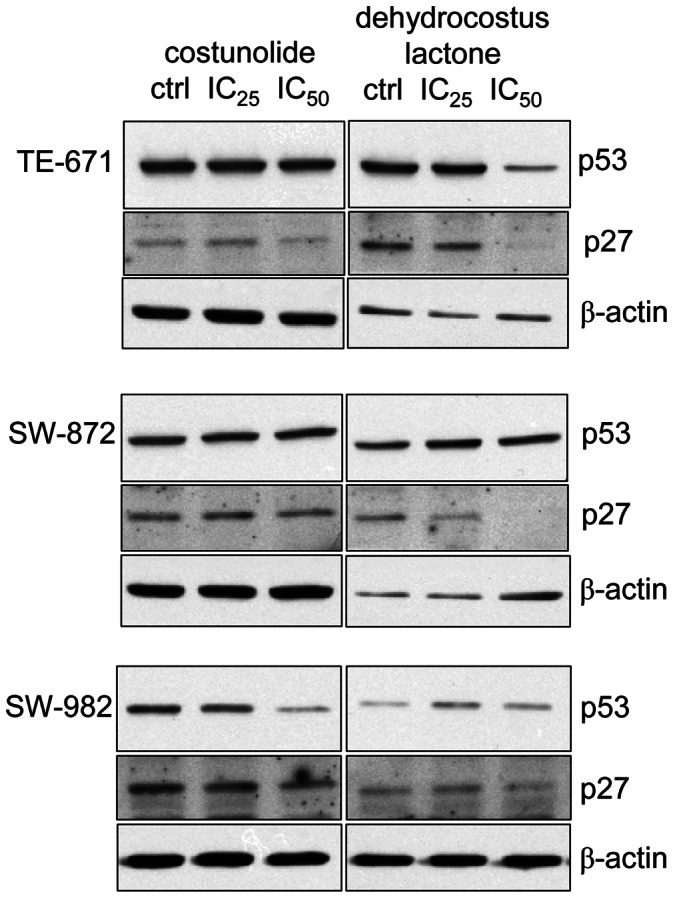
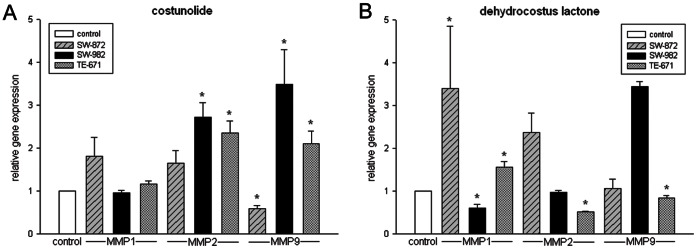
Soft tissue sarcomas (STS) represent a rare group of malignant tumors that frequently exhibit chemotherapeutic resistance and increased metastatic potential. Many studies have demonstrated the great potential of plant-derived agents in the treatment of various malignant entities. The present study investigates the effects of the sesquiterpene lactones costunolide and dehydrocostus lactone on cell cycle, MMP expression, and invasive potential of three human STS cell lines of various origins. Both compounds reduced cell proliferation in a time- and dose-dependent manner. Dehydrocostus lactone significantly inhibited cell proliferation, arrested the cells at the G2/M interface and caused a decrease in the expression of the cyclin-dependent kinase CDK2 and the cyclin-dependent kinase inhibitor p27(Kip1). In addition, accumulation of cells at the G2/M phase transition interface resulted in a significant decrease in cdc2 (CDK1) together with cyclin B1. Costunolide had no effect on the cell cycle. Based on the fact that STS tend to form daughter cell nests and metastasize, the expression levels of matrix metalloproteinases (MMPs), which play a crucial role in extracellular matrix degradation and metastasis, were investigated by Luminex® technology and real-time RT-PCR. In the presence of costunolide, MMP-2 and -9 levels were significantly increased in SW-982 and TE-671 cells. Dehydrocostus lactone treatment significantly reduced MMP-2 and -9 expression in TE-671 cells, but increased MMP-9 level in SW-982 cells. In addition, the invasion potential was significantly reduced after treatment with both sesquiterpene lactones as investigated by the HTS FluoroBlock™ insert system.
软组织肉瘤(STS)是一组罕见的恶性肿瘤,通常表现出化疗耐药性和增加的转移潜力。许多研究表明,植物来源的药物在治疗各种恶性实体瘤方面具有巨大潜力。本研究调查了倍半萜内酯化合物土木香内酯和去氢木香内酯对三种不同来源的人 STS 细胞系的细胞周期、MMP 表达和侵袭潜能的影响。这两种化合物均以时间和剂量依赖的方式减少细胞增殖。去氢木香内酯显著抑制细胞增殖,将细胞阻滞在 G2/M 界面,并导致细胞周期蛋白依赖性激酶 CDK2 和细胞周期蛋白依赖性激酶抑制剂 p27(Kip1) 的表达减少。此外,G2/M 期转换界面处细胞的积累导致 cdc2(CDK1)与 cyclin B1 的显著减少。土木香内酯对细胞周期没有影响。鉴于 STS 倾向于形成子细胞巢并转移,因此通过 Luminex®技术和实时 RT-PCR 研究了基质金属蛋白酶(MMPs)的表达水平,MMPs 在细胞外基质降解和转移中起着关键作用。在土木香内酯存在的情况下,SW-982 和 TE-671 细胞中的 MMP-2 和 MMP-9 水平显著增加。去氢木香内酯处理显著降低了 TE-671 细胞中 MMP-2 和 MMP-9 的表达,但增加了 SW-982 细胞中 MMP-9 的水平。此外,通过 HTS FluoroBlock™插入系统研究发现,两种倍半萜内酯处理后侵袭潜能显著降低。