Department of Anatomy/Cell Biology, Wayne State University School of Medicine, Detroit, Michigan, United States of America.
PLoS One. 2013 Jun 14;8(6):e66332. doi: 10.1371/journal.pone.0066332. Print 2013.
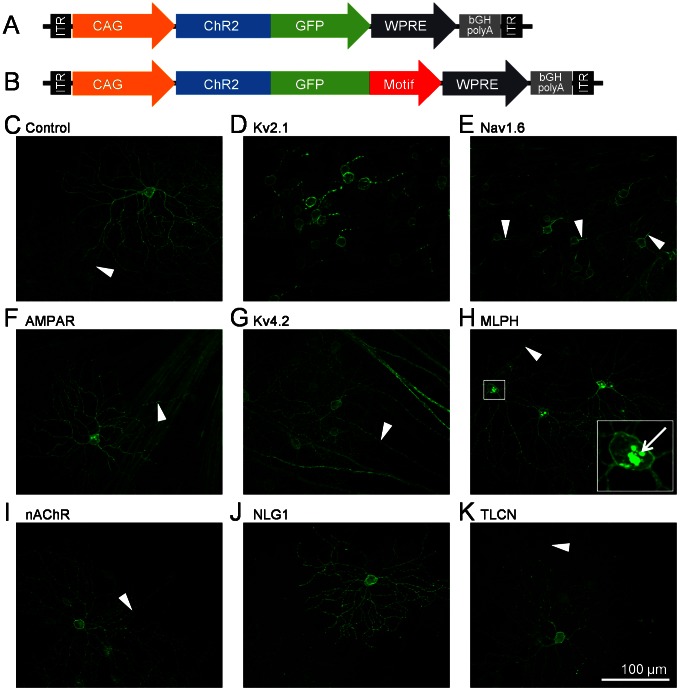
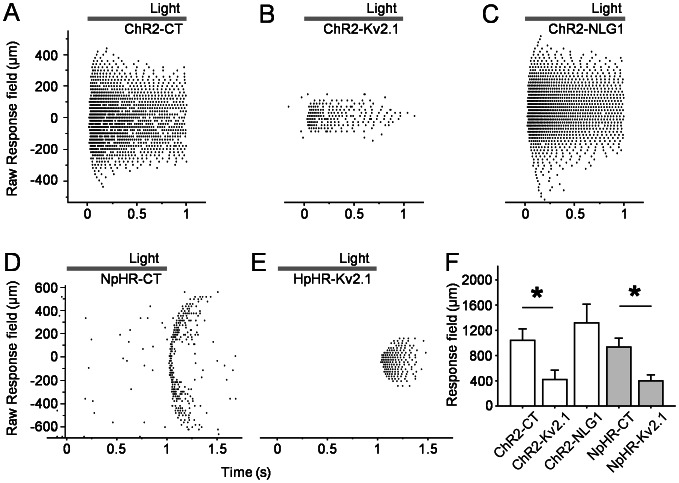
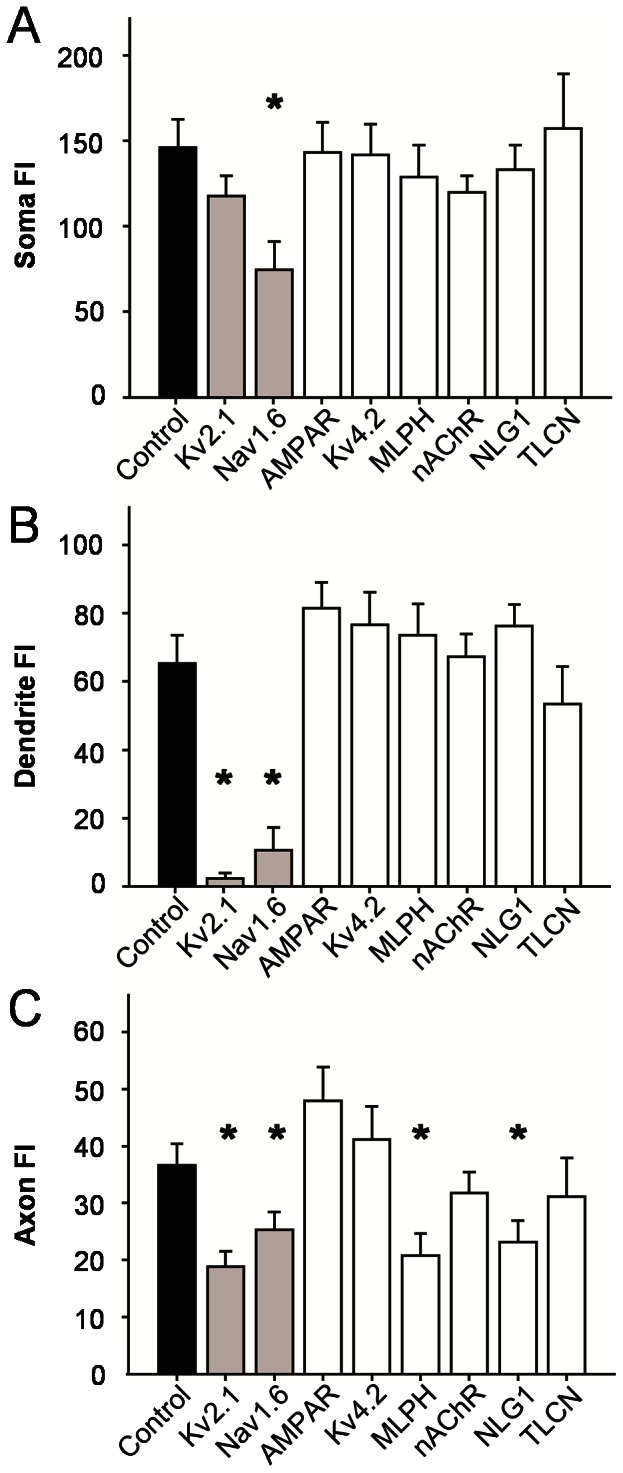
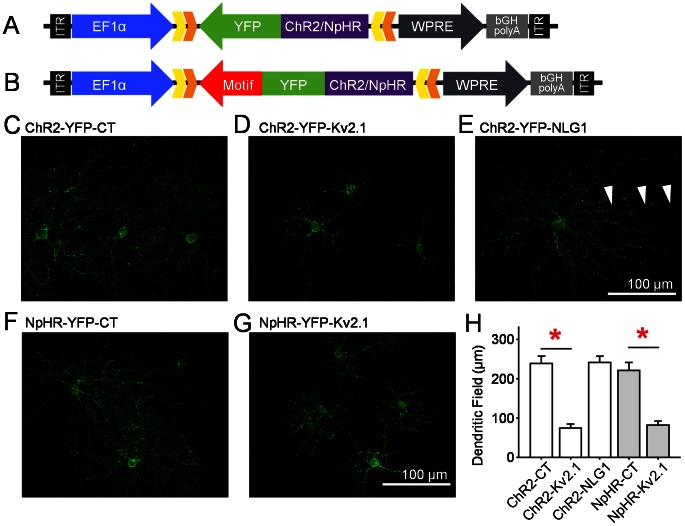
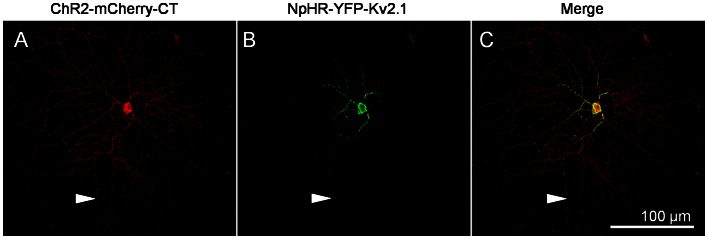
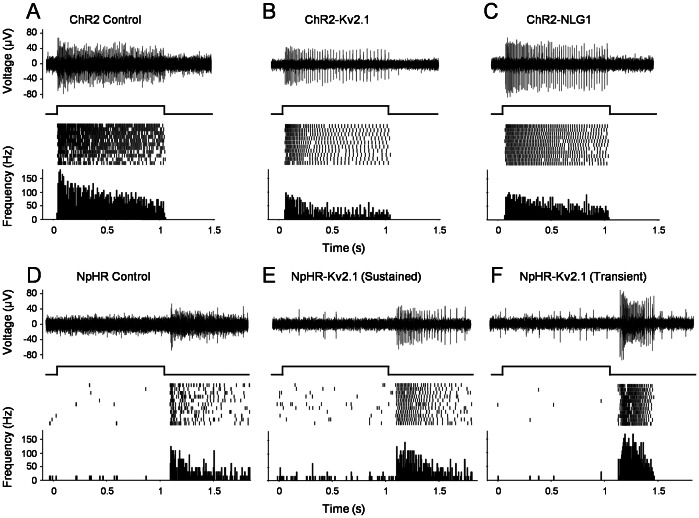
Expression of optogenetic tools in surviving inner retinal neurons to impart retinal light sensitivity has been a new strategy for restoring vision after photoreceptor degeneration. One potential approach for restoring retinal light sensitivity after photoreceptor degeneration is to express optogenetic tools in retinal ganglion cells (RGCs). For this approach, restoration of ON and OFF center-surround receptive fields in RGCs, a key feature of visual information processing, may be important. A possible solution is to differentially express depolarizing and hyperpolarizing optogenetic tools, such as channelrhodopsin-2 and halorhodopsin, to the center and peripheral regions of the RGC dendritic field by using protein targeting motifs. Recombinant adeno-associated virus (rAAV) vectors have proven to be a powerful vehicle for in vitro and in vivo gene delivery, including in the retina. Therefore, the search for protein targeting motifs that can achieve rAAV-mediated subcellular targeted expression would be particularly valuable for developing therapeutic applications. In this study, we identified two protein motifs that are suitable for rAAV-mediated subcellular targeting for generating center-surround receptive fields while reducing the axonal expression in RGCs. Resulting morphological dendritic field and physiological response field by center-targeting were significantly smaller than those produced by surround-targeting. rAAV motif-mediated protein targeting could also be a valuable tool for studying physiological function and clinical applications in other areas of the central nervous system.
将光遗传学工具表达在存活的视网膜内神经元中,赋予视网膜光敏感性,这是一种在光感受器变性后恢复视力的新策略。在光感受器变性后恢复视网膜光敏感性的一种潜在方法是在视网膜神经节细胞(RGC)中表达光遗传学工具。对于这种方法,恢复 RGC 中的 ON 和 OFF 中心-环绕感受野,这是视觉信息处理的关键特征,可能很重要。一种可能的解决方案是通过使用蛋白靶向基序,将去极化和超极化的光遗传学工具(如通道视紫红质-2 和盐藻视蛋白)差异化地表达在 RGC 树突场的中心和外围区域。重组腺相关病毒(rAAV)载体已被证明是体外和体内基因传递的有效载体,包括在视网膜中。因此,寻找可实现 rAAV 介导的亚细胞靶向表达的蛋白靶向基序,对于开发治疗应用将特别有价值。在这项研究中,我们确定了两种适合 rAAV 介导的亚细胞靶向的蛋白基序,用于产生中心-环绕感受野,同时减少 RGC 中的轴突表达。与靶向环绕相比,中心靶向产生的形态学树突场和生理反应场明显更小。rAAV 基序介导的蛋白靶向也可能是研究中枢神经系统其他区域生理功能和临床应用的有价值工具。